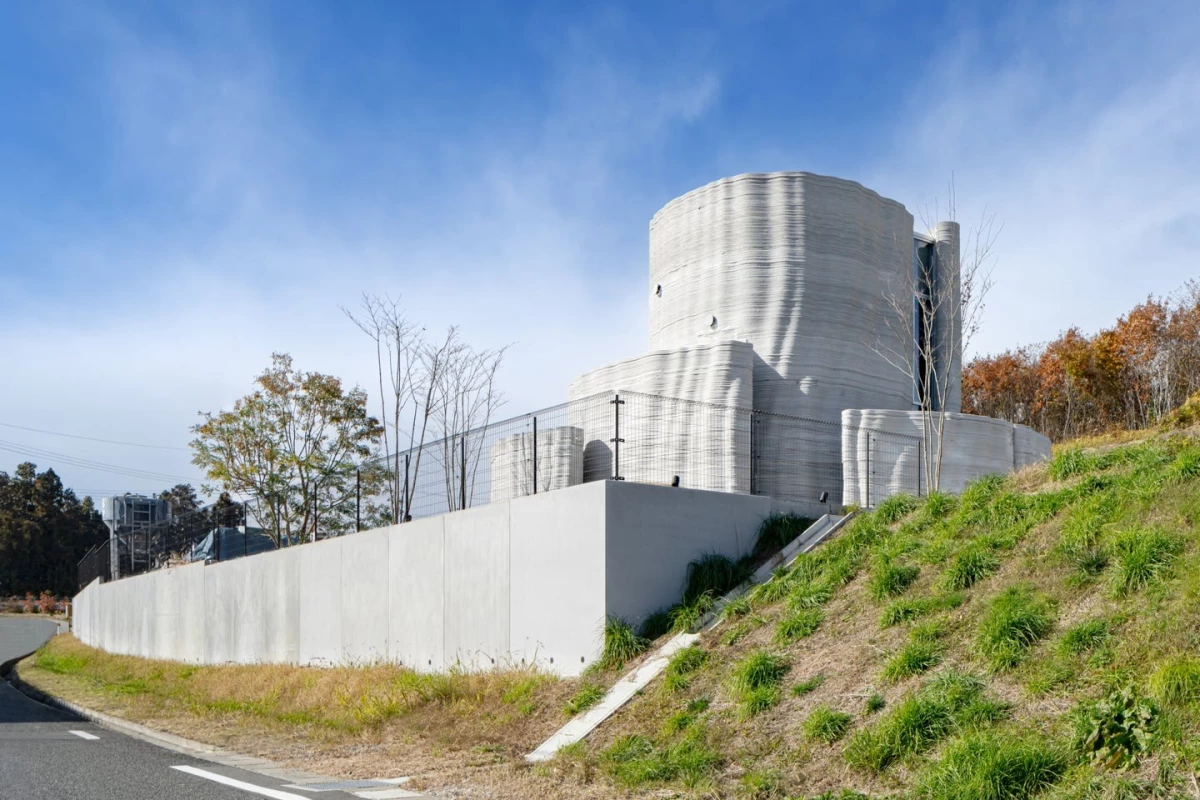
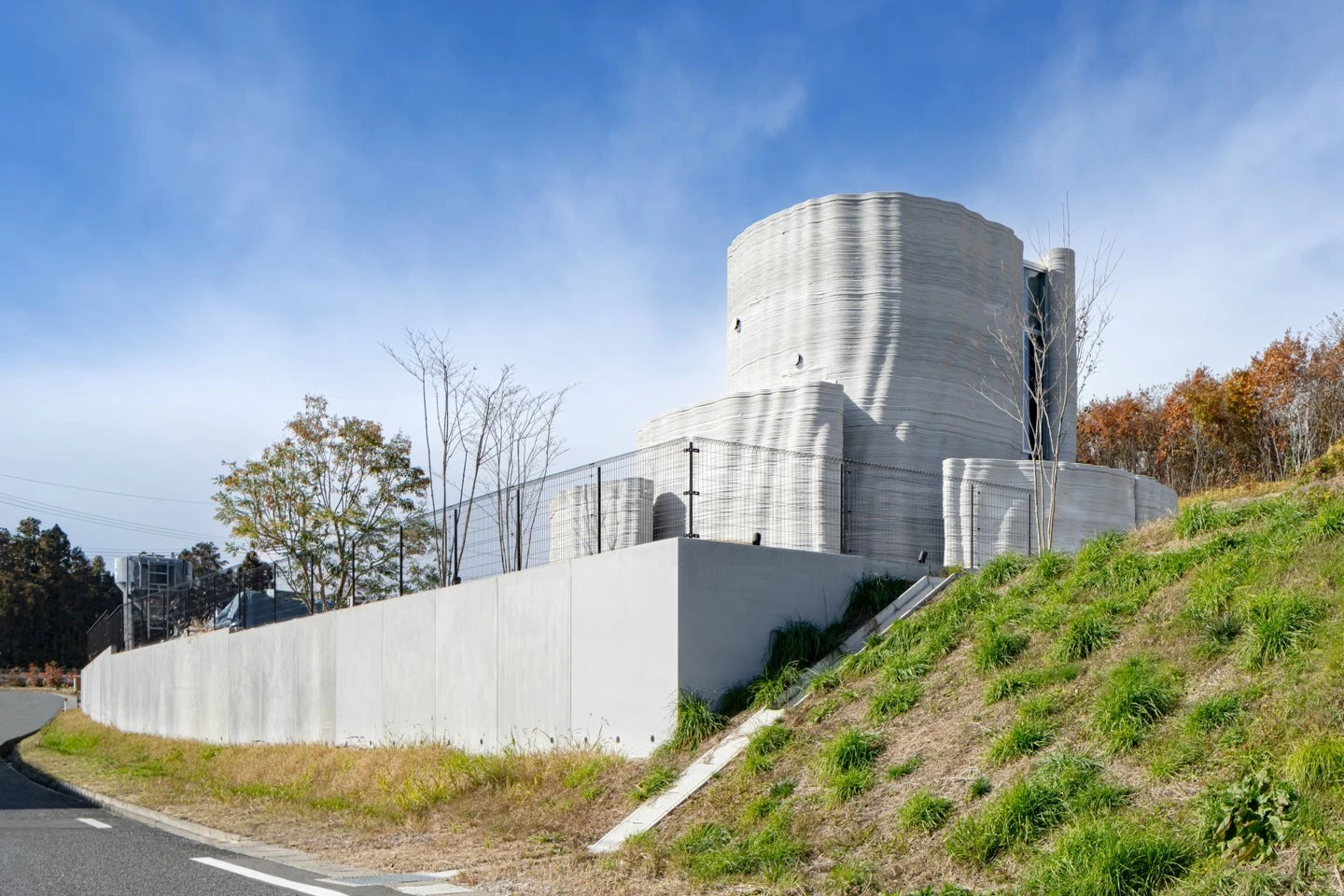


Described as Japan's first two-story 3D-printed home, the O House is inspired by the geometry of natural caves. Built to meet the country's strict seismic requirements, it combines cutting-edge robotic construction with some serious earthquake-resistant engineering.
The O House was created by a large Japanese team headed by Onocom and Kizuki, and it measures 50 sq m (537 sq ft), spread over two floors. So while not quite tiny house-sized, it's definitely compact.
The home's structure is a hybrid of 3D printing and conventional reinforced concrete. A custom COBOD 3D printer extruded a cement-like mixture out of a nozzle in layers to form much of the shell, including the arched walls, floor, and roof. A four-person crew operated the printer, working mostly on-site with some elements produced off-site, constructing the house from 0.5 m (1.64 ft) below ground to a height of 7 m (23 ft) above.
Like Guatemala's 3D-printed house, a big focus on this project was ensuring it could withstand seismic activity. With this in mind, it's anchored by a reinforced strip foundation supported by ground-improvement piles, which help it remain stable during earthquakes. A conventional reinforced concrete frame also forms the primary load-bearing system, while the 3D-printed walls sit within the frame.
"Japan has some of the most demanding seismic requirements in the world," says COBOD founder and general manager Henrik Lund-Nielsen. "Seeing a government approved two-story 3D-printed reinforced-concrete house completed here confirms that 3D-construction printing is ready for projects that rely on structural precision and consistent quality, also in seismic areas. Kizuki's project shows how our technology handles complex geometry, varying climate conditions, and strict regulatory standards."
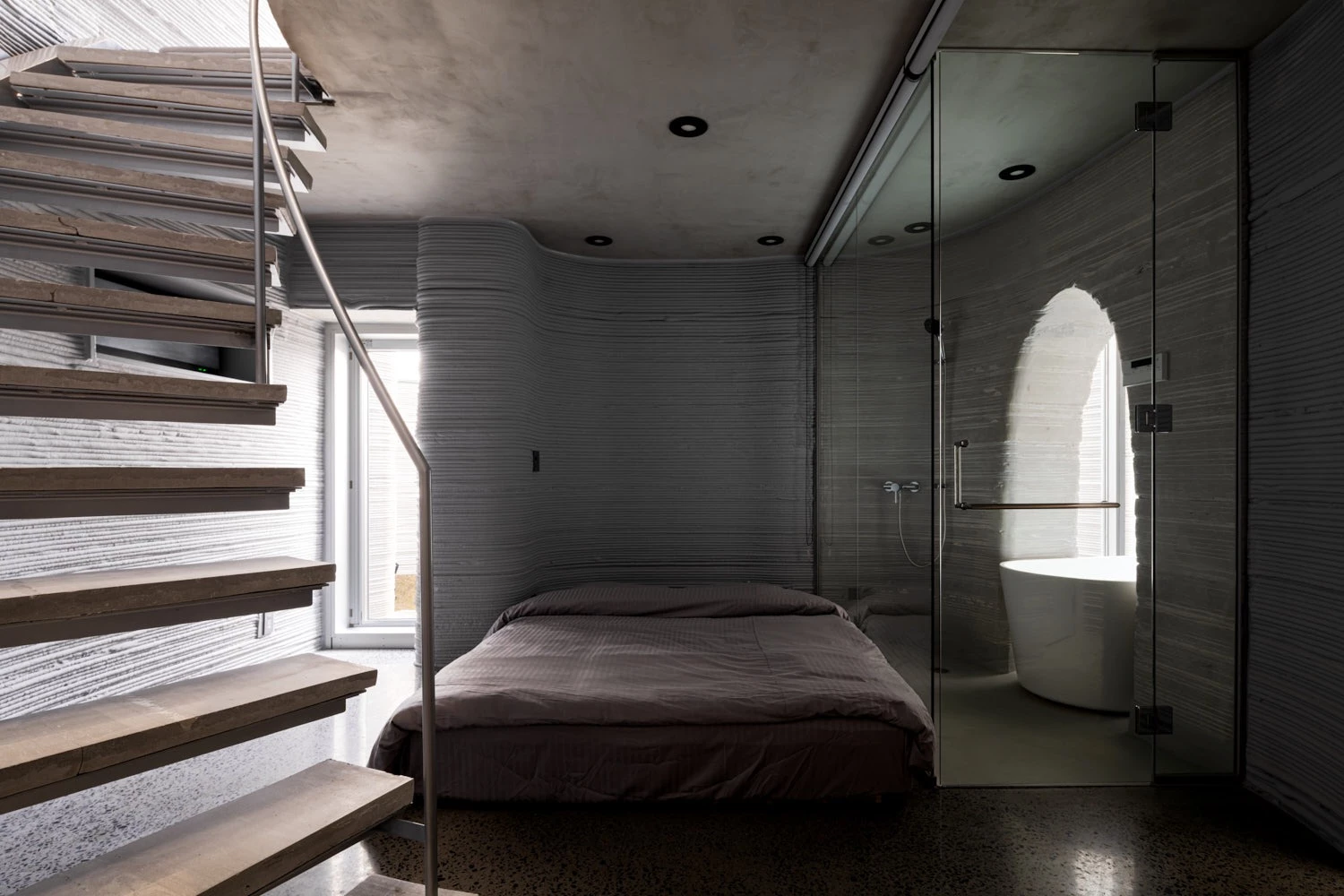
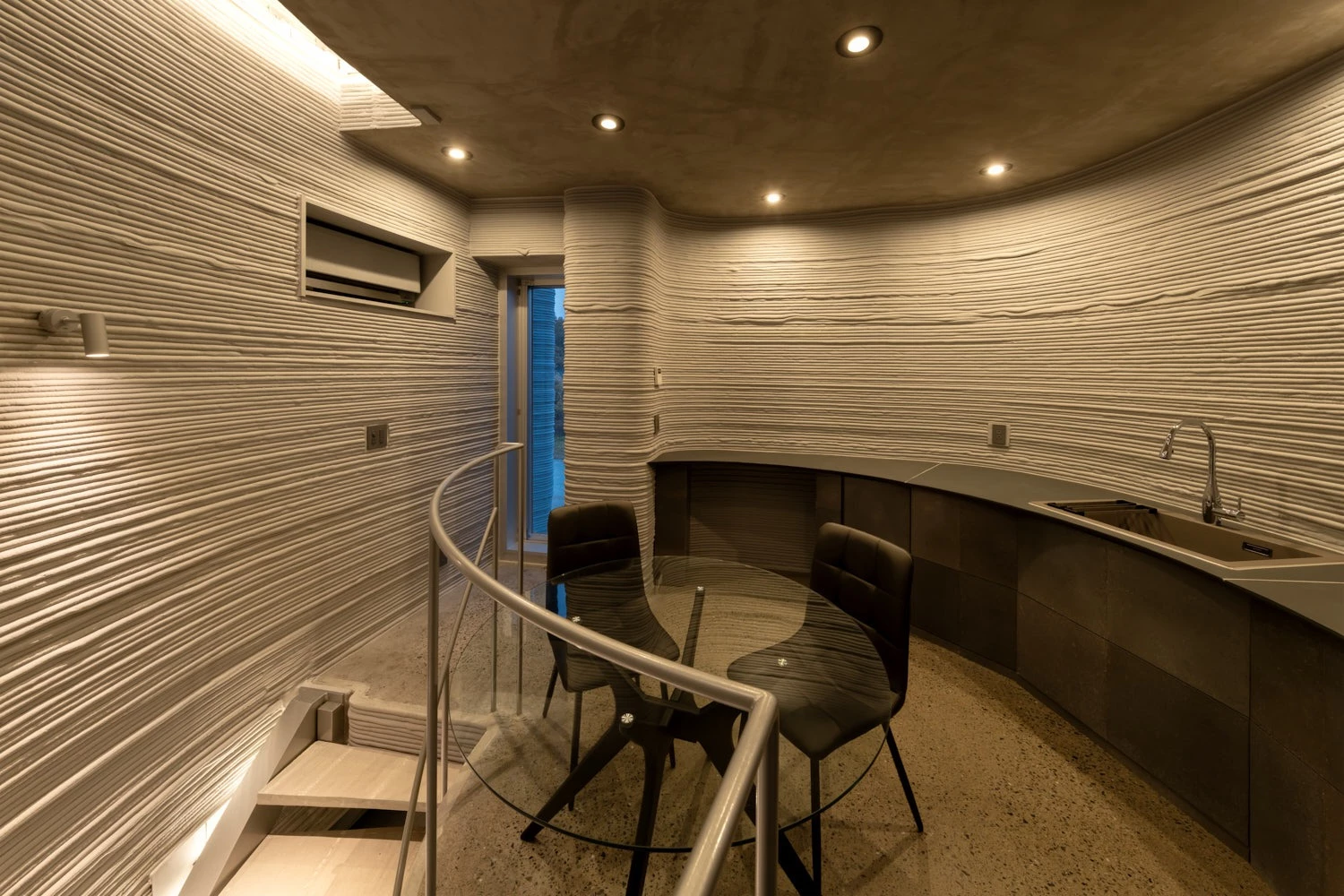
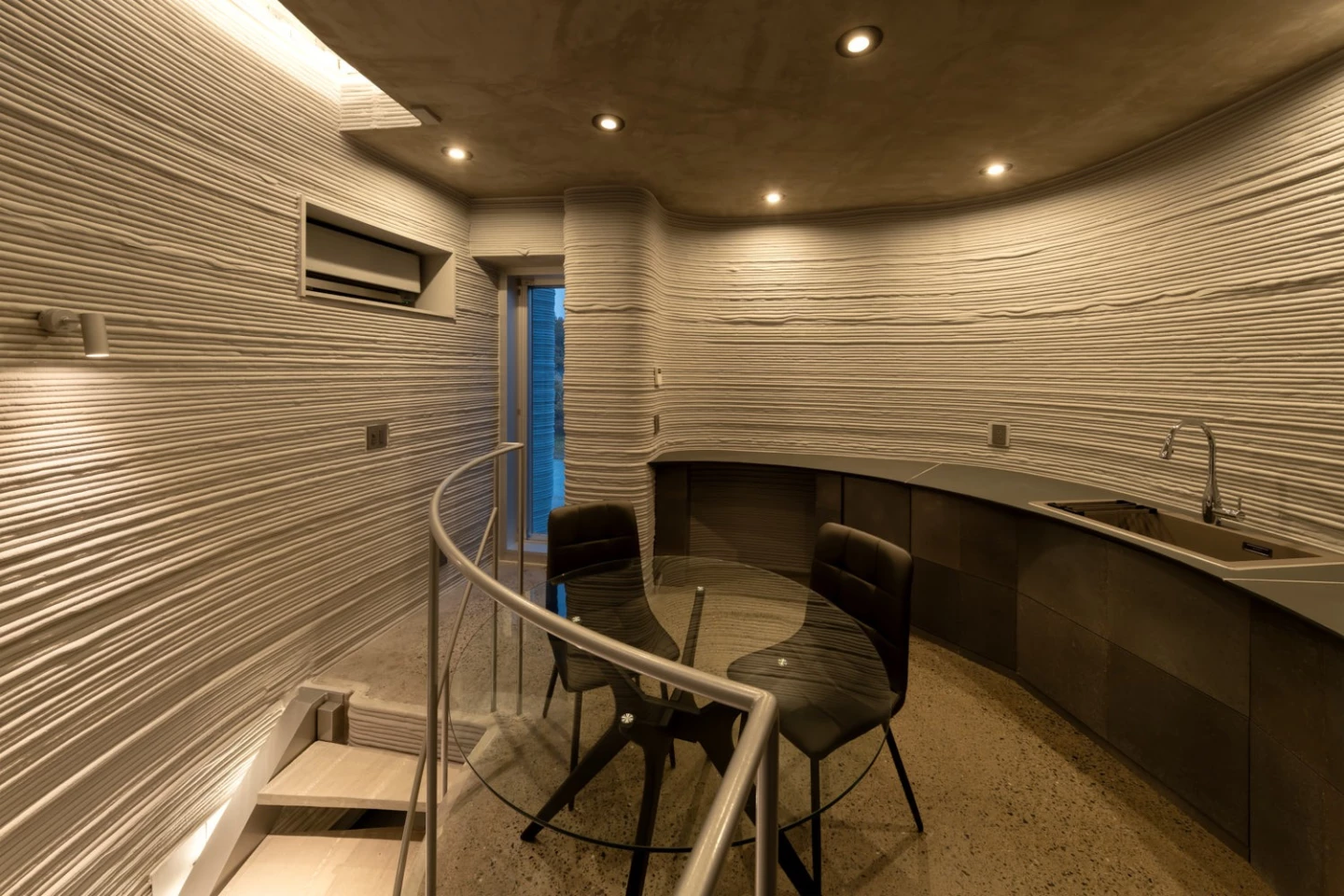
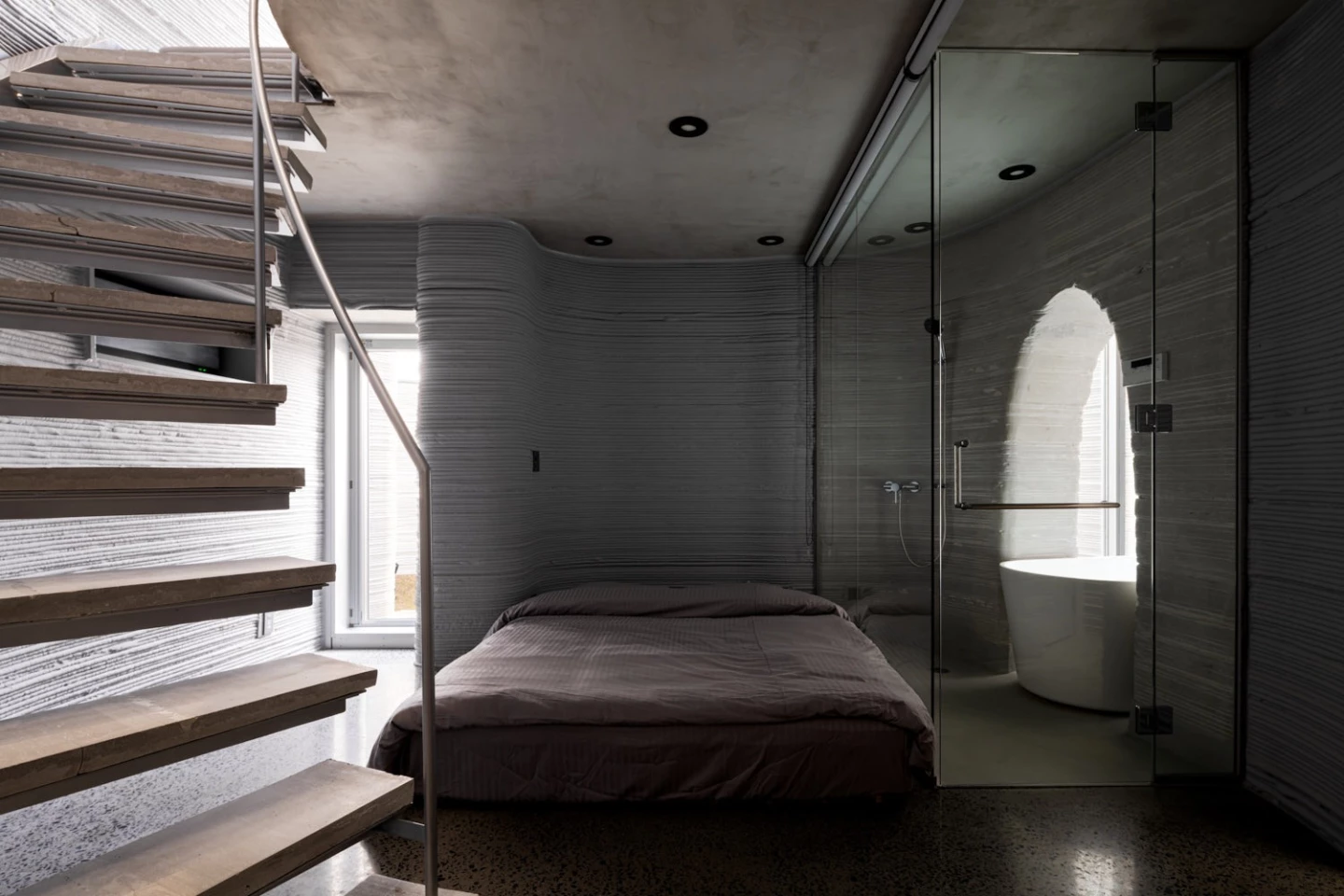
The interior leans into the cave-like theme with curved walls and a design that's light on traditional windows in favor of skylights. It's also arranged "upside down," with a multipurpose kitchen/living area that has custom curved cabinetry to fit into the walls situated upstairs. The downstairs master bedroom has an en-suite bathroom.
This home appears to have been built as a demonstration model. However, looking to the future, the team plans to build more 3D-printed homes and expand into defense and post-disaster reconstruction.