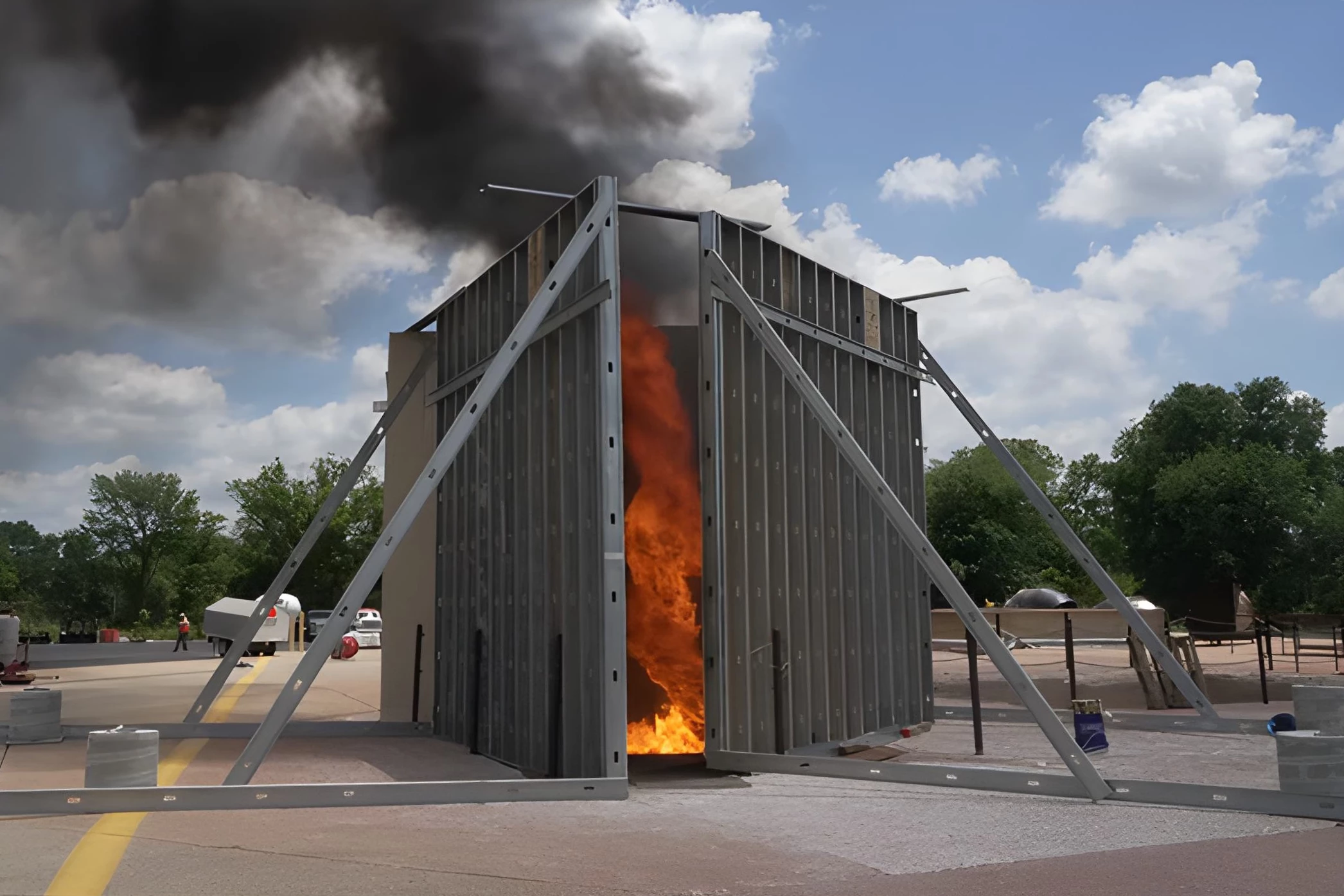

Oil spills in oceans can spell disaster for ecosystems, but options for mitigating them are limited and can come with their own environmental challenges. A new "fire tornado" from Texas A&M University might soon be able to come to the rescue.
Although oil spills from tankers have declined over the years, there are still enough of them to cause concern. In 2025, for example, there were six spills that released a total of nearly 30,000 barrels of crude and fuel oil into the environment. That brings the total number of spills for the decade to 308,000 barrels of oil leaked into the oceans. Then there are other types of spills, such as the oil released by the Deepwater Horizon drilling rig, which leaked 4.9 million barrels of oil into the Gulf of Mexico, decimating wildlife, entering the food chain, and fouling beaches, marshes, and wetlands.
Despite the threat to the environment oil spills pose, there are a relatively limited number of ways to deal with them when they happen, and none are perfect. One option is to try to burn the oil before it has a chance to spread – a method that was, in fact, used during the Horizon disaster. While in-situ burning, as it's called, is indeed a valid way to stop the oil from traveling further in the ocean, it releases thick black smoke into the atmosphere that's heavy in carbon dioxide and leaves behind a sticky goo on the ocean surface that still needs to be cleaned up.
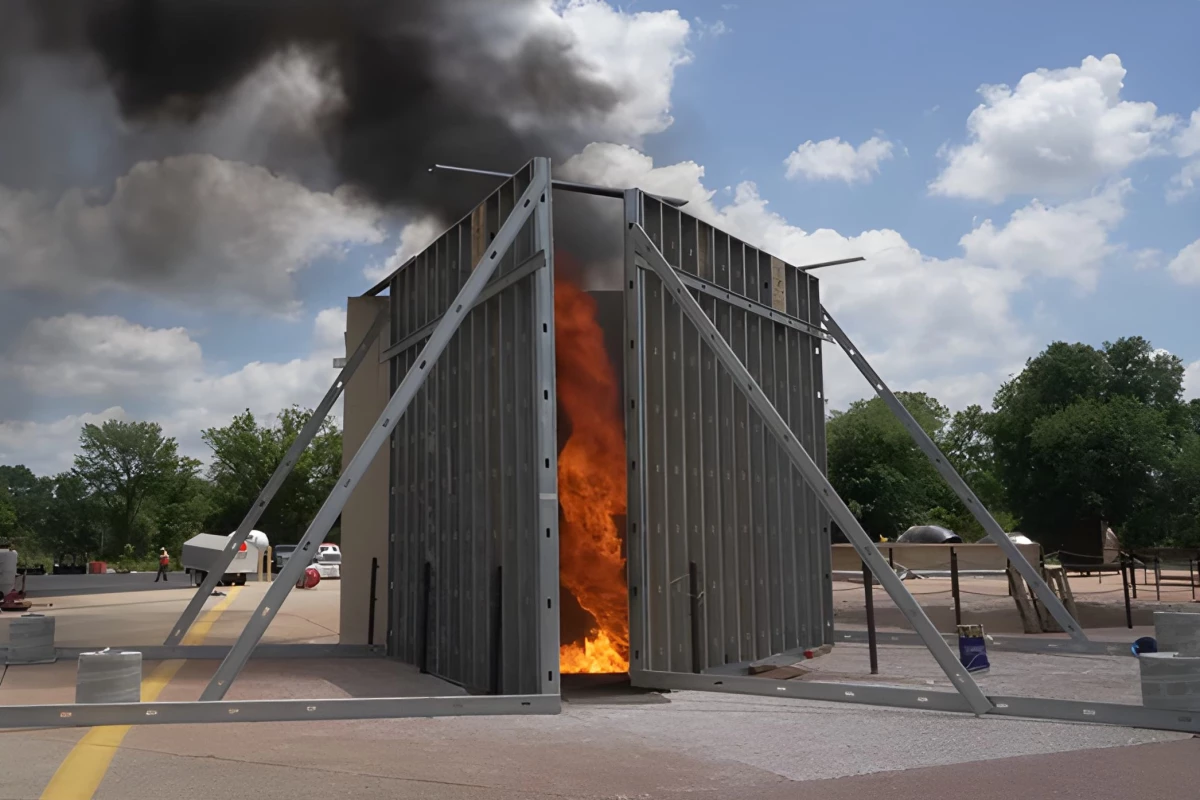
Seeking a better solution, the researchers at Texas A&M developed a fire whirl that can burn off 95% of an oil slick, leaving much fewer particles behind than current practices. What's more, in tests, which you can see below, their fire whirl also produced 40% less soot.
“This the first time anyone has conceived using fire whirls for oil spill remediation, and it’s really just the beginning,” said Elaine Oran, a professor of aerospace engineering who co-led the study. “Our goal is to harness the chaotic nature of fire whirls as a powerful, precise restoration tool, to protect coastlines, marine ecosystems and the environment as a whole.”
To develop their fire whirl, the researchers built a triangular structure standing 16-feet tall that twisted airflow around a column of flame arising from a pool of water coated in crude oil. As the air entered and swirled around the fire, it coaxed the flames into a 17-foot high fire tornado that was able burn off the fuel 40 percent faster than normal in-situ burns.
The secret to the whirl's success lies in the fact that it is able to provide a continuous flow of oxygen along the entire flame column. This lets it burn hotter, which allows it to vaporize more particles than usual. The higher oxygen content of the flames also leads to less production of soot, a material that prefers fuel-rich, oxygen-poor flames to form.
The researchers admit that this study is more of a proof-of-concept project than a proposal for a new oil-spill mitigation system, as the fire whirl was produced in stable conditions – not on the surface of a moving sea. Still, they say it is an important step toward developing a new system that can deal with the persistent issue of oil-spills around the world. They also say the work could inform the design of future high-efficiency combustion systems.
“Our study has universal applications,” concludes Oran. “By understanding the physical laws that govern fire whirls, we can harness their power beyond oil spill remediation.”
The study detailing the creation and testing of the fire whirl has been published in the journal Fuel.
Source: Texas A&M