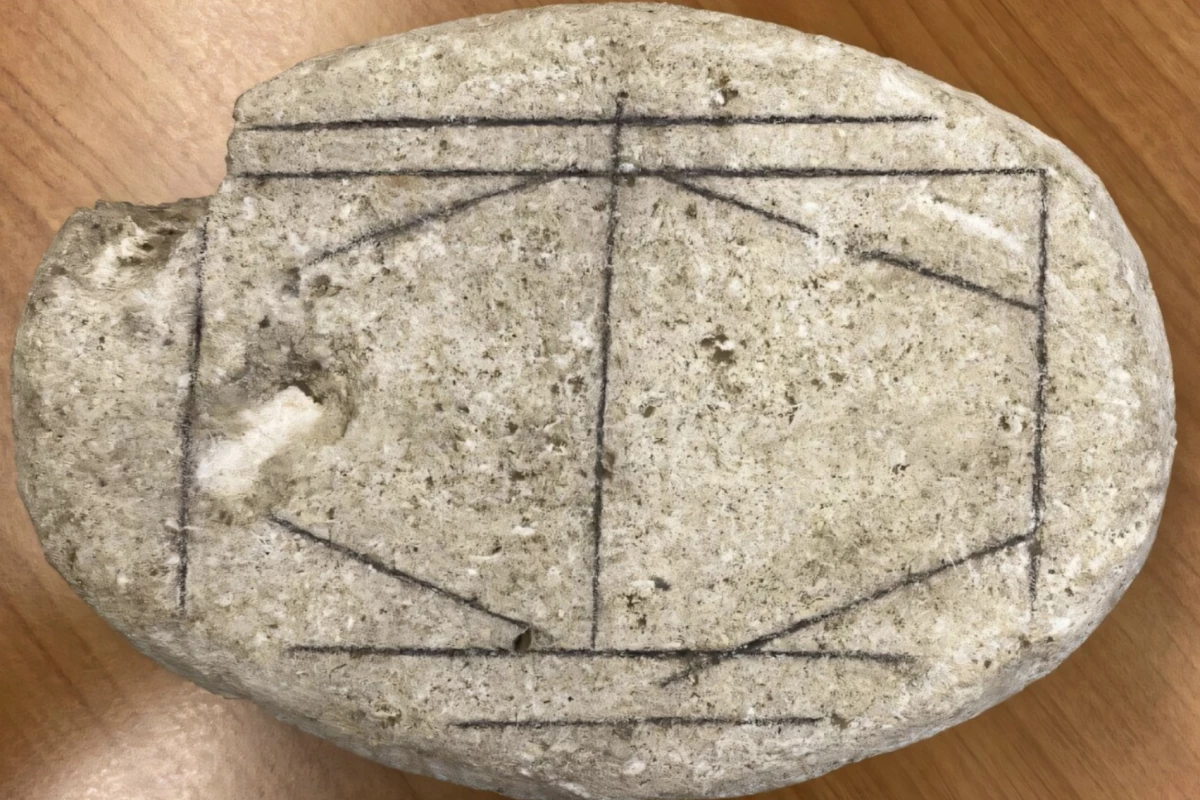
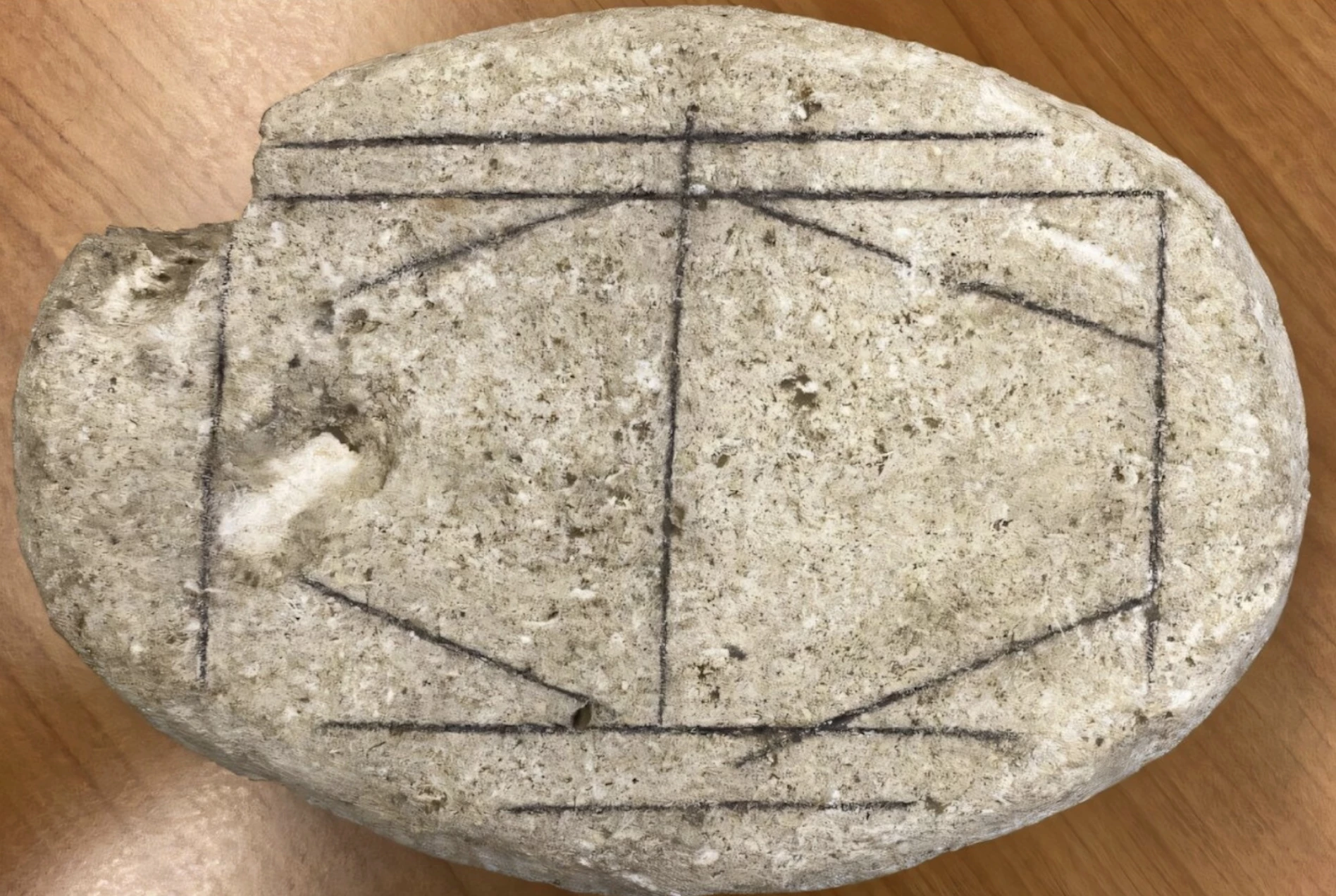

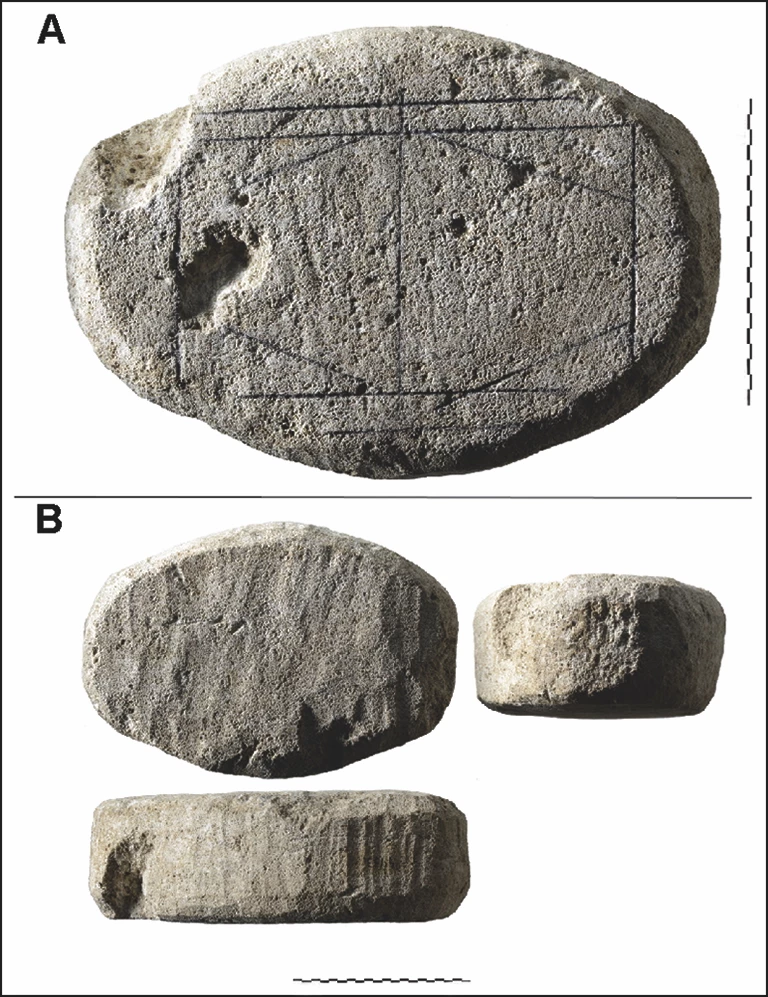

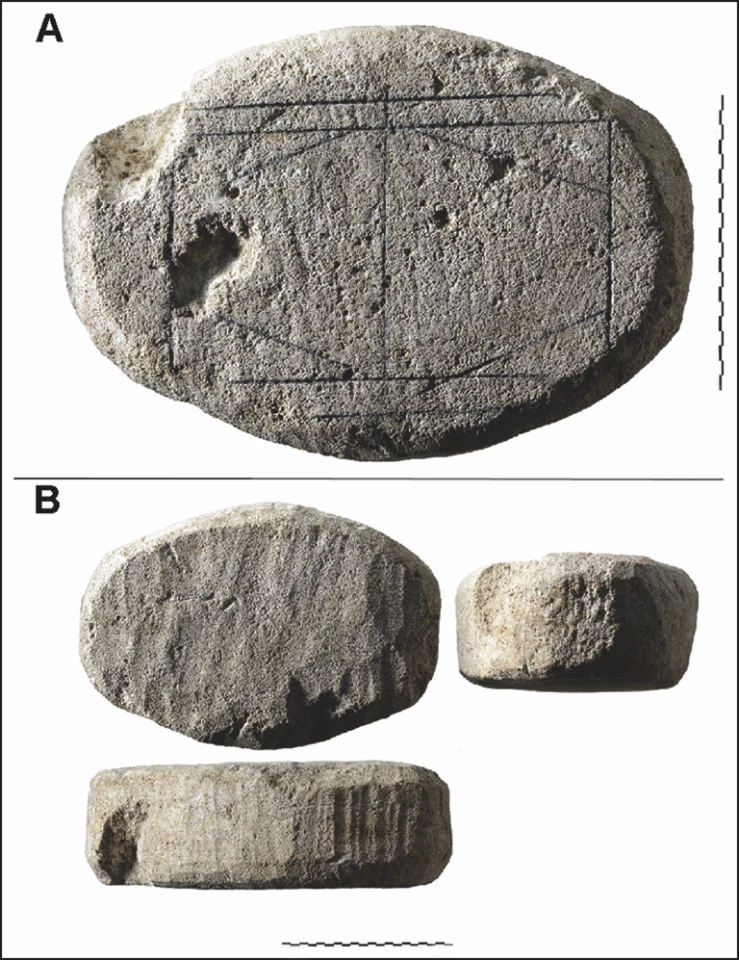
A slab of limestone excavated in 1984 from the ancient Coriovallum settlement in the Netherlands presented a puzzle for researchers of Roman history. Because of its distinct grooves and marks, the stone piece was believed to be some kind of board game – but obviously no rulebook was dug up to confirm this. Now, more than 40 years on, new technology appears to have solved the mystery.
An international team of researchers led by Maastricht University in the Netherlands, along with Leiden University, Australia's Flinders University, the Université Catholique de Louvain in Belgium and The Roman Museum and restoration studio Restaura in Heerlen, have used 3D scans and AI to unravel the rules of this mysterious game that no human has been able to figure out.
The oval-shaped stone, roughly 8.3 x 5.7 inches (21 x 14.5 cm) in diameter and marked on one side with distinct intersecting lines, had all the hallmarks of a game played in ancient times. As the researchers note in their paper, people around the world have played games since at least the Bronze Age (around 3000 BCE). A lot haven't survived due to materials used, but the Coriovallum limestone had withstood the test of time.

“The stone shows a geometric pattern and visible wear that are consistent with sliding game pieces across the surface, which point strongly to repeated play rather than another purpose,” said the study's lead author Dr Walter Crist, an archaeologist at Leiden University. “The uneven wear along the carved lines raises a key question about whether AI‑driven simulated play could reproduce that same pattern."
Now is probably a good time to mention the obvious – that the use of AI in research is becoming increasingly common and, to some degree, normalized. A few months ago I voiced my enthusiasm for how AI helps me in various ways, and I was surprised that several close friends who work in coding and software development fields were vehemently against it. One of the main arguments about using AI in research is its biases – which are undeniable, but humans have those too. AI is a tool, not a guide – and it's made critical thinking even more noticeably important. So with that main caveat out of the way, here's what the researchers did.
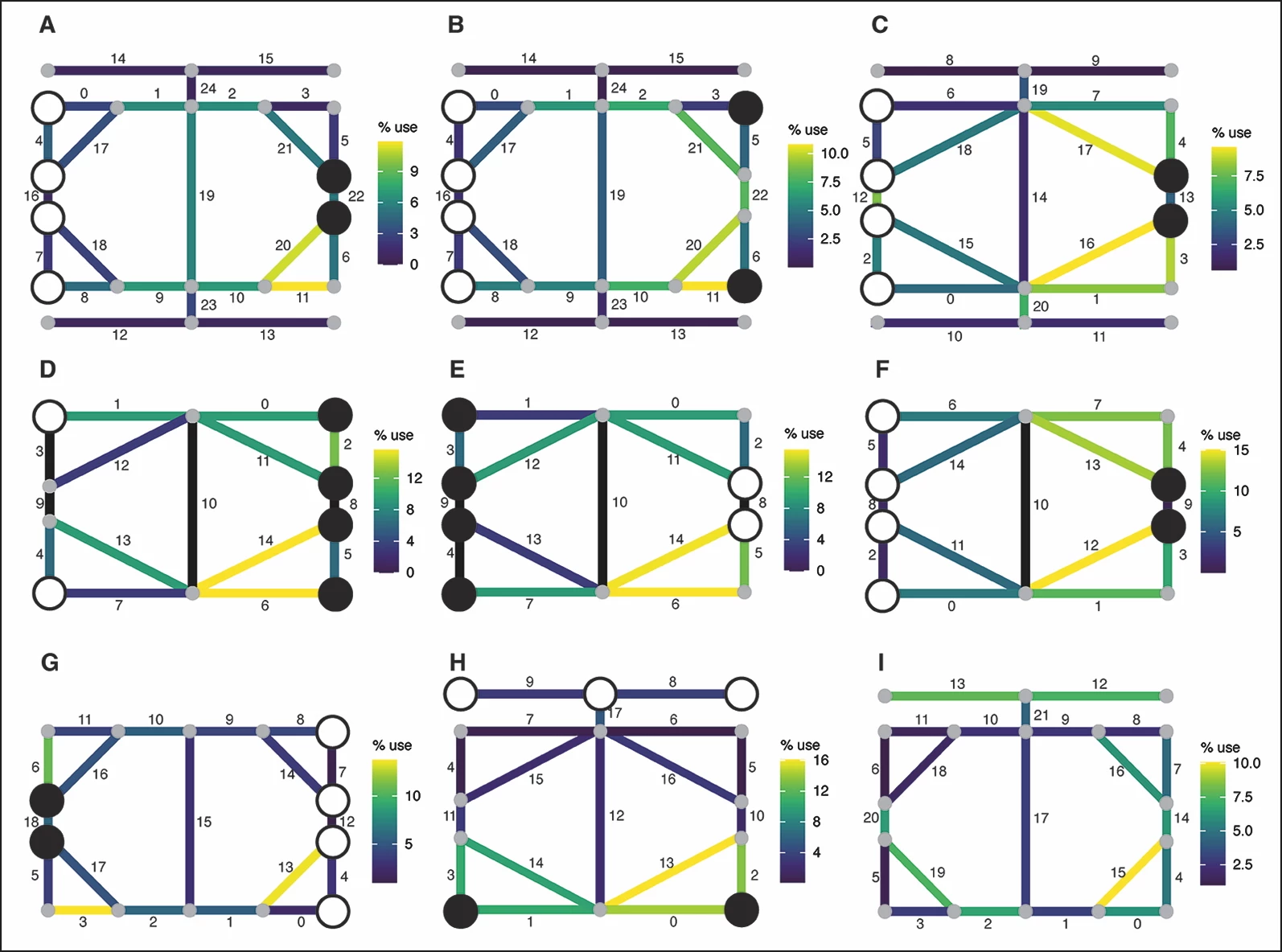
They programmed two AI bots to play a digital version of the limestone-etched board, with more than 100 different sets of rules from other games throughout history we know of. The AI players had 1,000 goes at each of these other games, and then a pattern emerged. Nine "rules" the other games had were consistent with this mysterious one.
Pattern recognition is a particularly strong positive feature of humans with neurodivergent brains – but even I, with this kind of brain wiring – will admit it's nothing compared to what AI can notice. That's not to say it's flawless or hasn't already proved problematic for years. But it's a much better tool at figuring out these kinds of patterns that even experts in ancient games studies – like Crist – won't see.
The AI system, known as Ludii, pitted the two bots against each other and fed them sets of rules from ancient board games such as haretavl from Scandinavia and gioco dell’orso from Italy.
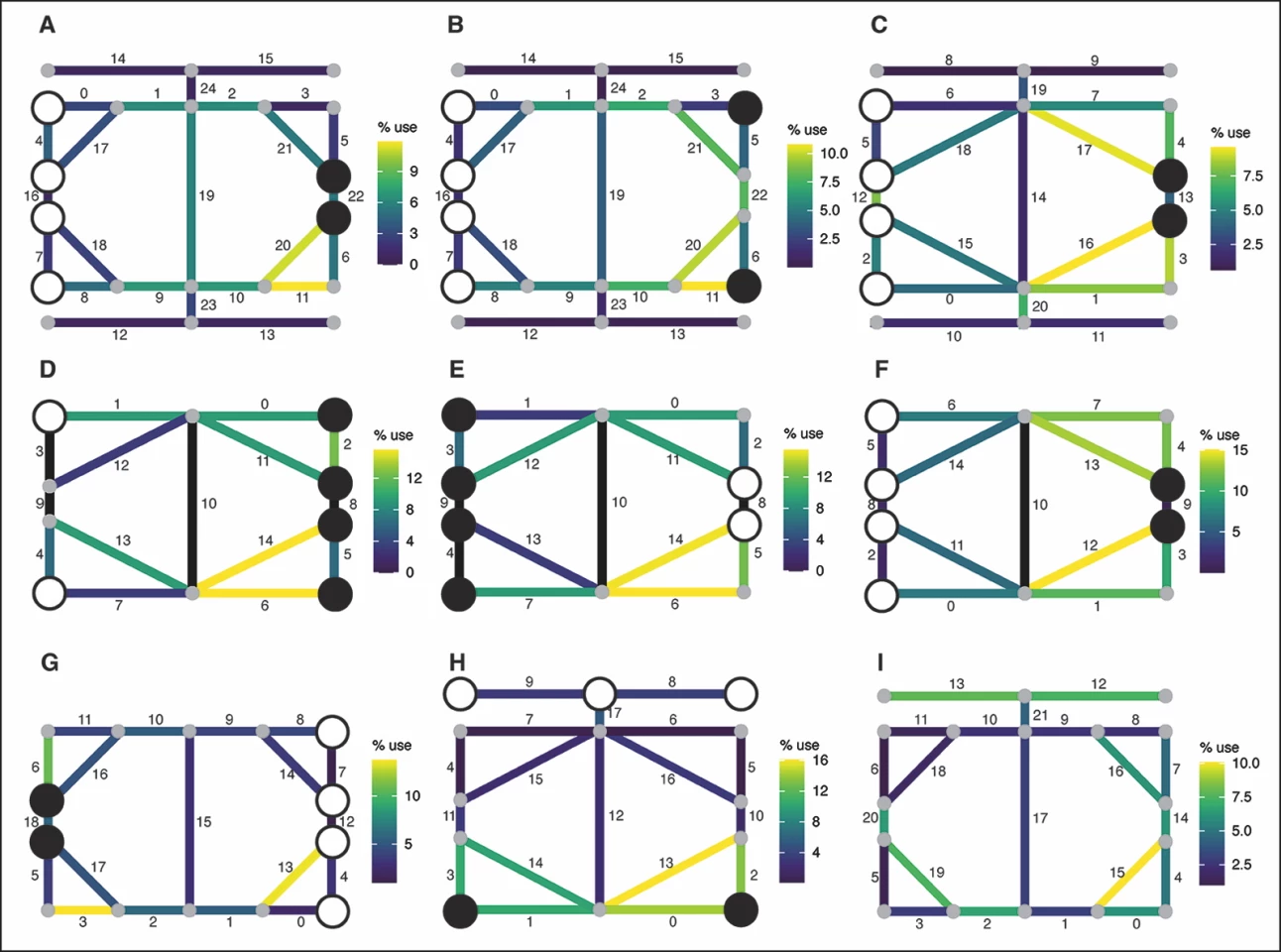
“We ran the simulations repeatedly, adjusting rules each time to see which movements would cause the same concentrated friction seen on the original stone,” said Matthew Stephenson, from Flinders University's College of Science and Engineering. “The simulations pointed strongly to a type of strategy game known as a blocking game. In blocking games, players try to trap their opponent’s pieces by preventing movement rather than capturing them.”
So what's the big deal? Well, we know very little about these kinds of blocking games before the Middle Ages, so AI could be a crucial tool in better understanding the past with the tools we have built for the future.
“This is the first time that AI-driven simulated play has been used together with archaeological methods to identify a board game,” said Crist. “It offers archaeologists a promising new tool for understanding ancient games that don’t resemble those known from surviving texts or artworks.”
Whether AI got this right or just found a pattern that suited the limestone markings, we may never know if it nailed the rulebook – but the huge team of researchers involved believe the bots managed what humans couldn't for nearly half a century.
“The success of this approach suggests that many other mysterious artefacts may hold hidden stories waiting to be uncovered with the help of modern technology,” said Stephenson. “It shows how AI can contribute to our understanding of materials that would otherwise be difficult to interpret.”
The research was published in the journal Antiquity.
Source: Flinders University