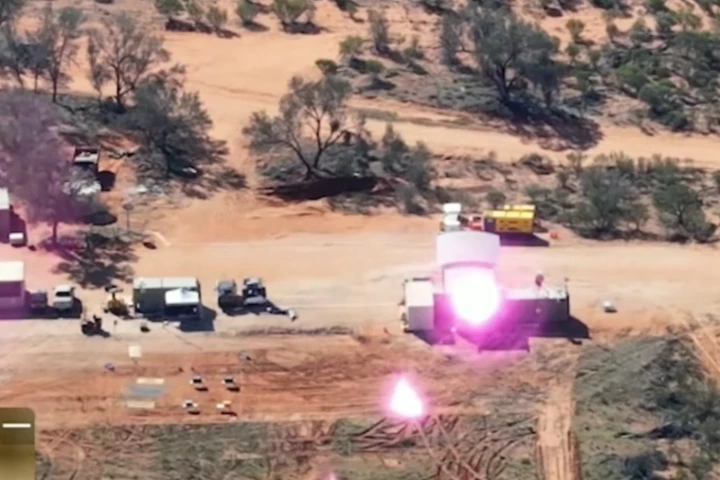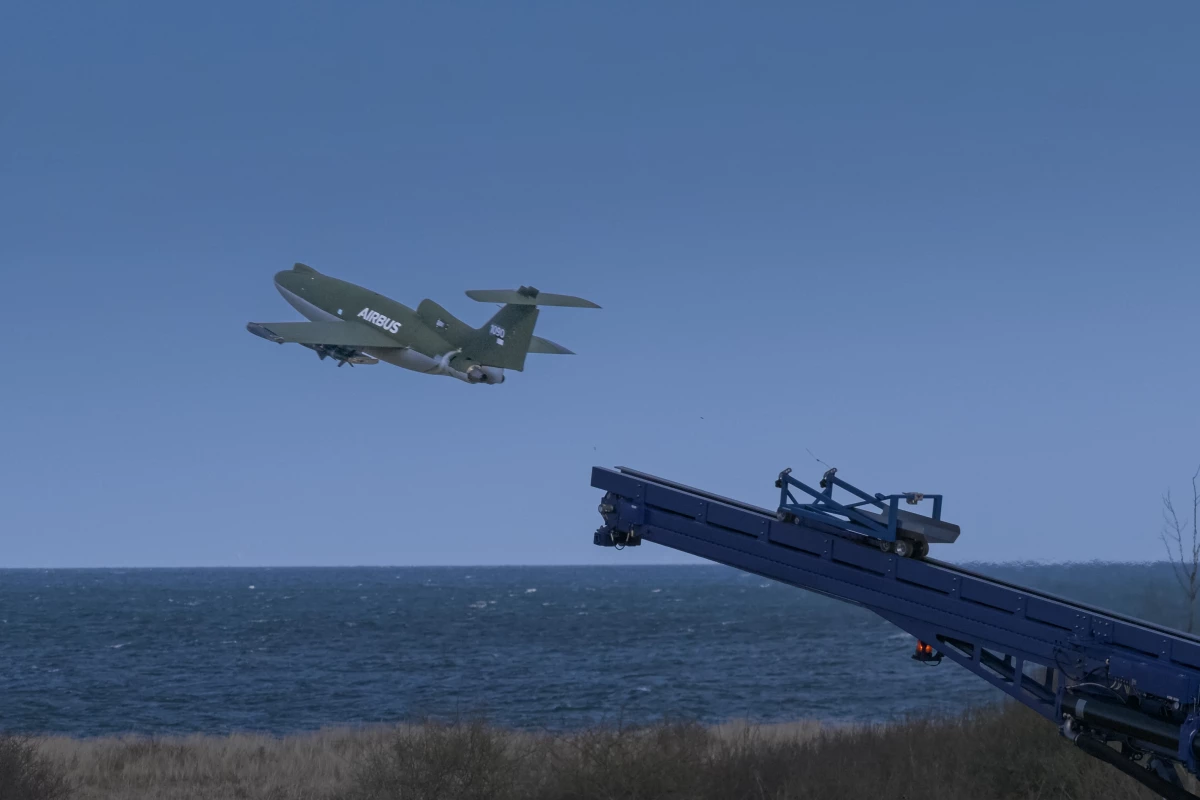



Like an overachieving fledgling falcon, on its inaugural flight an Airbus "Bird of Prey" interceptor drone took out a medium-sized suicide drone using a Fraknkenberg Mark I mini-missile during a demonstration on March 30, 2026 in northern Germany.
Based on a modified Airbus Do-DT25 target drone, the Bird of Prey isn't related to the earlier Airbus concept of the same name. Instead, it's a completely different aircraft made for a completely different purpose.
This Bird of Prey is not a hybrid electric passenger aircraft concept. It's a 10-ft (3-m) jet-powered drone with an 8-ft (2-m) wingspan, a takeoff weight of 352 lb (160 kg), and a top speed of 300 knots (345 mph, 555 km/h). With the ability to carry up to eight Mark I fire-and-forget missiles built by Estonian startup Frankenberg Technologies, it's designed to intercept hostile drones much more cheaply than much more expensive anti-aircraft/missile missile systems.
Successful first demo flight: Airbus’ uncrewed Bird of Prey interceptor autonomously engages kamikaze drone with @FrankenburgTech missile.
— Airbus Defence (@AirbusDefence) March 30, 2026
The Airbus 'Bird of Prey' is designed to seamlessly operate within NATO's integrated air defence architecture via established command and… pic.twitter.com/u3Yd5K9uSY
During the recent demonstration test, the Bird of Prey took off from a launch cradle, and once in the air was able to autonomously search for, detect, and classify a target drone standing in for a hostile. Final weapon release was done on order of a human operator.
According to Airbus, the Mark I is one of the smallest interceptor missiles, with a length of only 26 in (65 cm) and a weight of 4.4 lb (2 kg), including the fragmentation warhead. With a high-subsonic speed and a range of 0.9 miles (1.5 km), it's made specifically for dealing with the sort of medium-sized suicide drones that have become so prominent in recent conflicts.
In addition, during the demo the system seamlessly integrated into NATO's air defense architecture, with command and control maintained through the Airbus Integrated Battle Management System (IBMS).

Another point of pride for Airbus is the fact that the project took only nine months from conception to demonstration, which reflects the urgency put on developing new drone and anti-drone technologies. Further test flights are scheduled for 2026 as it progressed towards the goal of full operational capability.
"Against the current geopolitical and military backdrop, defending against kamikaze drones is a tactical priority that urgently needs to be tackled," said Mike Schoellhorn, CEO Airbus Defence and Space. "With our Bird of Prey and Frankenburg’s affordable Mark I missiles, we are providing armed forces with an effective, cost-efficient interceptor, filling a crucial capability gap in today’s asymmetric conflict theaters. The integration of Bird of Prey into Airbus’ air defense battle management suite IBMS acts as a force multiplier."
Source: Airbus