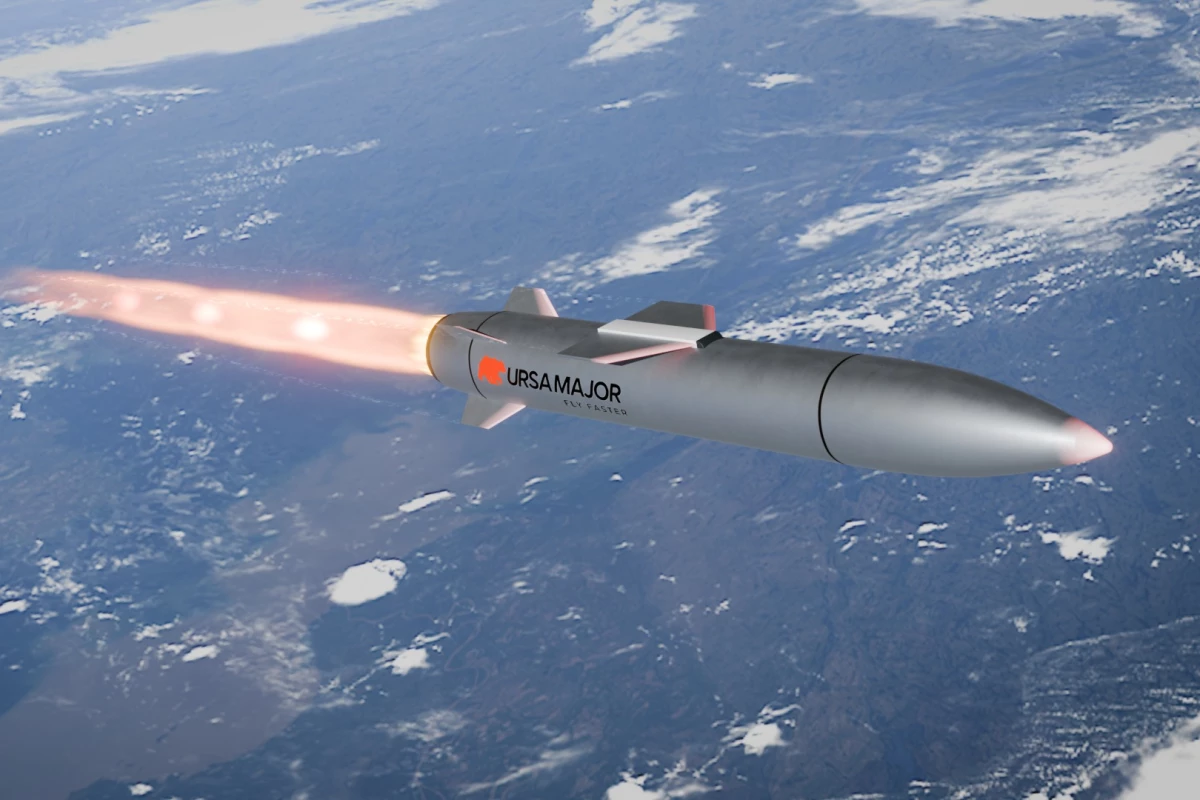
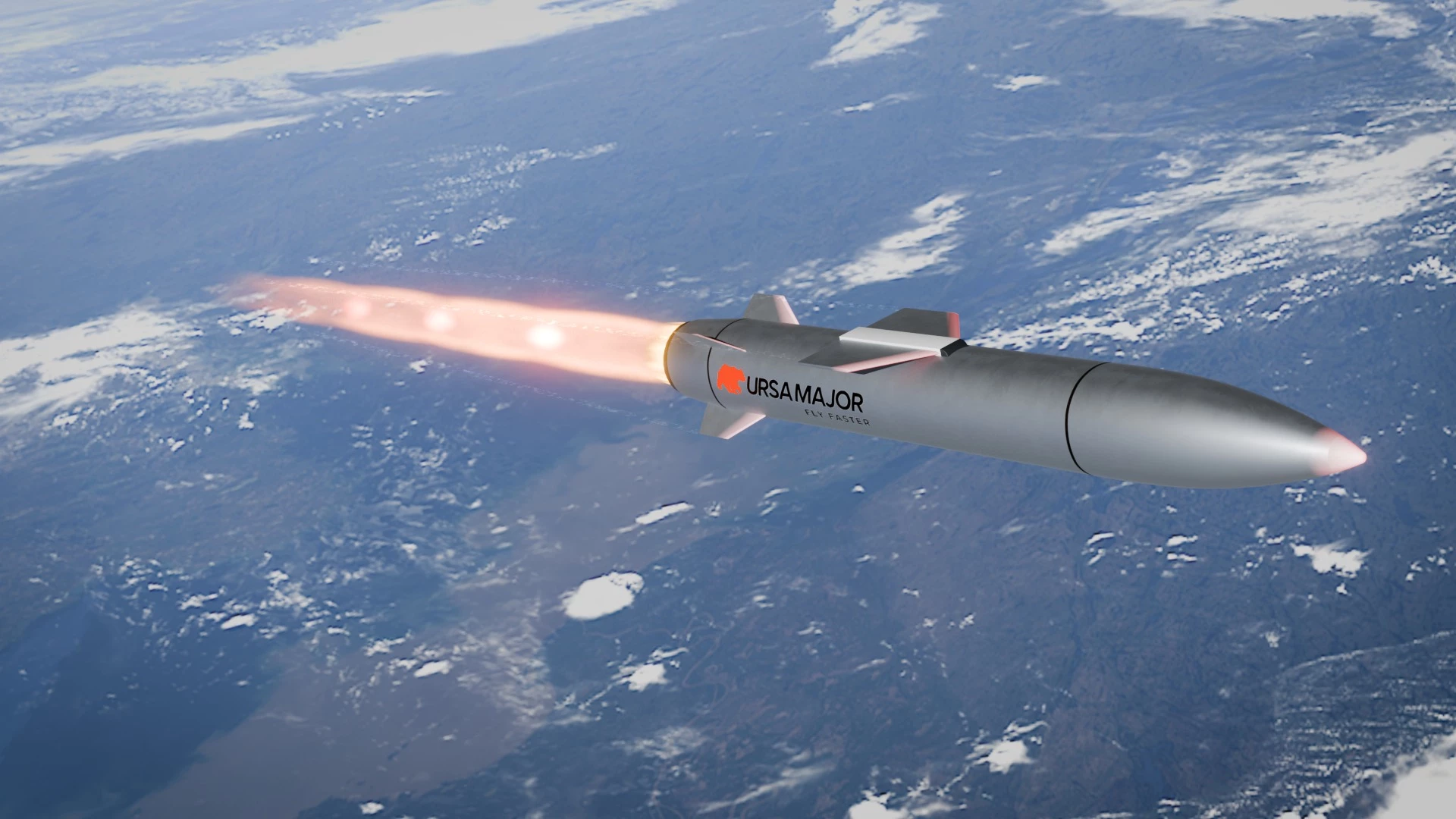

Aerospace and defense company Ursa Major aims to bring greater containment and control to hypersonic flight with its HAVOC missile – a medium-range vehicle capable of flying in excess of Mach 5, yet designed for low cost and high-volume production.
Hypersonic flight has made great strides in recent years, but programs have run up against a bottleneck when it comes to propulsion at the requisite velocities. Essentially, solutions have broken down into two alternatives.
The first is to drop the missile from a very great height and use gravity to accelerate it as it glides toward the Earth. The second is to use either a solid- or liquid-fueled rocket to boost the missile to speeds beyond five times the speed of sound, after which it can glide or sustain flight using a scramjet or similar engine.
These approaches work, but both leave much to be desired. The glide option is unpowered, with all the drawbacks that implies. Solid rocket boosters cannot be throttled or switched on and off – they’re essentially light-the-blue-touch-paper and that’s it. Meanwhile, liquid-fueled rockets are temperamental and often rely on cryogenic or highly toxic propellants, neither of which tolerate mishandling or long-term storage.
Ursa Major’s HAVOC missile, being developed with the US Air Force Research Laboratory (AFRL), seeks to address these limitations with the company’s Draper engine, which is a liquid-fueled system that uses a more benign pair of fuels and incorporates several design innovations.
Unlike many rocket engines used for hypersonic vehicles, the Draper engine runs on high-test hydrogen peroxide and kerosene. These propellants are non-cryogenic, stable at room temperature, and relatively non-toxic, allowing them to be stored more safely until needed.
The clever bit is when these fuels flow through the Draper engine and encounter a catalyst that decomposes the hydrogen peroxide into high-pressure oxygen and steam. The steam drives the engine’s turbopumps, while the oxygen combusts with the kerosene, with the mixture igniting spontaneously.
The result is a mechanically simpler engine that can be throttled and even shut down and restarted in flight, providing significantly greater flight flexibility. According to the company, the design also lends itself to large-scale manufacturing at lower cost, with more than 80% of its components produced via 3D printing. This reduces part count and shortens production timelines.
The HAVOC missile is claimed to do away with the need for expensive and complex thermal protection systems, resulting in further savings. Thanks to its modular design and compatibility with solid rocket boosters, it can be launched from fighters, bombers, vertical launch systems, and ground-based launchers.
So far, HAVOC has completed static testing, with flight tests scheduled for later this year.
"Keeping pace with our adversaries requires more than exquisite systems, it requires speed to delivery, affordability, and the ability to build at scale," said Chris Spagnoletti, CEO of Ursa Major. "The Ursa Major HAVOC Missile System delivers a highly capable hypersonic weapon designed from the start to be produced rapidly and in quantity, giving the warfighter a credible and adaptable capability."
Source: Ursa Major