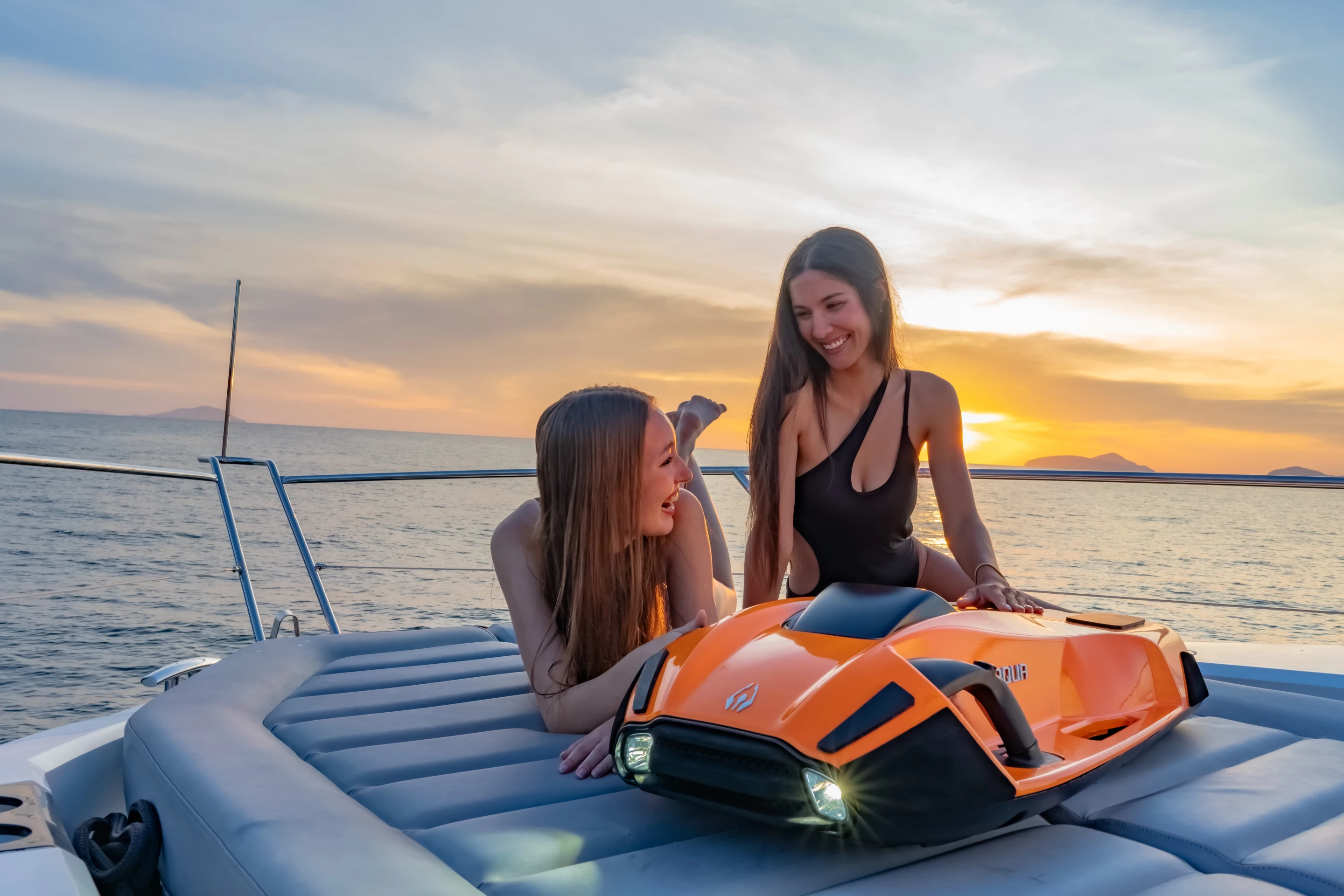

Sea scooters are often overlooked as pricey toys, but Aquaplane is aiming to change the narrative. Their latest models offer a serious power-to-price ratio, bringing industry-leading features and performance to value-focused divers and enthusiasts.
Electric sea scooters, also known as diving propulsion vehicles (or DPVs), have historically fallen into two distinct camps: the "glorified pool toy" that barely outpaces a leisurely swim, and the ultra-exclusive "yacht toy" that costs as much as a small car. If you wanted the kind of thrust that actually feels fun and exciting, you typically had to be comfortable with a five-figure price tag, and budget-oriented options have a reputation for poor reliability and underwhelming performance. For these reasons, sea scooters are often overlooked as a viable option for most recreational watersports enthusiasts.
Aquaplane is looking to disrupt that dynamic. Formerly known as iAqua, the company is already a veteran in the space with thousands of machines in operation globally. While they’ve built their reputation on the high-end yacht and professional dive circuits, their latest releases represent a serious attempt to bring professional-grade aquatic performance to a much broader audience.
Mantis: A New Value Benchmark
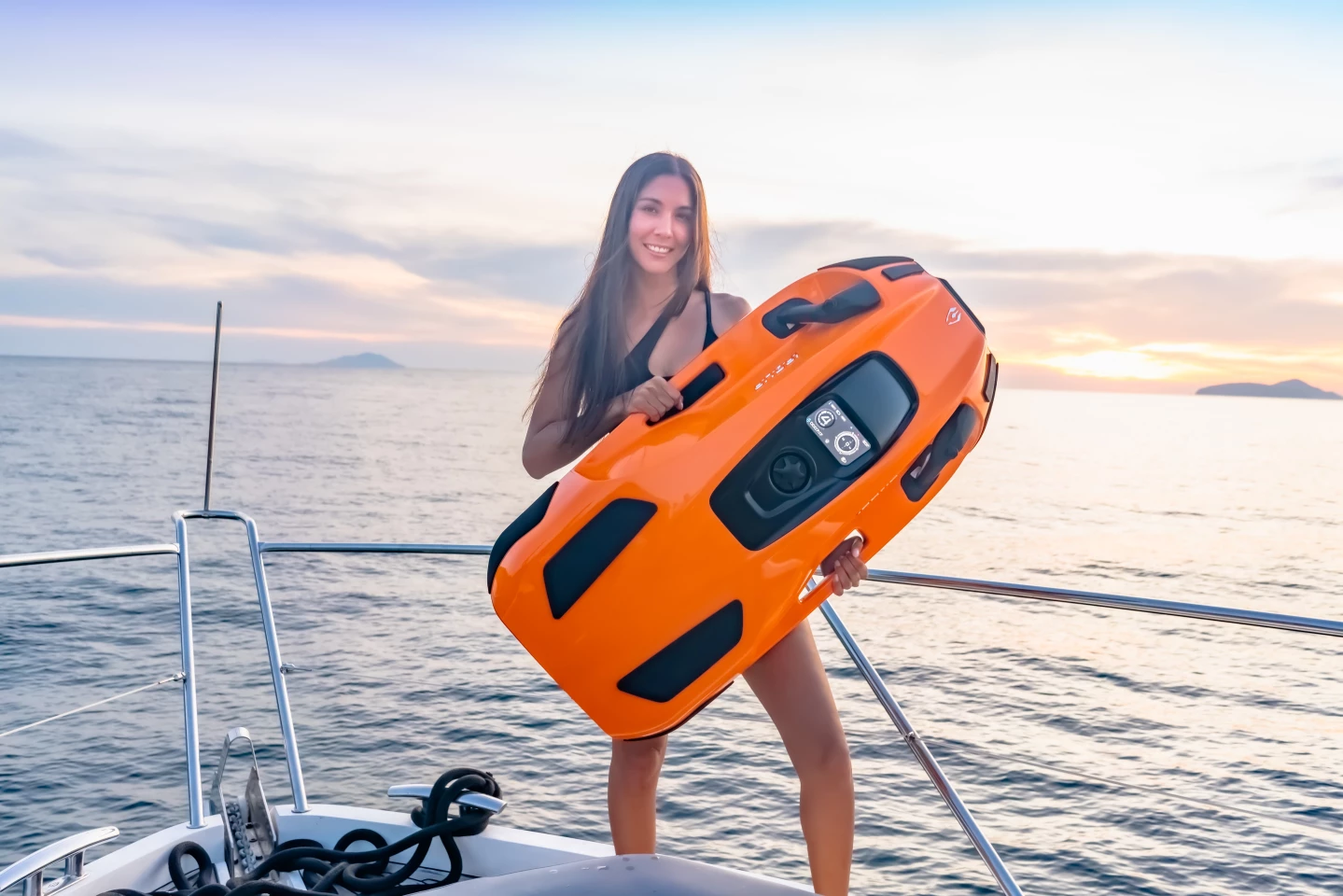
The Mantis is Aquaplane’s more affordable sea scooter, but calling it an "entry-level" model feels like a disservice. In the world of sea scooters, the Mantis is a heavyweight in terms of power, capable of outputting more than 10 times the thrust of a typical budget offering from Amazon, with more than 16 times the average battery capacity.
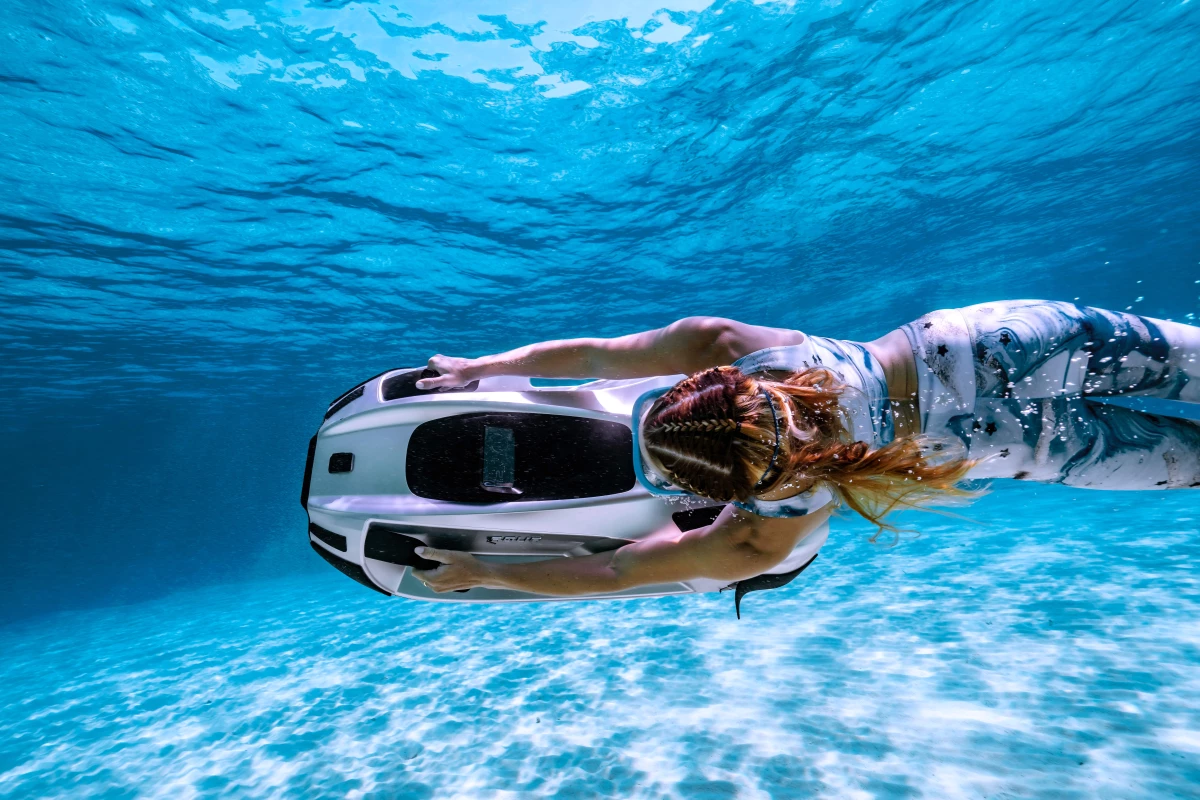
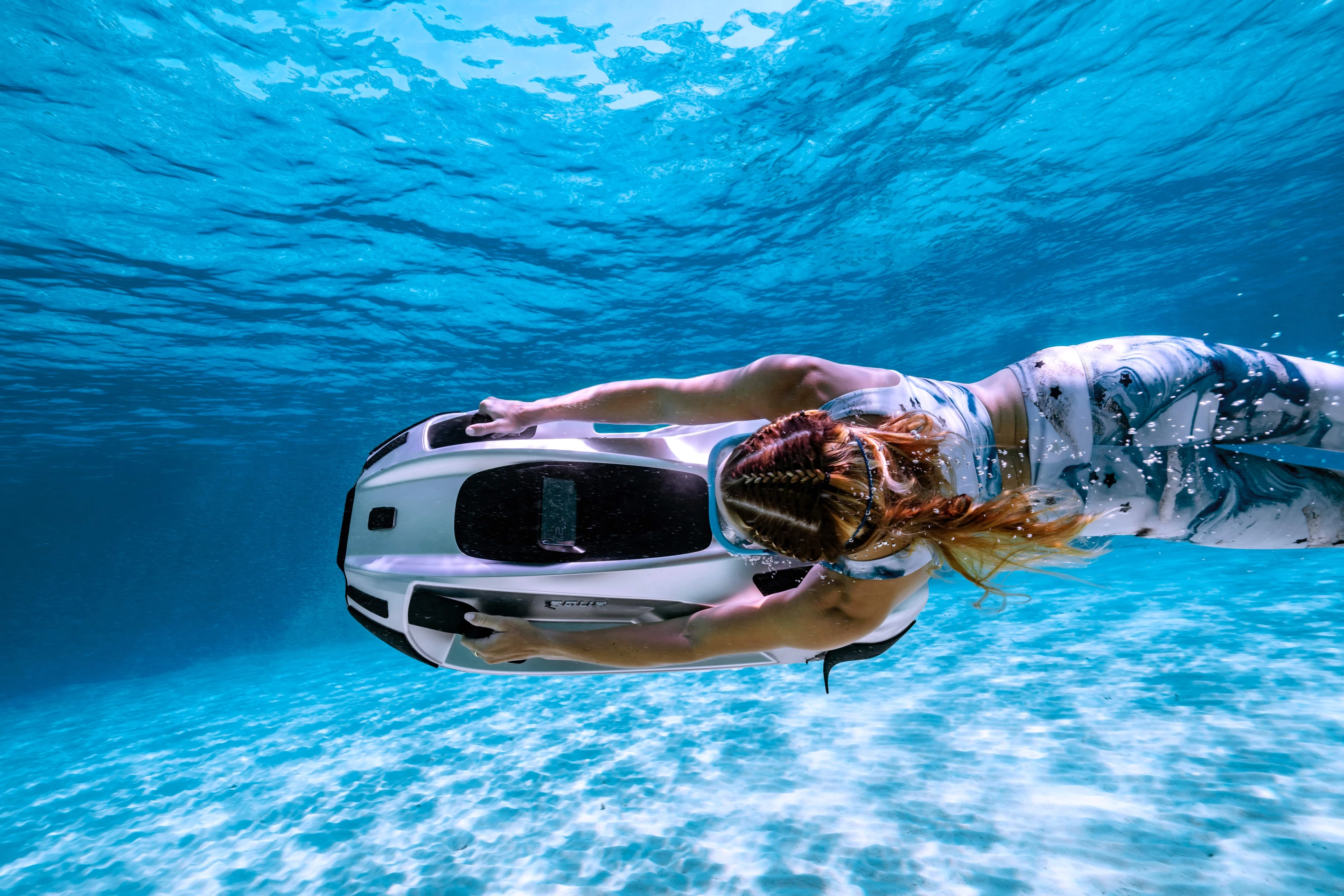
While sea scooters are often associated with underwater use, one of their main use cases is for surface-level transportation, which unlocks higher top speeds due to the decrease in drag forces. The Mantis can operate at speeds of nearly 14 miles per hour on the surface, which is over four times faster than the average swimming speed, allowing it to deliver a unique high-speed experience that no other water-based propulsion device can provide.
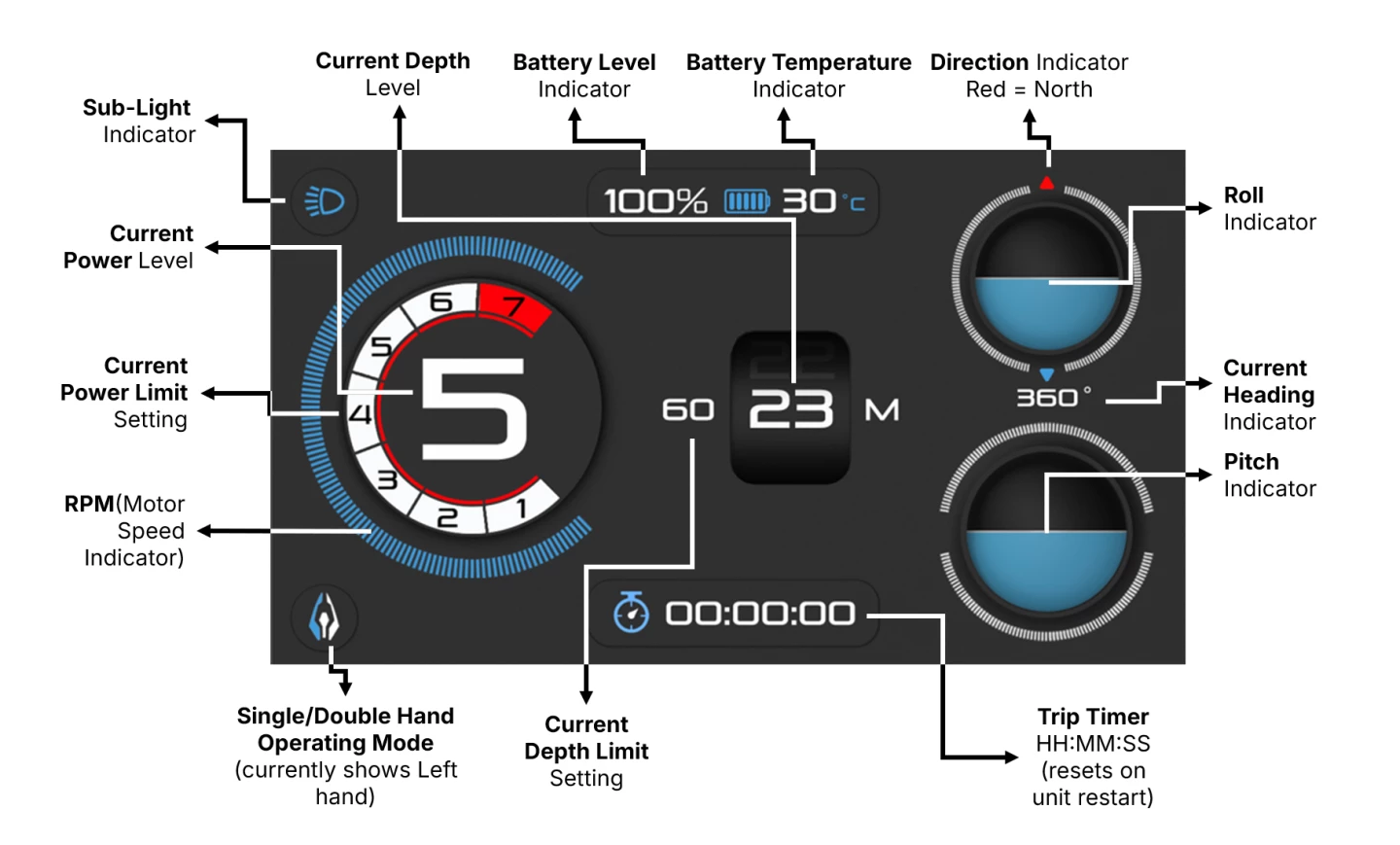
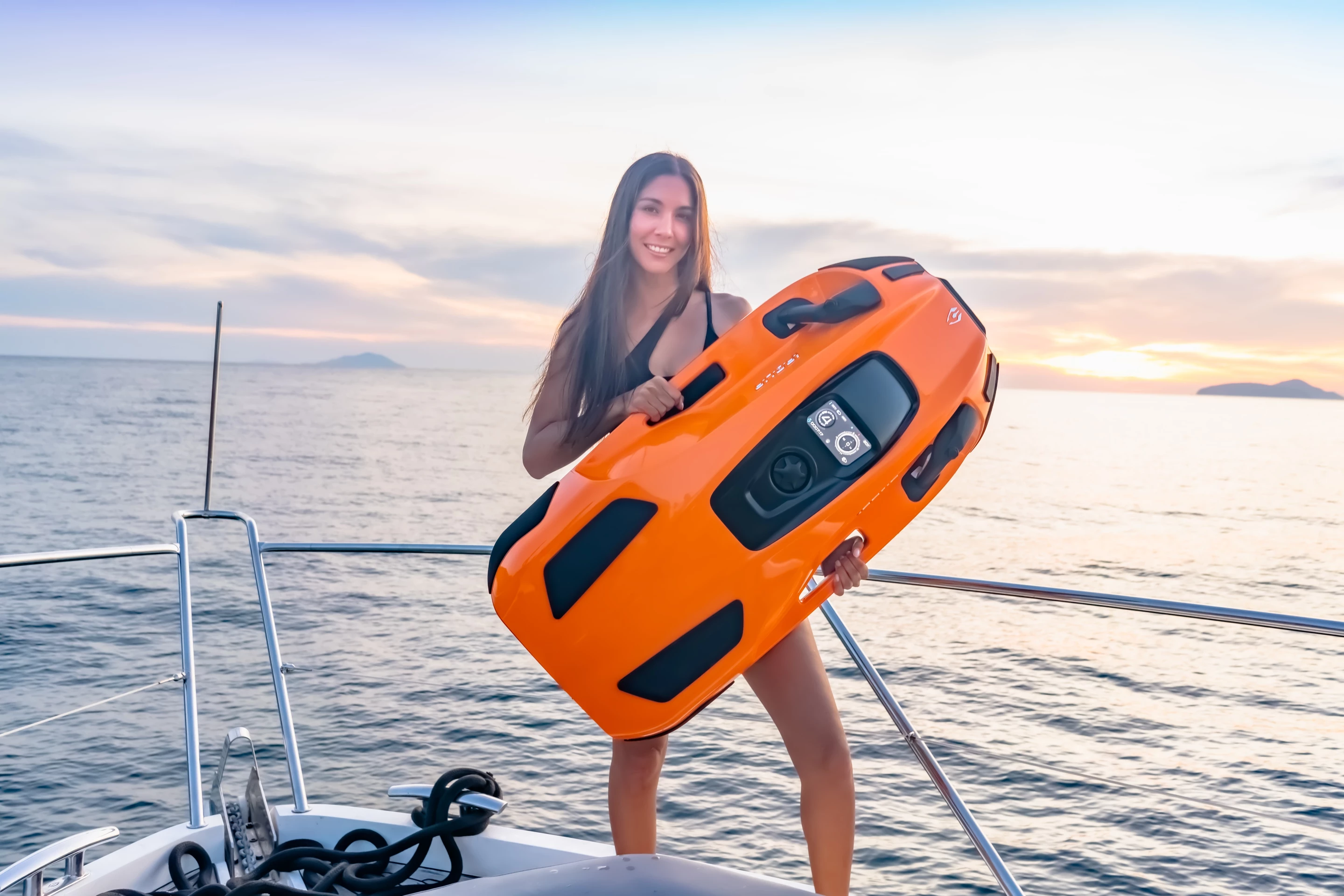
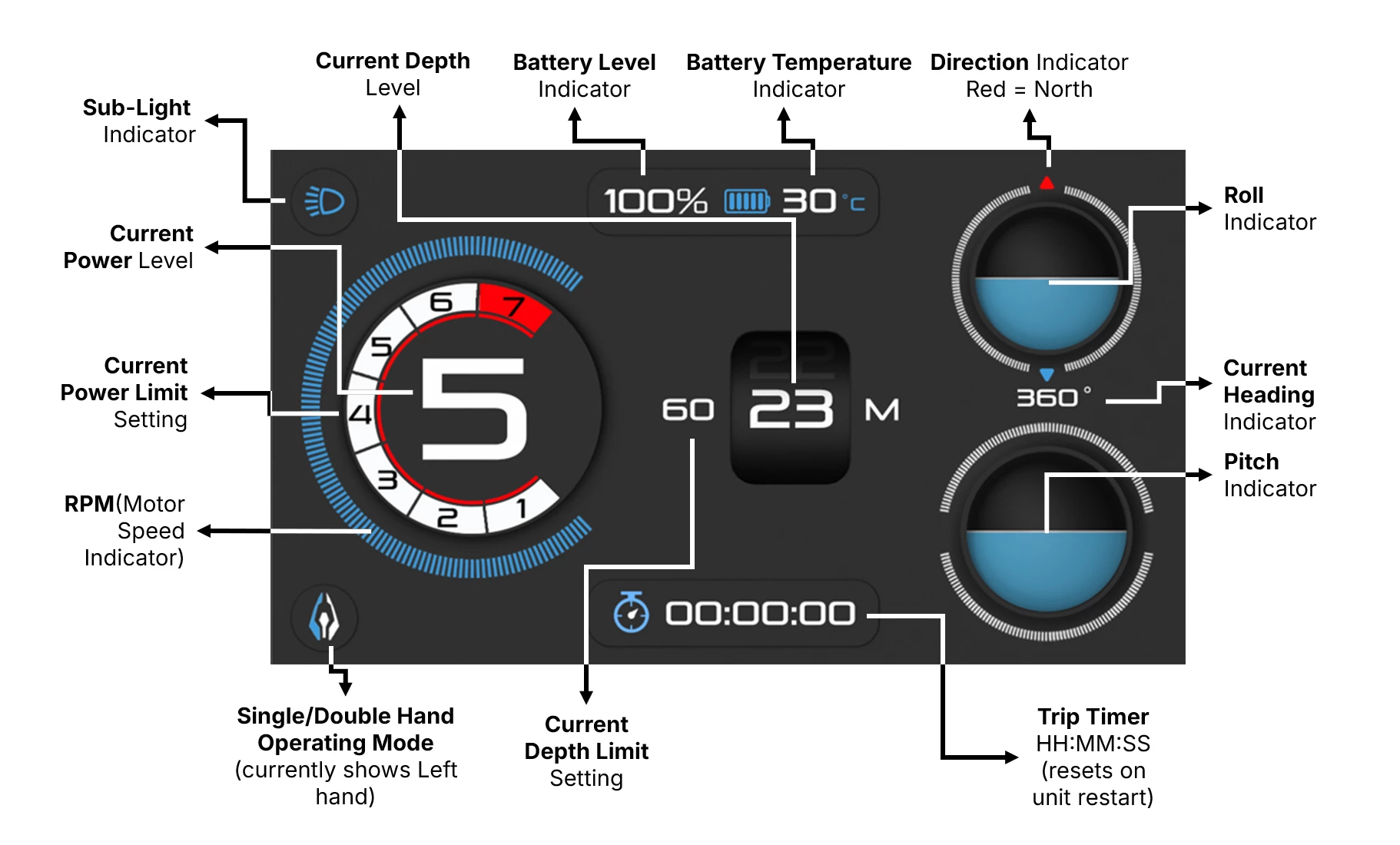
The Mantis also introduces a suite of helpful features that can’t be found anywhere else at its price point. The dashboard’s full-color interface provides a compass, attitude (pitch) indicator, and depth readings, as well as some other key information like the battery’s state of charge, a trip timer, and current power limits and consumption. Divers will also appreciate the adjustable depth limit, which can be set anywhere from 2 to 45 meters, a wider range than anything else on the market.
What’s most astounding about the Mantis is its price. The Mantis delivers this leap in performance and capabilities at less than half the cost of rival units with similar specs.
Barracuda: The Carbon Fiber Performance King
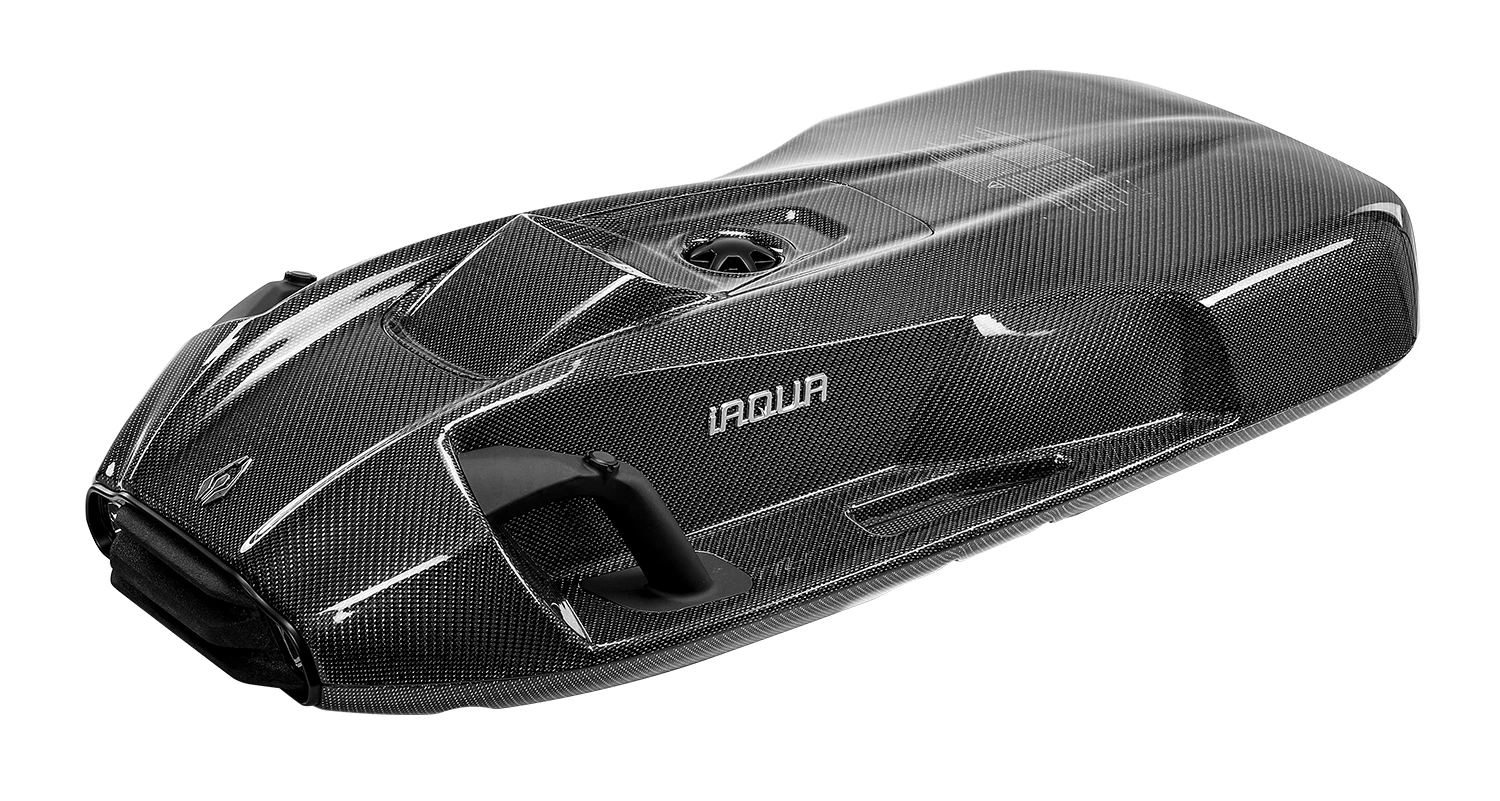
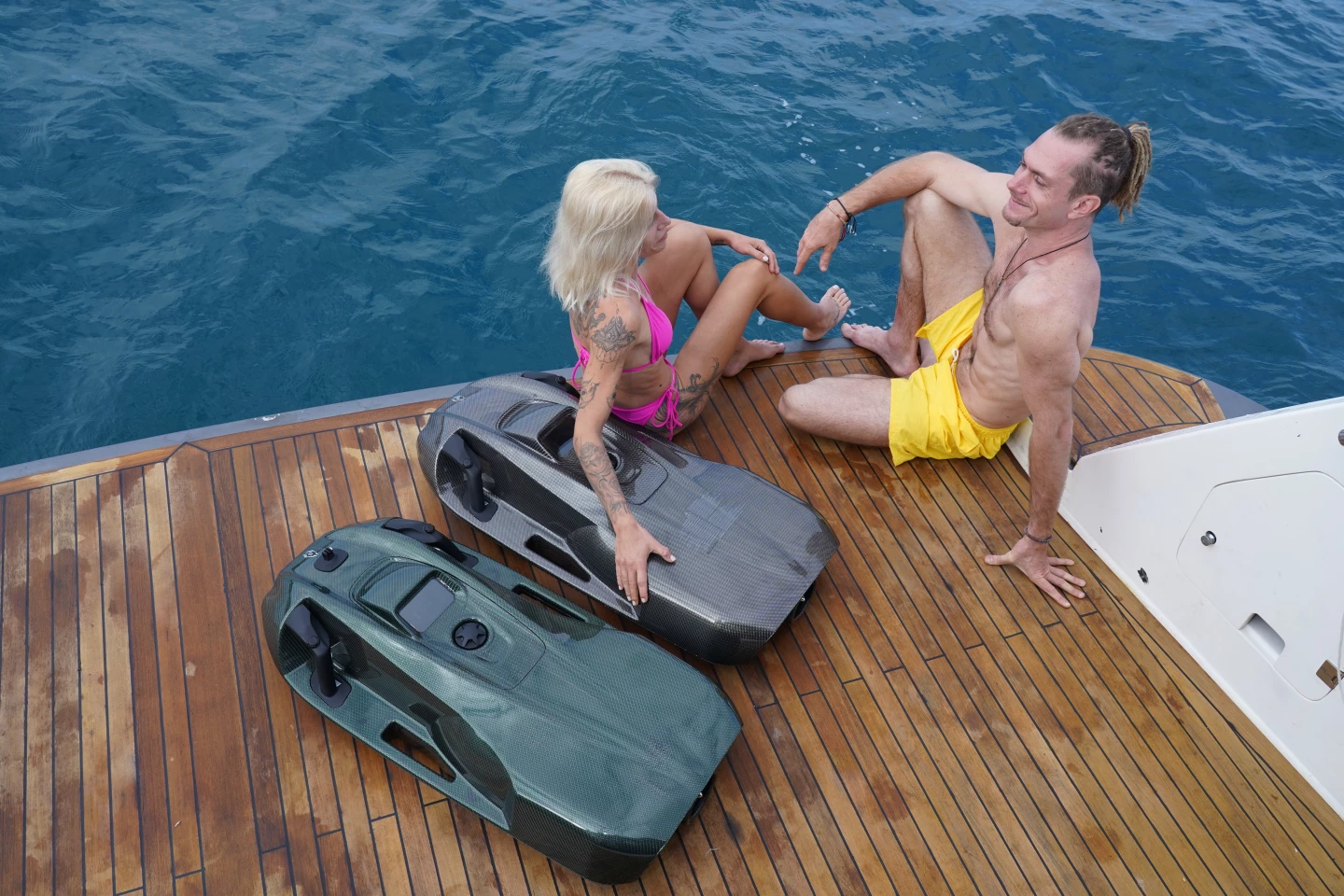
If the Mantis is the performance car for the masses, the Barracuda is the track-focused supercar. It currently holds the title of the world’s most powerful electric sea scooter, offering a 47 percent increase in power and a massive 68 percent increase in range compared to the competition, with a slight boost in top surface speed over the Mantis of 15 miles per hour.
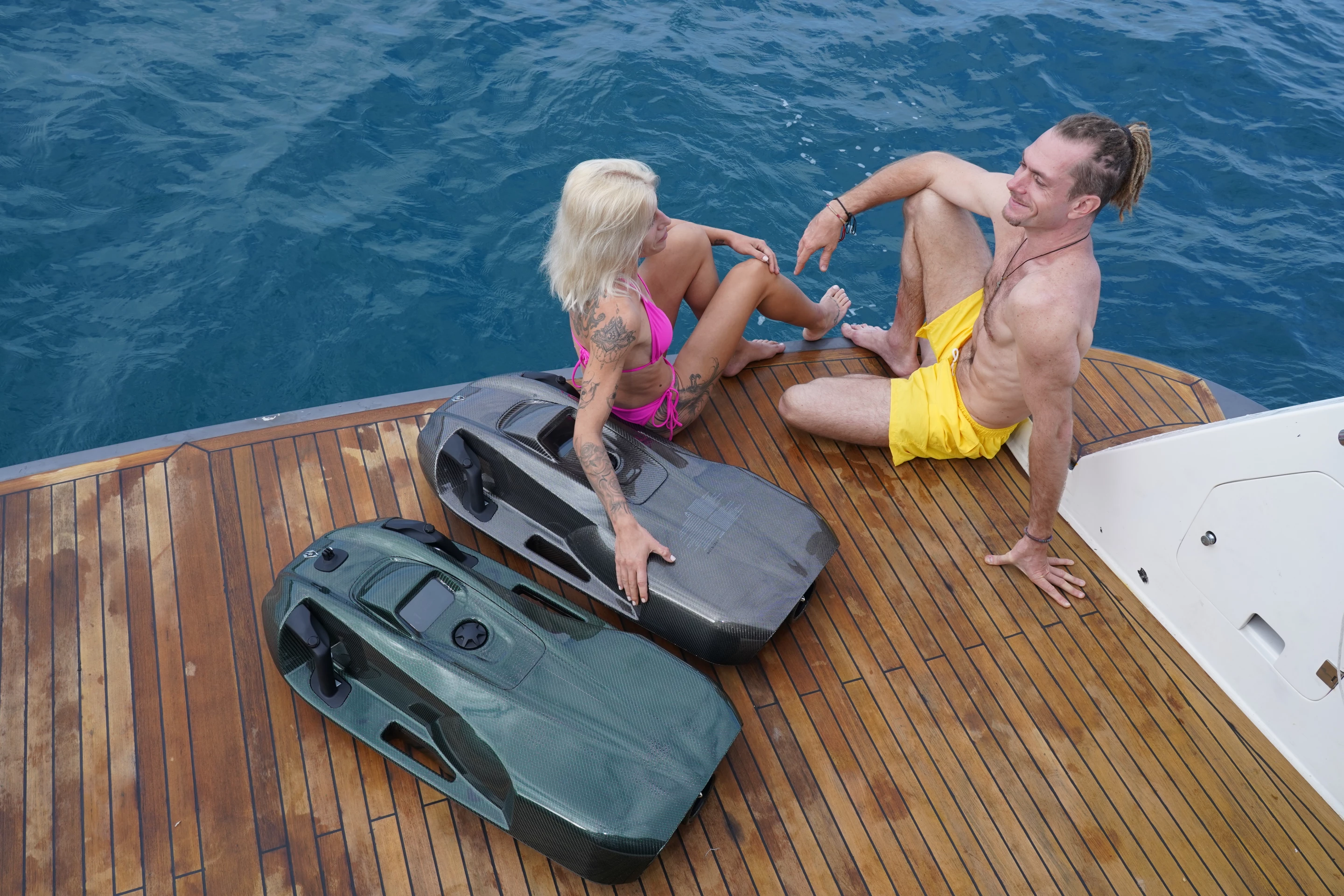
To handle that kind of grunt without tipping the scales, Aquaplane has utilized an automotive-grade carbon fiber hull. This keeps the unit remarkably rigid and manageable out of the water, and its hydrodynamic shape minimizes drag when you're riding at full tilt.
The Barracuda inherits all the navigation and safety tech of the Mantis but adds a "7th Gear" performance mode. Enabling this final power level provides a surge of thrust that is nothing short of exhilarating. It's the closest most of us will ever get to feeling like a torpedo!
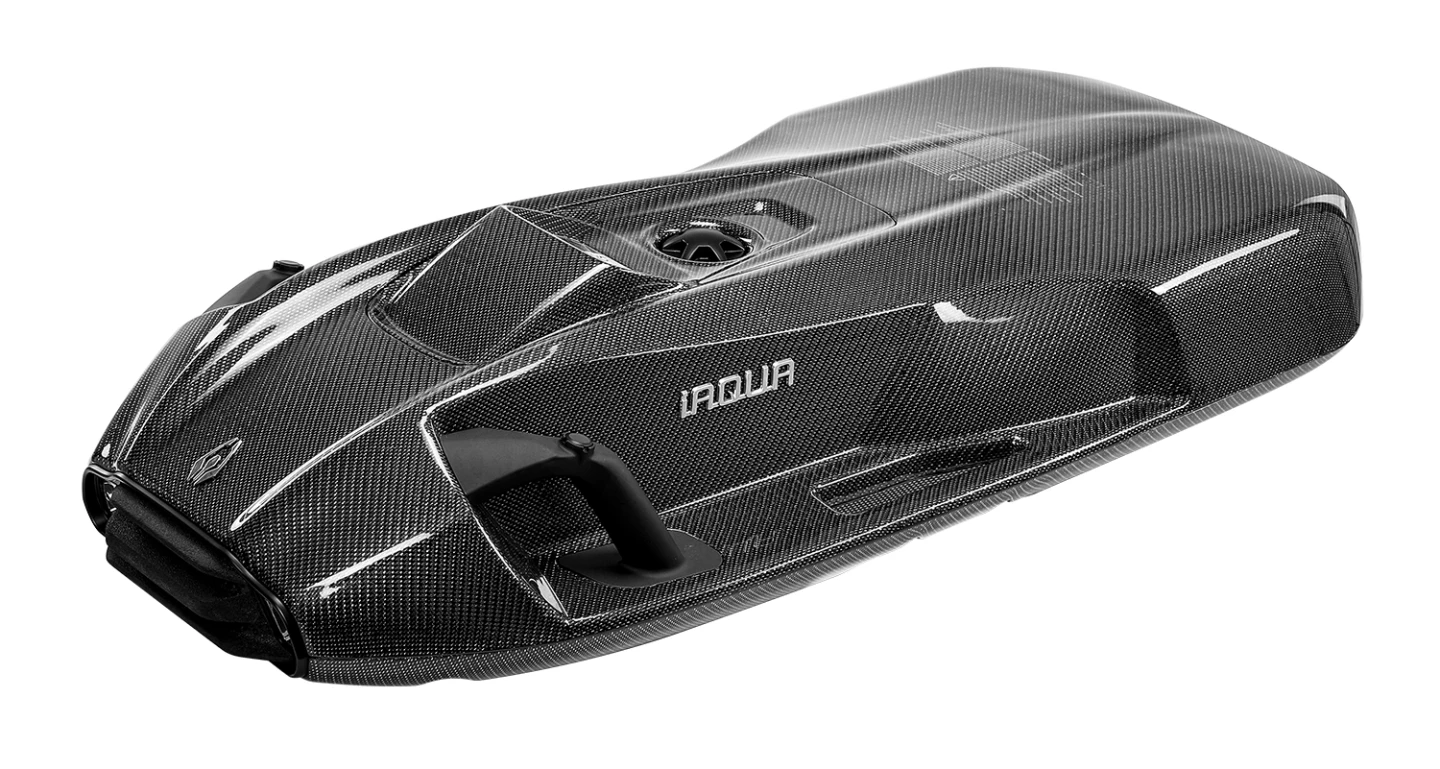
One of the smartest design choices unique to the Barracuda is the ability to switch between two-hand and one-hand operation on the fly. For a casual snorkeler, two-hand operation is great for stability and safety, allowing for immediate motor disengagement should the rider let go of one of the handles. For divers, however, the one-hand mode is a game changer. It frees up your other hand to equalize your ears or interact with other dive equipment without having to pause mid-dive.
Other Features & Lighting
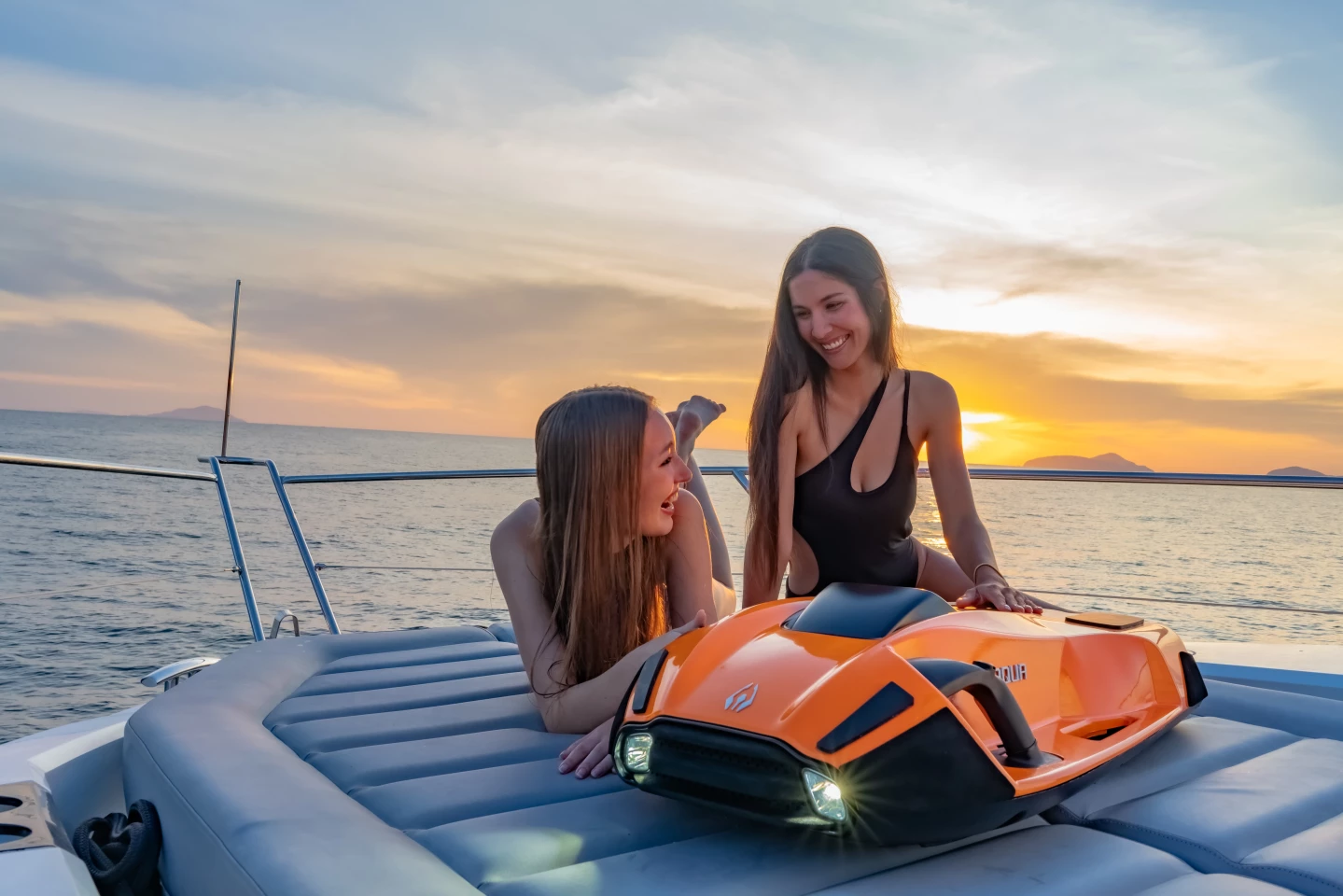
Both new Aquaplane models are designed to have slightly positive buoyancy, to reduce fatigue while resting, and to keep the unit afloat should it become separated from the rider. However, an optional neutral-buoyancy weight kit accessory will be available, which is helpful for divers who prefer the unit to stay put underwater during a long dive.
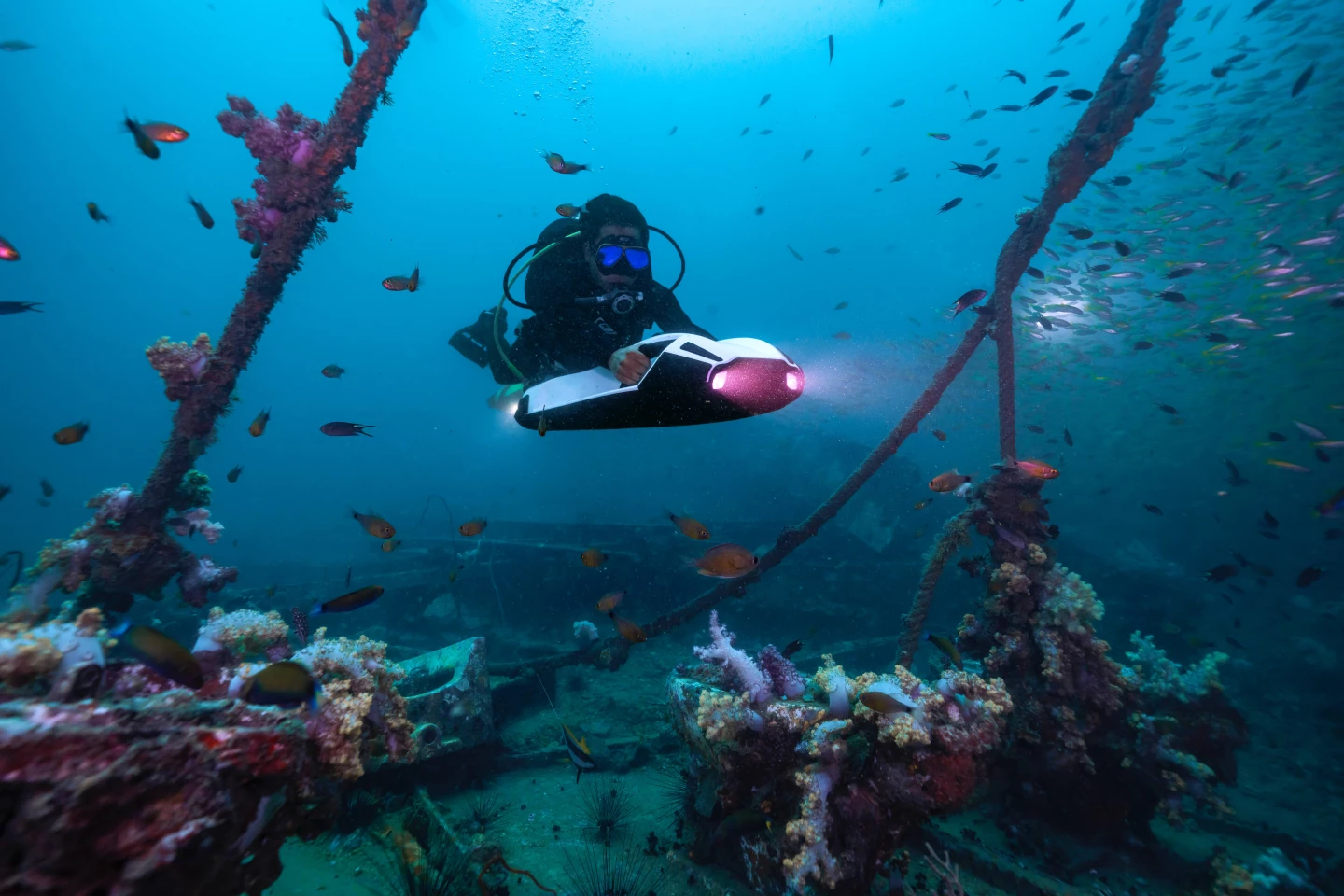
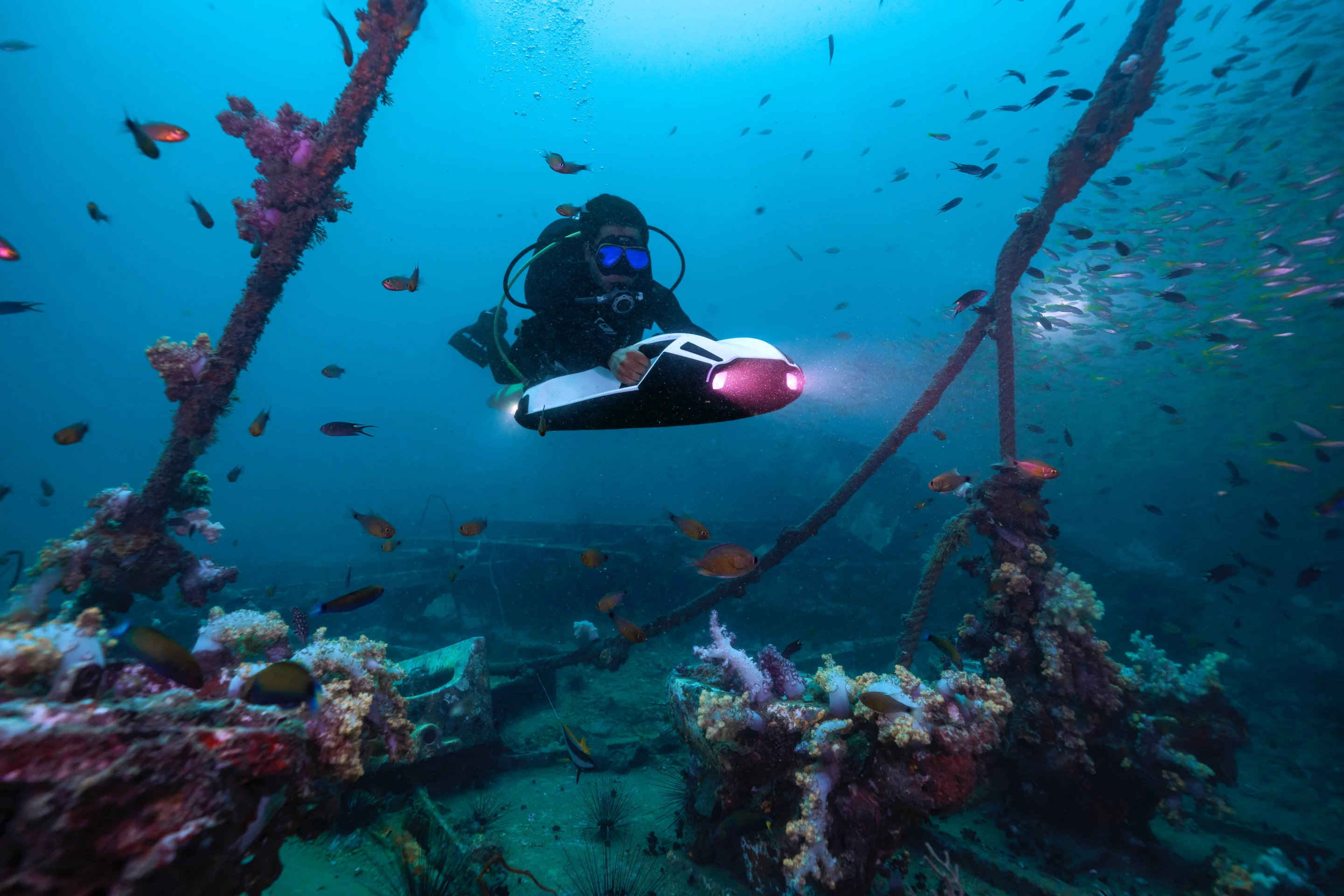
They also come equipped with dual 1200-lumen headlights. While many scooters treat lighting as an afterthought, offering either a single weak LED or no lighting at all, the Aquaplane setup is genuinely useful for underwater cave exploration, night dives, and other limited-visibility situations. The beams are wide enough to illuminate your entire field of vision, which adds a significant layer of safety when navigating tighter underwater structures. Also included are a pair of bright red taillights that signal your location to other divers around you, and which allow for easier group navigation when multiple sea scooters are in use.
The Verdict
It’s rare to see a company move from a niche luxury market into a more accessible space without stripping away features or performance. Aquaplane hasn't done that. Instead, they’ve leveraged their years of experience in the yachting world to create the next generation of sea scooters that feel over-engineered in the best way possible.
At $6,999, the Mantis is likely going to be the "sweet spot" for most enthusiasts, as it offers world-class specs at an unbeatable price point. But for those who refuse to compromise on range, speed, or build quality, the Barracuda stands alone at the top of the food chain, still beating out the competition on price at $12,999.
Whether you're scouting new dive sites or just want to turn a standard snorkeling trip into a high-speed adventure, Aquaplane’s new sea scooters are a clear first pick.