
Medical Imaging
-
 Updating an ancient form of health diagnosis with modern machine learning, researchers have developed a remarkable system that can reveal a range of medical conditions including asthma and diabetes just by looking at your tongue. It aced its tests.
 -
 A new kind of 3D display could take the form of an acrylic cube with an image inside, which can be erased and rewritten to easily. The new technique can be used to make 2D, 3D and even animated images.
 -
 OmniVision has announced that its OV6948 unit has been declared the world's smallest commercially available image sensor by Guinness World Records. And the company has now squeezed it into a new camera module.
 -
 Artificial Intelligence promises to revolutionize many fields, but few as important as healthcare. With that in mind, Nvidia and King's College London have teamed up to build and train an AI platform to interpret radiological scans for hospitals across the UK.
 -
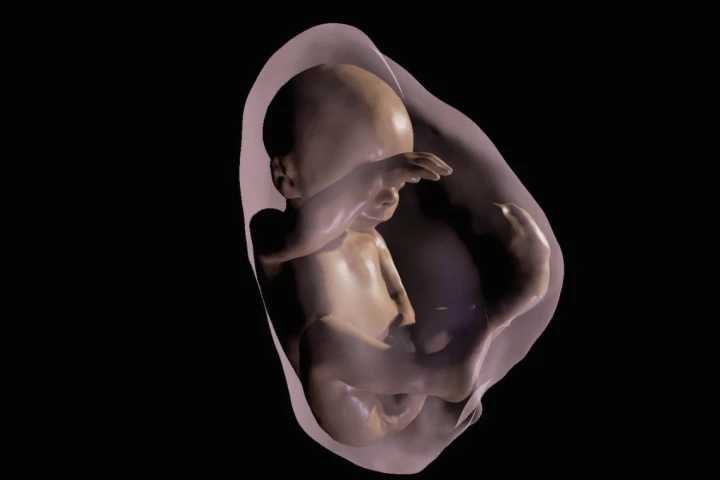 Scientists have used a mix of MRI, ultrasound and VR to produce 3D models of fetuses, a technology that could be used to avoid complications when it comes time to welcome them into the real world.
 -
 Scientists have created a new multi-layered nanoparticle that effectively converts low-energy light into high-energy light, which may help drive more efficient energy harvesting, novel bio-imaging techniques and superior anti-counterfeit protection.
 -
 Gizmag reveals the winners of the World Technology Summit & Awards 2012.
 -
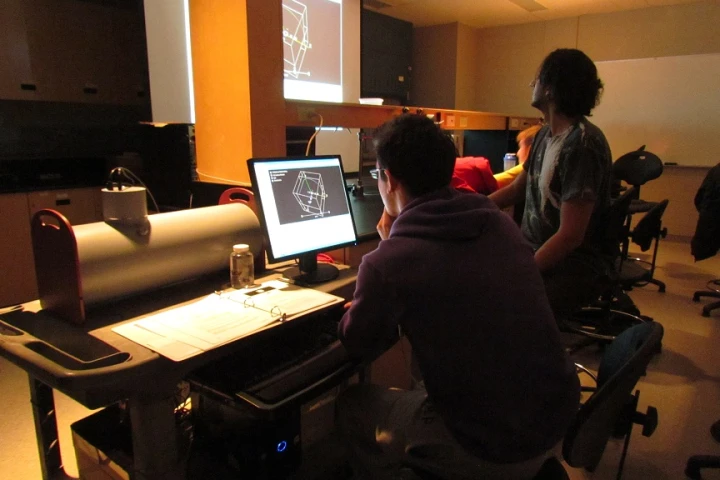 DeskCAT is a miniature visible-light CT scanner, designed for use in medical school classrooms.
 -
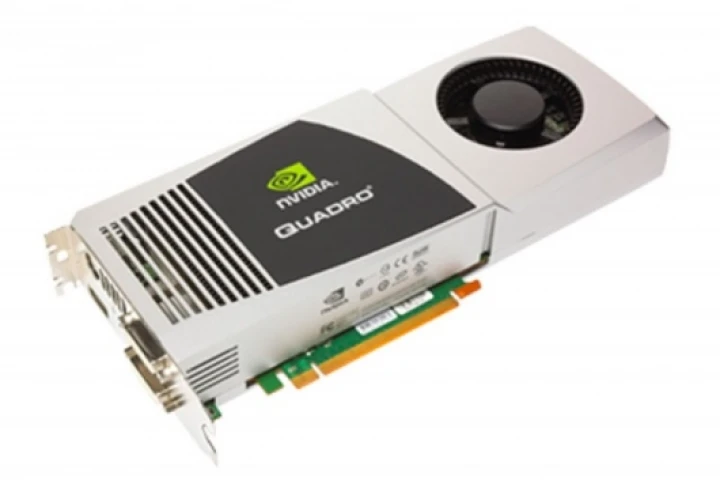 Launched under the by-line of "the most powerful professional graphics card in graphics history", NVIDIA 's new flagship Quadro FX 5800 graphics card features up to 240 CUDA programmable parallel cores and world first 4GB GDDR3 GPU Memory offering bandwidth up to 102GB/sec.
 -
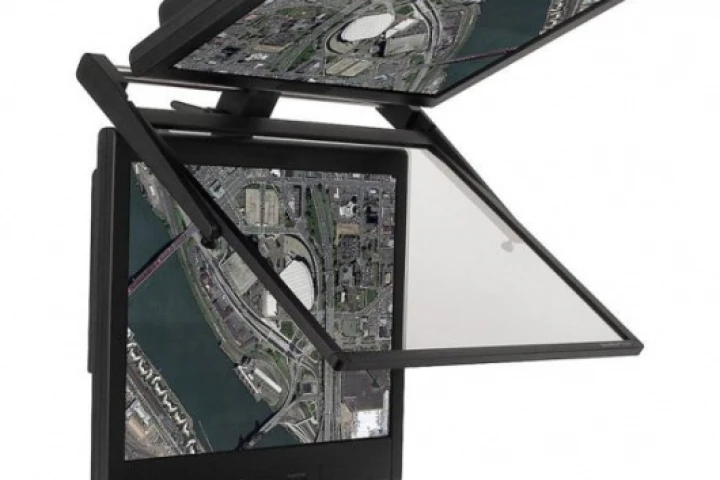 September 14, 2005 Constituting the very latest in stereoscopic 3D technology is the SD1710 from Planar Systems. Designed to address imaging applications in geo