
Quantum Information
-
 The world’s longest quantum communications link has been set up between China and South Africa, spanning a record-breaking 12,900 km (8,015 miles). The connection takes advantage of quantum physics for “unbreakable” encryption.
 -
 In the last several days, headlines have been plastered all over the internet regarding Chinese researchers using D-Wave quantum computers to hack RSA, AES, and "military-grade encryption." This is true and not true.
 -
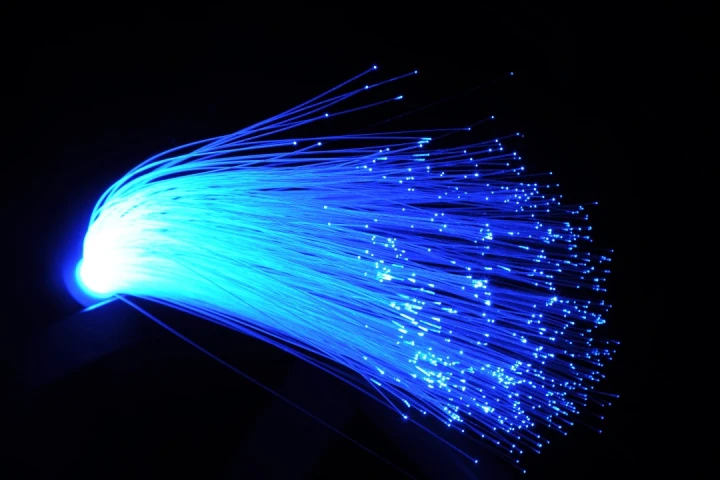 Fiber optics allows for ultra-fast communication systems, and more data can be crammed in by "twisting" the light. Now, Australian researchers have developed a device to decode beams that’s small enough to fit over the end of a fiber optic cable.
 -
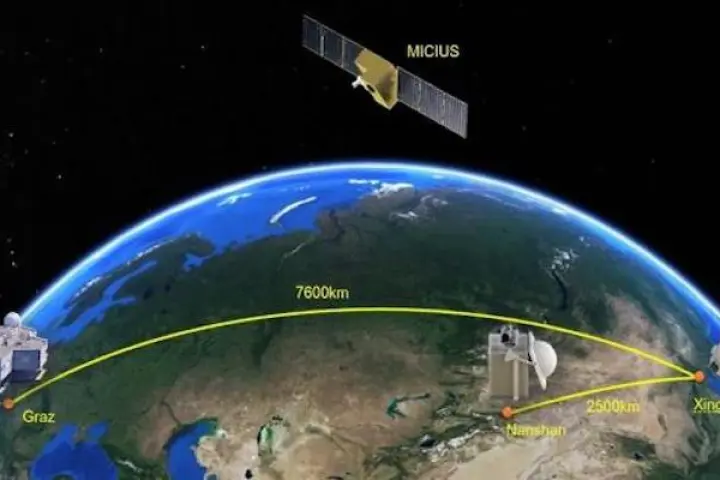 Quantum encryption can make data breaches literally impossible, and in a new demonstration of that kind of security, scientists have now used the Chinese satellite Micius to send quantum-encrypted data between China and Austria. That brings the world another step closer to a global quantum internet.
 -
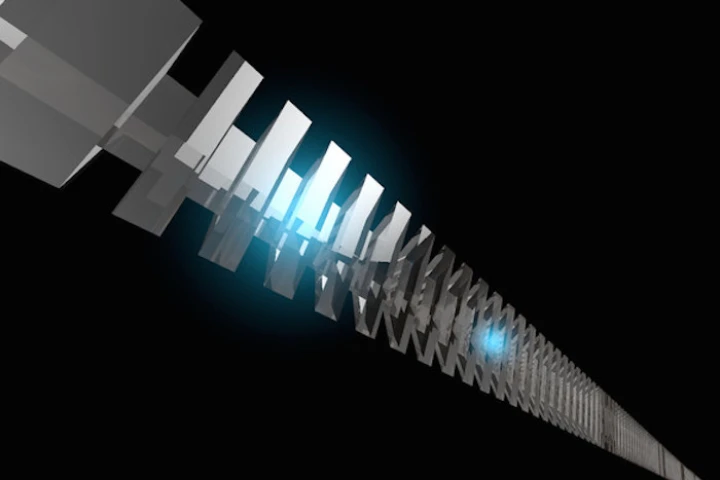 Researchers at Caltech have developed a computer chip that can store quantum information in the form of light, at the nanoscale. The breakthrough is the latest step towards quantum computers and networks, which would allow information to be processed and transmitted faster and with smaller devices.
 -
 Quantum encryption could make for much less hackable communication networks. But for it to really take off it needs to work out in the real world, among other signals and natural air turbulence. Now, researchers have successfully sent a message with 4D quantum encryption between two rooftops.
 -
 Researchers at the University of New South Wales have each achieved records in processing quantum data with an accuracy above 99 percent and the storage of coherent quantum information for more than thirty seconds, both of which are essential for creating future super-fast quantum computers.