
University of Michigan
-
 A new computer processor called Morpheus thwarts hackers by randomly changing its microarchitecture every few milliseconds. The puzzling processor has now aced major tests, repelling hundreds of professional hackers in a DARPA security challenge.
 -
 Scientists have now demonstrated a new type of artificial photosynthesis technology that can not only produce clean hydrogen fuel, but undergo morphological changes during use that makes it become more efficient over time.
 -
 Researchers have developed a kind of electronic “invisible ink” that can alert users to unauthorized tampering with a device. When the chip is exposed to light it will erase information printed on it, making it clear that someone’s opened the box.
 -
 Scientists have demonstrated a multifunctional battery that doubles as the structural material of a scorpion-shaped robot. They estimate this technology could provide future robots with as much as 72 times the power of current configurations.
 -
 Although robotic prosthetic legs do have some advantages over their conventional counterparts, they also have some drawbacks that keep them from entering wider use. A new prototype prosthesis, however, addresses some of those shortcomings.
 -
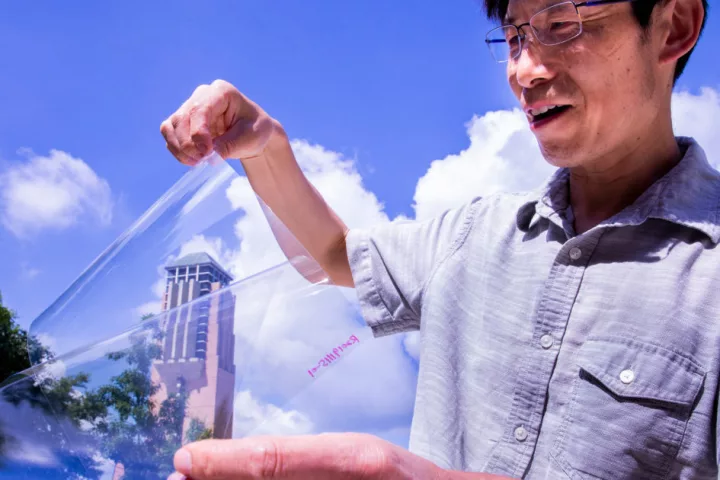 Scientists have long hoped to give plastic conductive properties by adding extra materials, and one team of researchers has now put forward a promising possibility its hoped could find uses in large touchscreens or window-mounted solar cells.
 -
 As a recent study indicated, aerial delivery drones aren't always as energy-efficient as ground-based transport. We may therefore be seeing more wheeled delivery robots, such as the rather cool-looking and increasingly in-demand REV-1.
 -
 Lithium-ion batteries degrade over time, but there are ways you can make them last longer. A team at the University of Michigan, Ann Arbor, has put together a list of best practices to preserve the life of lithium-ion batteries as long as possible.
 -
 Scientists at the University of Michigan have demonstrated an octocopter equipped with a nail gun and a knack for fixing asphalt shingles to a mock rooftop.
 -
 Electronic devices are made possible thanks to rare-Earth metals, but these are rare and relatively expensive. Now, scientists have found a way to combine common elements into electronically-useful compounds, which could find their way into tunable lighting and solar panels.
 -
 "World’s smallest computer” is a contentious title, not just because scientists are racing to shrink devices, but because the very definition of a computer could be up for debate. The latest claim to the title is a tiny device that communicates through light and makes a grain of rice look gigantic.
 -
 Our phones follow us everywhere – which often puts them in the line of fire for spilt drinks or rain. But now a team at the University of Michigan has developed a durable, clear coating that could help phones – or any surface, for that matter – repel almost any liquid.
Load More