
If you have a regional turboprop aircraft and wish that it was a bit more hybirdy, RTX may be able to accommodate you. The company is developing a combined thermal/electric propulsion system that not only increases efficiency but can be retrofitted into existing aircraft.
With their high torque, extreme efficiency, and zero emissions, electric motors seem like an attractive option for aircraft propulsion. Unfortunately, they also have disadvantages that currently restrict them to niche applications such as very small commuter aircraft carrying only a few passengers or limited cargo.
The main issue is energy density. Internal combustion engines use fuel with an energy density at least 20 times greater than electric batteries per unit of mass. As a result, a large portion of an electric aircraft’s weight and payload capacity would be taken up by batteries, restricting most all-electric designs to ranges of less than 150 nm (172 miles, 278 km).
Worse. Batteries are dead weight. As a conventional aircraft burns fuel, it becomes lighter during flight, improving range and efficiency. An electric aircraft, however, remains the same weight from takeoff to landing, meaning much of the remaining charge is spent simply carrying the batteries themselves. Thermal management challenges and the strain on ground-based charging infrastructure add further complications.
Electric propulsion still has clear advantages, though. The question is how to take advantage of them without sacrificing performance.
To explore this, RTX subsidiary Pratt & Whitney Canada is working with Collins Aerospace and the Canadian government to develop a hybrid turboprop engine for medium-sized regional aircraft. The RTX Hybrid-Electric Flight Demonstrator reached a significant milestone on March 3, 2026, when its integrated propulsion system and batteries successfully operated at full power in a test cell in Longueuil, Quebec.
For those familiar with automotive hybrids, this system works differently from designs used in vehicles like the Toyota Prius. In those systems, the internal combustion engine charges batteries that then power the electric motor. That is not the approach taken in the RTX demonstrator.
Instead, the partners have combined a derivative of Pratt & Whitney’s 1-MW PW127XT turboprop engine with a 1-MW Collins Aerospace electric motor. Through a specialized gearbox, both power sources can drive the propeller shaft simultaneously, sharing the workload rather than operating sequentially.
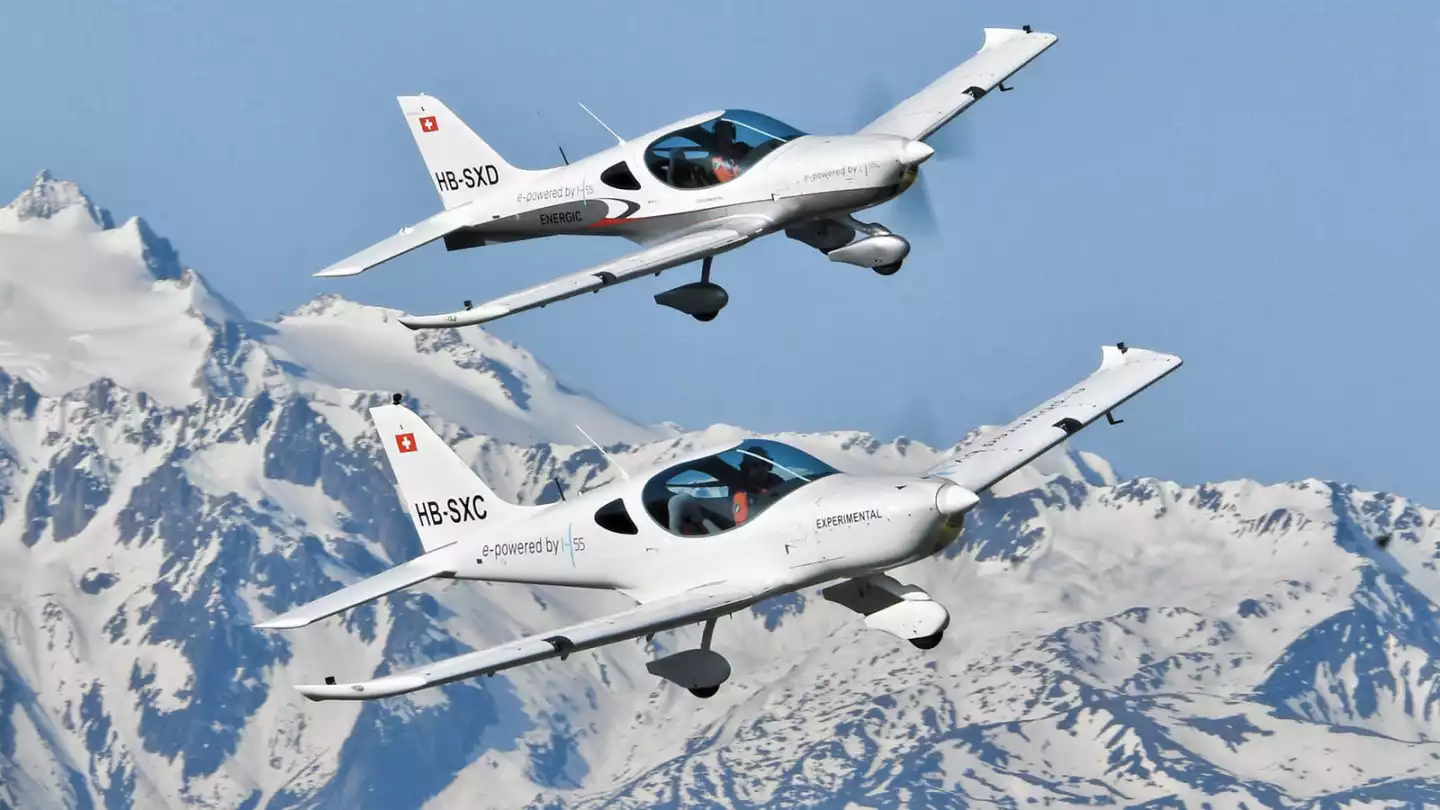
The basic idea is to simplify the power curve of the thermal engine by supplementing it with the electric motor. Instead of the engine having to rev up for takeoff and climbing, the electrics can kick in and help boost the engine as it runs at a more or less constant throttle. It also gives the pilot the option of up to 2 MW of power at the touch of the throttle. In addition, the motor can do double duty as a generator during descent, putting a partial charge back into the 200-kWh H55 battery system, which helps to balance the books at the end of the day.
The goal is to produce a lighter engine with an overall reduction of fuel consumption of 30% and 20% lower maintenance costs. It can also make things a bit greener because RTX claims that the new system can run on 100% Sustainable Aviation Fuel (SAF).
But the party piece is that the new system doesn't need a new aircraft to house it. One sales feature is that the partners claim that it can be retrofitted into existing regional aircraft, which should make it attractive to operators who want to go green while maintaining or improving the bottom line.
Ground testing will continue throughout 2026, with flight testing scheduled to take place at AeroTEC in Moses Lake, Washington, using a modified De Havilland Canada Dash 8-100 experimental aircraft.
"People don’t want to fly an empty plane filled with batteries. What we’re interested in is reducing the energy per passenger-mile," said Rémi Robache, a Pratt & Whitney program manager for electronics. "It’s having the most efficient system that consumes the least fuel and the least electricity possible. It’s about minimizing the energy that you need to bring a passenger from A to B."
Source: RTX