


Zaha Hadid Architects has revealed plans for the largest airport in Africa. As you might expect from one of the world's most innovative architecture companies, this ambitious building is very striking, and it will take the form of a massive futuristic structure in the desert.
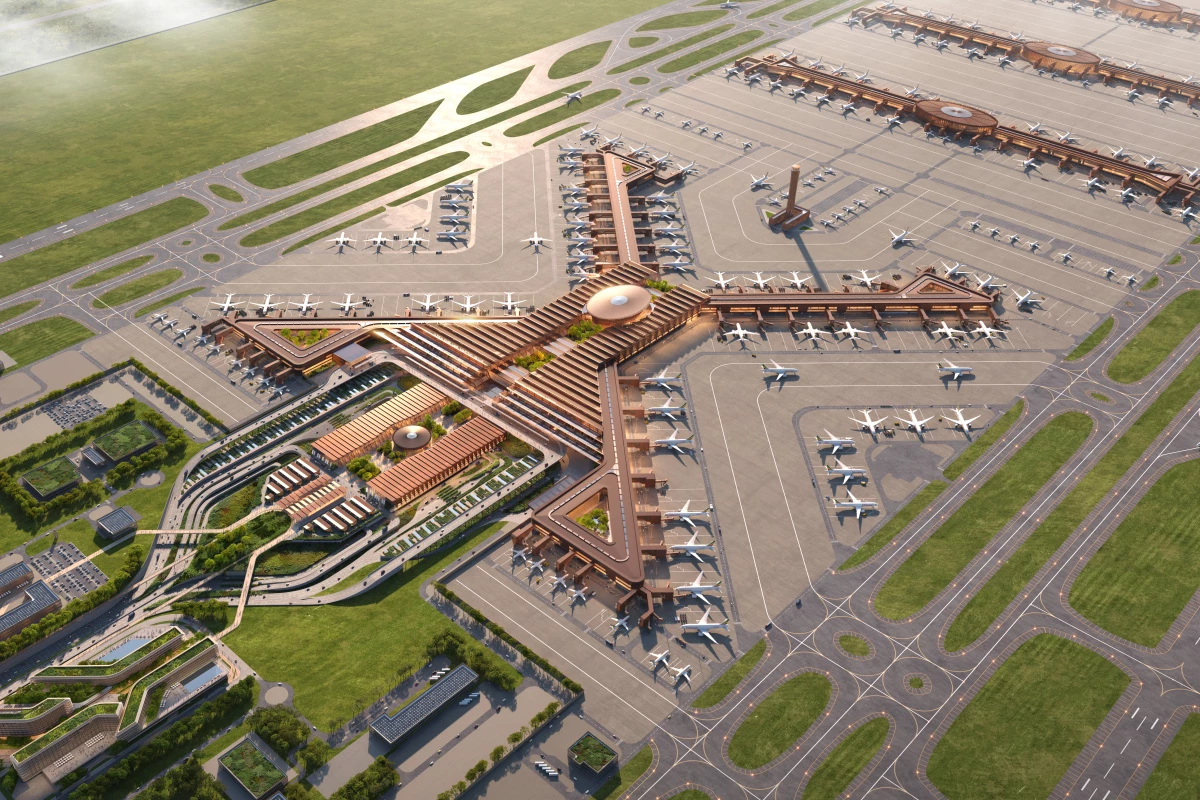
The Bishoftu International Airport is currently under construction just south of Addis Ababa, Ethiopia, and was commissioned by Ethiopian Airlines Group. It will measure around 660,000 sq m (approximately 7 million sq ft) and feature an unusual roughly X-shaped form that looks like some sort of strange extraterrestrial structure – which, to be fair, is something you could say of much of Zaha Hadid Architects' oeuvre. The firm says this isn't just for show, but will make it easier to navigate throughout the interior of the building.

"Each of the terminal's piers incorporates a unique interior materiality and color palette to reflect the diverse regions of Ethiopia," says Zaha Hadid Architects. "Inspired by the Great Rift Valley that passes near Bishoftu as it crosses through the country, a single central spine connects the terminal's facilities and aircraft piers – minimizing transfer distances and ensuring connecting passengers can easily navigate to their next departure gate."
The project is slated to achieve the LEED Gold green building standard. Natural ventilation will help maintain comfortable temperatures, while semi-enclosed spaces and outdoor areas allow transferring passengers to enjoy the region's temperate climate.
It will be constructed using modular fabrication and incorporate locally produced materials. Storm water from the airport's runways, taxiways and aprons will all be distributed into wetlands and channels for storage and reuse. Additionally, solar panel arrays will be installed throughout to enable on-site energy production. Native drought-resistant planting will also be used.

Due for an initial opening in 2030, the airport will be constructed in phases and will eventually accommodate up to 110 million passengers every year, with parking for 270 aircraft.
Source: Zaha Hadid Architects