
Science
The latest in science news, from the depths of space to the quantum realm.
Top Science News
-
 The earliest ancestors of all backboned animals, including humans, may have viewed the world with four eyes, not just two, according to a new study. The remnants of those extra eyes persist deep in the human brain today as the pineal organ.
 -
 For the first time, researchers have tracked how deer use photoluminescent markers as signposts on trees to communicate with one another. Their unique visual acuity allows them to see in ultraviolet wavelengths invisible to human eyes.
 -
 The Artemis II mission, which will return US astronauts to lunar space, has run into problems that have critics demanding NASA remove the crew from the flight for safety reasons. The bigger question is, why do we have astronauts at all?
Load More
Latest Science News
-

Pig-boar hybrids in Fukushima evacuation zone rewrite wild genomes
March 29, 2026 | Chelsea HaneyWhen escaped domestic pigs bred with wild boar after the Fukushima evacuation, researchers gained a rare chance to observe large-scale hybridization. The result offers a new lens on how fast-breeding traits can quietly reshape wildlife genetics. -

Our chins appear to be an evolutionary side effect
March 27, 2026 | Chelsea HaneyMale nipples. Whale pelvic bones. Vestigial hind limbs in snakes. Evolution is full of features that look purposeful but are actually by-products with no explicit function. New research suggests the human chin may be one such evolutionary side effect. -

Researchers gene-edit the bitterness out of grapefruit
March 26, 2026 | Jay KakadeIn the late 1990s researchers identified the key gene responsible for producing the bitter compounds in grapefruit. Now, using the genome editing technology CRISPR/Cas9, the team has inactivated the gene in grapefruit to eliminate that bitter taste. -

Newfound giant virus holds clues to how complex life evolved
March 26, 2026 | Chelsea HaneyFor two decades giant viruses have unsettled one of biology’s most fundamental boundaries forcing scientists to rethink how cellular complexity emerged. A newly discovered giant virus sharpens that debate, offering clues about how a key feature of most complex life may have evolved. -

Google says its upcoming data center will cool itself without water
February 25, 2026 | Abhimanyu GhoshalAmong the many problems posed by the rapid proliferation of data centers is the strain on local water supplies. Google says it's building a better data center that won't require water to keep its servers and computing equipment cool. -

Video: Fire tornado cleans up oil spills
February 24, 2026 | Michael FrancoOil spills in oceans can spell disaster for ecosystems, but options for mitigating them are limited and can come with their own environmental challenges. A new "fire tornado" from Texas A&M University might soon be able to come to the rescue. -
New technique targets 'sweet spot' to destroy bacteria
February 10, 2026 | Michael FrancoResearchers have discovered a certain kind of sugar that is only found on the surface of bacteria. Targeting it could lead to an entirely new class of immunotherapeutic drugs designed to target and eliminate at least one deadly, drug-resistant bug. -

8,000-year-old pottery suggests math predates writing
February 07, 2026 | Jay KakadeWe generally associate the origins of mathematical thinking with the emergence of writing but a new study challenges this assumption looking at floral designs found on the pottery sherds across northern Mesopotamia, dating back 8000 years. -

Plants that touch each other are more resilient to stress
February 07, 2026 | Jay KakadeNew research has found when plant leaves physically touch each other, they seem to form a biological signalling network to warn each other about upcoming stress. This boosts resilience to intense light, a common environmental challenge. -
Wood polymer gives thermal paper an eco-friendly makeover
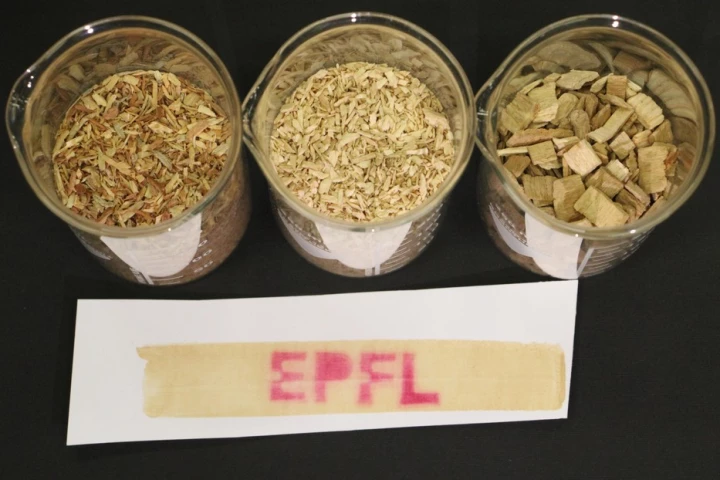
January 31, 2026 | Maryna HolovnovaNowadays, wood is rapidly becoming a valuable material in the renewable tech industry, replacing many harmful materials. Recent research shows that wood-derived compounds can serve as an alternative to the toxic chemicals used in paper receipts.
Load More