
Artificial
-
 Scientists believe lightweight, ultra-strong and flexible spider silk is now one step closer to commercial use thanks to a deceptively complex 'box' that can spin nature's wonder fiber in a "spontaneous, extremely rapid, and highly reproducible" way.
 -
 Meteor showers are beautiful astronomical phenomena, but they can be fickle. Now a Japanese company is planning to put on artificial shooting star shows on demand with the Sky Canvas project. And there might be some scientific benefits to it as well.
 -
 The squid’s color-changing abilities have fascinated scientists for decades. Now, researchers have created a new squid-inspired artificial skin that can withstand extreme cold and kill microbes, opening the door to a range of potential uses.
 -
 Leaves are impressive machines, converting sunlight, carbon dioxide and water into energy. Cambridge scientists have now created artificial leaves that can float on water, tapping into sunlight above it and water below to efficiently produce fuels.
 -
 MIT engineers have developed a new type of artificial synapse that’s extremely energy efficient and ultra-fast, processing data a million times faster than synapses in the human brain. The analog device shuttles protons around instead of electrons.
 -
 Researchers have developed a new type of artificial muscle that’s entirely made out of natural proteins. Responding to changes in its environment allows the muscle to flex on demand, which could make it useful for implants, prosthetics or robots.
 -
 A newfound understanding around the intricate architecture of lobster underbellies has provided MIT engineers with a model for a tough and stretchy new hydrogel, which features great durability and resistance to tearing.
 -
 Scientists have successfully bridged the gap between organic and artificial. A team has created biohybrid synapses that let living cells communicate with electronic systems, not with electrical signals but with neurotransmitters like dopamine.
 -
 Researchers at Rice University have built a simple new solar-powered device that can create hydrogen for fuel by splitting water. It's similar to other “artificial leaf” designs but the team says it’s self-sufficient and relatively cheap to produce.
 -
 Researchers in Europe and the UK have managed to connect biological and artificial neurons together. The biological neurons were grown in Italy, sent signals through an artificial synapse in the UK to communicate with artificial neurons in Zurich.
 -
 Over the last few years humans have tried to mimic nature with artificial leaves, but they’re never quite up to scratch. Now, researchers have designed a new version that could work under real-world conditions, sucking carbon dioxide out of the air and creating oxygen and synthetic fuels.
 -
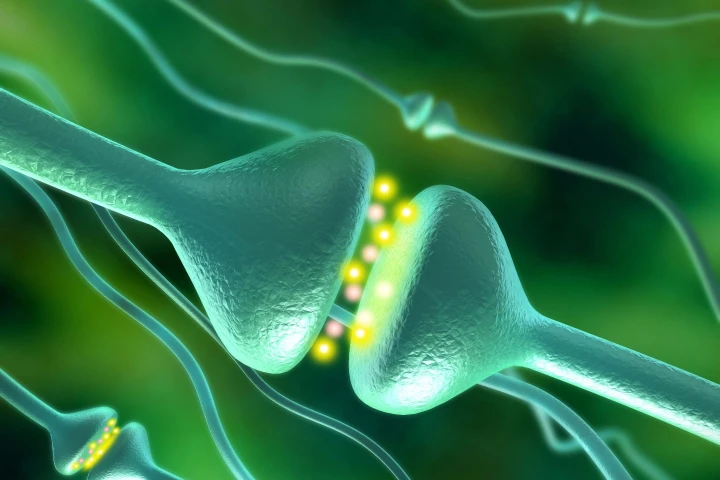 The human brain is nature’s most powerful processor, so developing computers that mimic it is a long-term goal. Neural networks are the closest models we have, and now Stanford scientists have developed an organic artificial synapse, inching us closer to making computers more efficient learners.
Load More