
Cyborg
-
 Cyborg cockroaches have got a promotion. Besides finding survivors in earthquake rubble, they’ve become paramedics, delivering emergency medication while human rescuers are on their way.
 -
 What sounds more terrifying than a part-cockroach, part-robot cyborg? Definitely one that can also breathe underwater. Yet, this is exactly what researchers have just created, except they are replacing “terrifying” with “useful.” Scientists from Nanyang Technological University (NTU) Singapore and Waseda University in Japan have created a soft, flexible diving suit for cyborg cockroaches. The suits are equipped with miniature oxygen generators that allow the cockroaches to survive for up to three hours underwater or in low-oxygen conditions.
 -
 Instead of going to the trouble of building tiny robots from scratch, some scientists are now turning insects into remote-control cyborgs. A new "assembly line" could help, by converting cockroaches into cyborgs far faster than can be done by hand.
 -
 I bet that headline wasn't on your bingo card this week. Researchers at the University of Osaka have equipped cyborg insects with teeny tiny helmets to steer them around various environments, without the need for invasive surgery or internal wiring.
 -
 Why design robots from scratch when nature has already done the hard work for us? That’s the reasoning behind cyborg insects, and now scientists have found a way to power remote-controlled cyborg cockroaches using custom solar cells.
 -
 Researchers have managed to create a kind of cyborg, integrating the ear of a locust into a robot. The robot was then able to respond to noises that the biological sensor picked up, which could pave the way for more sensitive and efficient sensors.
 -
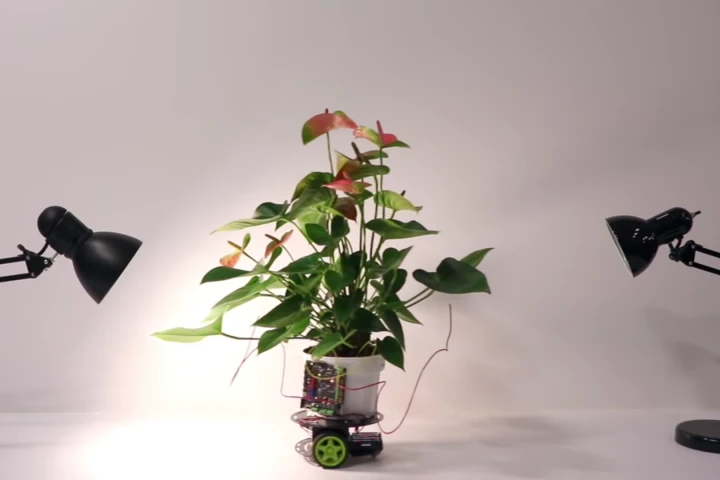 Plants are incredibly complex organisms that sense and react to their surroundings. Their normal methods of getting around are pretty slow, so to give them a helping hand researchers at MIT have now created “cyborg plants” that can control a robot base to drive themselves where they want to go.
 -
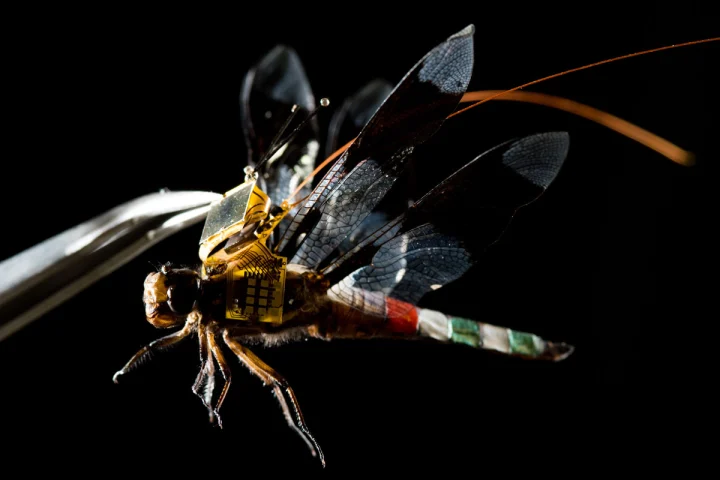 Back in January, researchers from Charles Stark Draper Laboratory and Howard Hughes Medical Institute (HHMI) outlined plans to fit dragonflies with tiny electronic backpacks, allowing them to be controlled remotely. In a new video, their cyborg dragonflies have taken flight for the first time.
 -
 Scientists are exploring ways to augment living animals with robotic systems, and now a team from the Korea Advanced Institute of Science and Technology (KAIST) has used a "parasitic robot" to control the movements of a live turtle by feeding it treats.
 -
 Transhumanist Rich Lee currently has five implants in his body meant to enhance the way he experiences and interacts with the world. While they may have added to his life, they may now also be taking something away: his kids. We talked with the body modifier to find out more.
 -
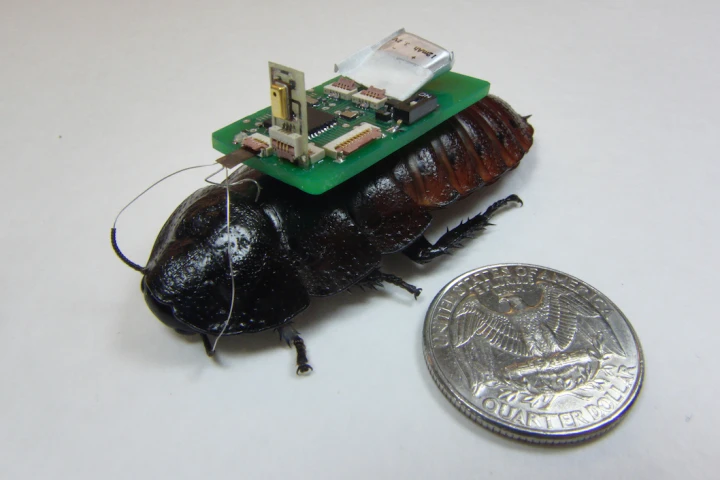 In the future, remote-controlled cyborg cockroaches could help map out disaster areas and search for survivors. Now two new studies have looked into how accurately the bugs’ movements can be tracked, and how much autonomy they need to be efficient explorers.
 -
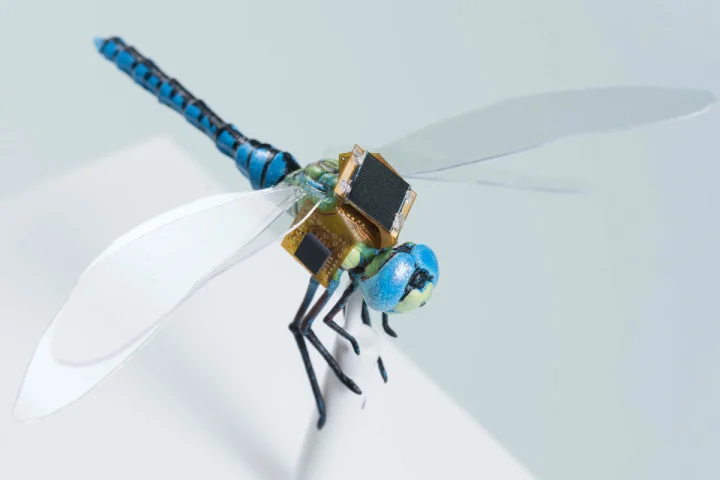 Researchers have developed a system that a living dragonfly can wear like a backpack, allowing engineers to steer it remotely to deliver payloads, conduct reconnaissance and even guide pollination.
Load More