
Gecko
-
 Geckos are able to maintain a grip on wet surfaces not because their toe pads repel water, but because they attract it. A new polymer, which was inspired by this phenomenon, could find use in shoe soles that keep people from slipping on ice.
 -
 When it comes to robotic hands, there are ones that can grasp tough items firmly, and ones that can grasp delicate items lightly. The experimental new gecko-inspired farmHand, however, is capable of doing both.
 -
 Storage-integrated staircases are popular in tiny houses but this is the first time we've seen a lizard-integrated staircase. Following Rocky Mountain Tiny Houses' recent cat-friendly home, it has designed a compact dwelling with a staircase that hosts a vivarium for the owners' pet gecko.
 -
 One particularly active area of robotics research involves the exploration of soft parts, which are opening up new possibilities and making machines safer for humans to work around. Now they are gaining a helping hand from the amazing adhesive properties of the gecko.
 -
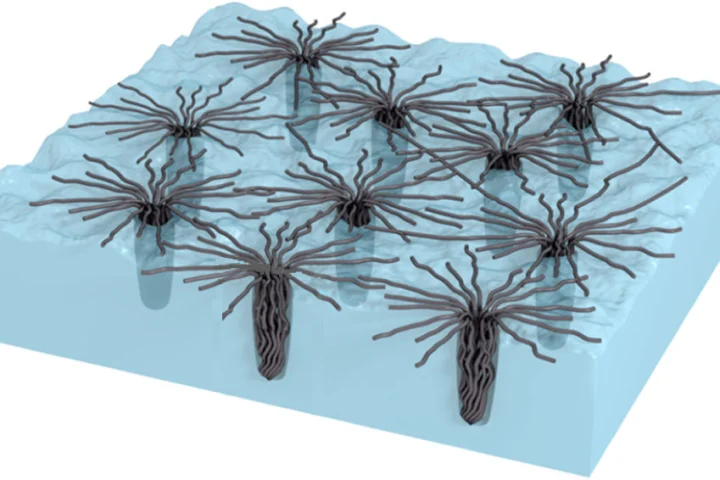 Researchers have developed a new dry adhesive that not only bonds in extreme temperatures, it even gets stronger as the heat goes up. The gecko-inspired material maintains its hold in extreme cold and actually gets stickier in extreme heat.
 -
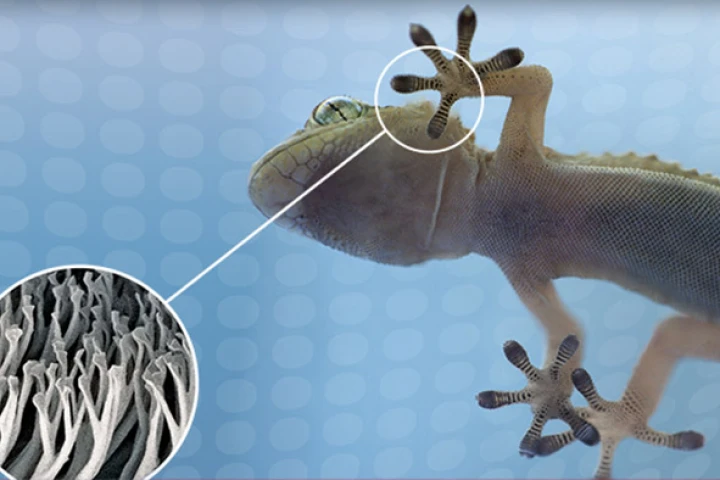 The natural stickiness of gecko's feet has inspired decades-long research efforts to develop advanced adhesives. Now a company spun out of university research group called nanoGriptech has taken the science to market.
 -
 In various types of manufacturing, parts are picked and placed using graspers or suction cups. The former can damage fragile items, however, while the latter won't work in vacuums. That's why scientists have developed a new material that utilizes the same principle as gecko feet.
 -
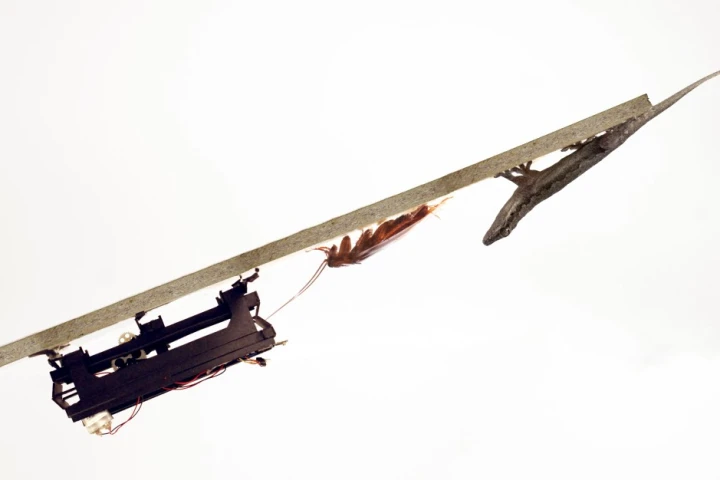 Scientists from the University of California, Berkeley have adapted a small six-legged robot to perform an evasive maneuver used by cockroaches.
 -
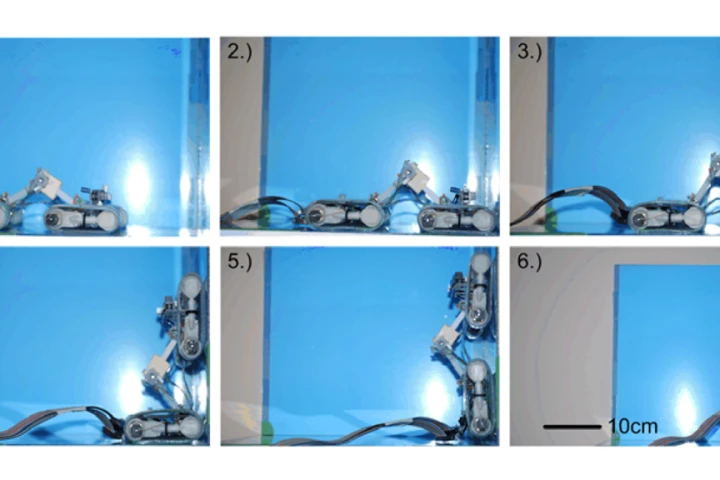 Researchers at Simon Fraser University Burnaby (SFU) claim to be the first to apply the gecko's wall-climbing technique to a robot that operates like a tank.
 -
 With feet modeled on the intricate design of gecko toes, engineers at Stanford University have create a robot that can climb smooth surfaces including a wall of slick glass.