
North Carolina State University
-
 Using a novel design inspired by the Japanese art of paper cutting, researchers have developed gentle yet strong robotic grippers that can fold clothes, grasp a drop of water, lift 16,000 times their own weight, and turn the pages of a book.
 -
 Although there are several methods of 3D-printing metal objects, all of them involve heat – which isn't conducive to producing heat-sensitive electronics, among other things. A new gel, however, can be used to print such items at room temperature.
 -
 A brand new form of silicon might help extend its use into the future. Engineers at North Carolina State University have discovered a material called Q-silicon, with new properties that could have important uses in quantum computers and spintronics.
 -
 Science continues to make advances in smart fabrics. Now, a team of international researchers has created a wearable textile that can self-repair, is antibacterial, and could even be used to monitor a person’s heart rhythm.
 -
 If you're making a small robot that can explore tight spaces, it would be good if that device could also shimmy its way through narrow gaps. An experimental new robot can do just that, by emulating a caterpillar.
 -
 In order to see how well a corn plant is performing photosynthesis, you need to check the angle of its leaves relative to its stem. And while scientists ordinarily have to do so with a protractor, a new robotic system can now do the job much quicker.
 -
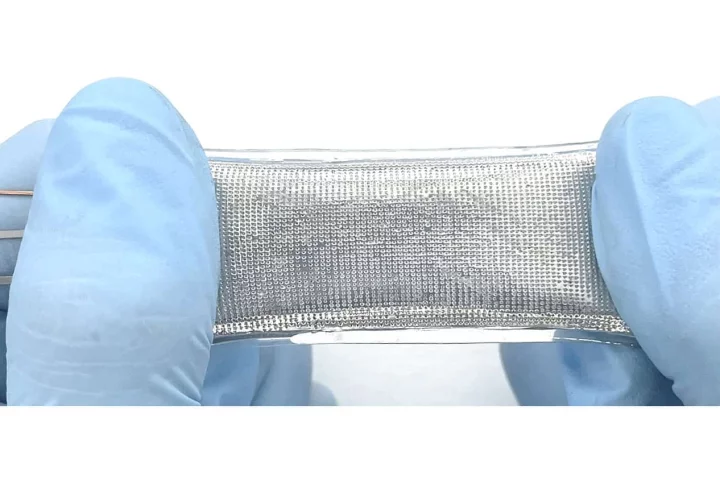 A team of researchers has developed a new material that’s not only elastic, but is impervious to gases and liquids – something this kind of material is usually bad at. The material could be useful for making flexible batteries or wearable electronics.
 -
 Imagine if you were tasked with sorting and separating thousands of tiny fossils, most of them less than a millimeter wide. It would quite a tedious, time-consuming task … which is why scientists have recently created a robot to do the job.
 -
 Although many groups are developing power-generating "smart fabrics," the technology is often too complex to be scaled up to commercial use. Now, however, scientists have devised a method of embroidering electrical generators onto regular fabric.
 -
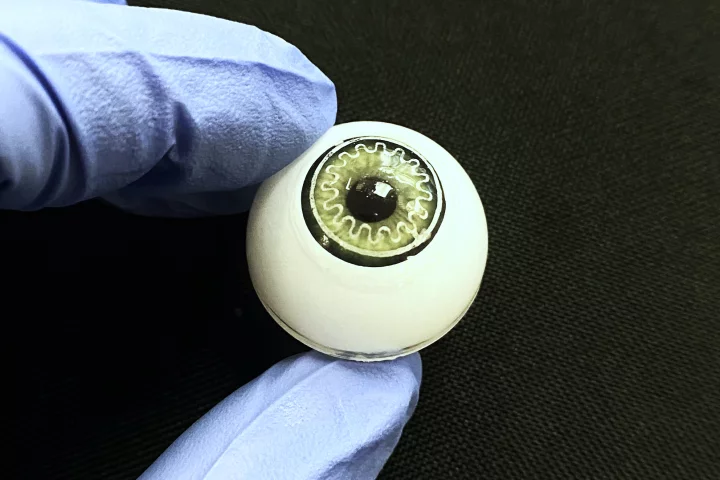 While the field of printable electronics holds much promise, the printing of circuits onto curved surfaces is still very challenging. A new technique simplifies the process of doing so, potentially allowing for new types of electronic devices.
 -
 Scientists regularly draw ideas from the natural world in a bid to improve robotic performance, and the latest creation in this space is a soft robot that mimics butterfly stroke in humans to move through the water with unparalleled speed.
 -
 In wastewater produced by the textile industry and others, dye is one of the primary pollutants. A newly developed synthetic polymer is capable of removing that dye from the water, plus it can be cleaned up and reused to treat more wastewater.
Load More