
Radiation
-
 A team of engineers has developed a new type of camera that can detect radiation in terahertz wavelengths. This new imaging system can see through certain materials in high detail, which could make it useful for security scanners and other sensors.
 -
 Radiation is famously damaging to materials, but now engineers at MIT have been surprised to discover that radiation may actually help certain alloys to self-heal, extending their useful lifetime. This could help inform future power plant designs.
 -
 Scientists at EMPA have developed a new aerogel-based material that blocks a wide range of electromagnetic radiation frequencies, forming what they describe as by far the lightest electromagnetic shielding material in the world.
 -
 Scientists have developed a new polymer that could be the basis for cheaper, lighter and more environmentally friendly radiation shielding. It is created by introducing bismuth trioxide particles into PMMA resin, which was then cured with UV light.
 -
 Searching for sources of potentially harmful radiation isn't a job that most people would want – so why not get a drone to do it? Well, a team of Czech engineers is currently developing just such an aircraft.
 -
 Rust may be generally unwelcome, but scientists at North Carolina State University are using it to develop a new radiation shielding that is lighter and cheaper than conventional materials. It promises weight savings of at least 30 percent.
 -
 The Netherlands' NRG has completed a major milestone irradiation test of molten nuclear fuel salts in its High Flux Reactor north of Amsterdam.
 -
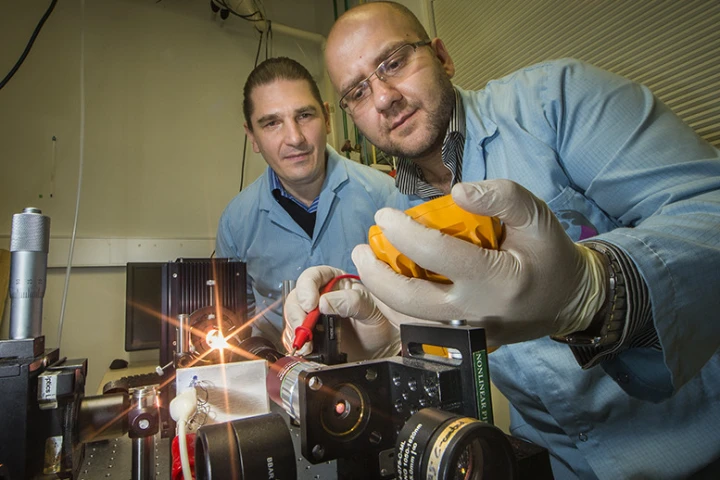 Radiation exposure leaves astronauts with an increased risk of cancer and other diseases. Now a team from Australian National University has developed a new nanomaterial that could protect space travelers with a thin film that dynamically reflects harmful radiation.
 -
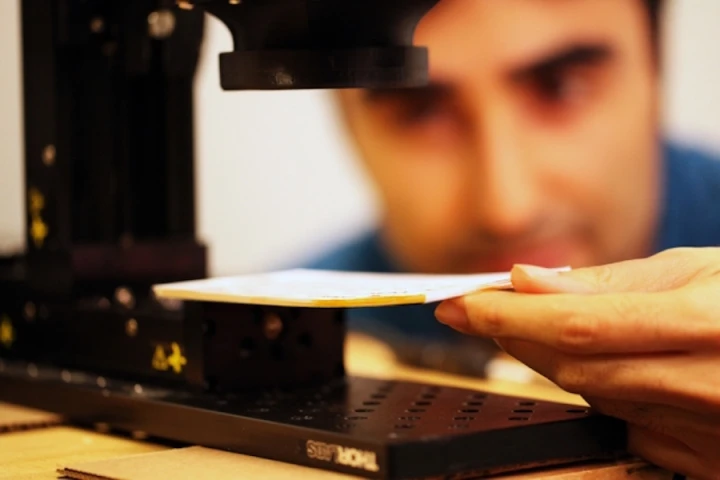 Using terahertz radiation, a new prototype device from MIT researchers can accurately identify letters written in a stack of paper up to nine pages in depth.
 -
 Last year we saw researchers adapt foam metals to stop various forms of radiation in their tracks, and now the same team has ramped things up to offer protection from something with a bit more force: an armour-piercing bullet.
 -
 An international team of scientists led by MIT hhasave discovered that adding small amounts of carbon nanotubes to metals makes them much more resistant to radiation damage.
 -
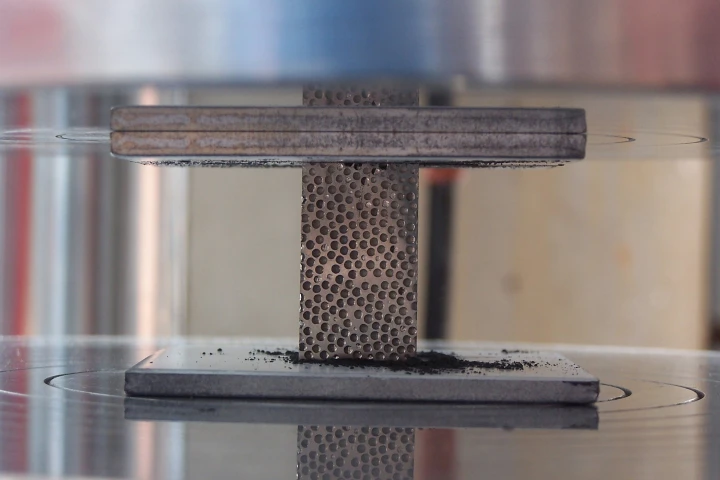 A North Carolina State University team is developing a new lightweight shielding based on foam metals that can block X-rays, gamma rays, and neutron radiation, as well as withstanding high-energy impact collisions.
Load More