
RMIT
-
 A team of engineers in Australia has come up with a new recipe for a road construction material that draws on two huge sources of waste, while offering the strength and flexibility required to handle heavy traffic.
 -
 A new record has been achieved for the fastest internet speed from a single light source – an absolutely astounding 44.2 terabits per second, 44,000 times faster than the highest speed connection. It was made possible by a new kind of optical chip.
 -
 Scientists in Australia have developed a new type of electronic material that is touch-responsive and just a fraction of the thickness of current smartphone screens, which could see it one day find use in next-generation mobile devices.
 -
 The wonderful potential of graphene has been well covered on our pages. One thing missing has been a cost-effective way to produce the wonder material, but a team of researchers now believe they may have discovered a key to this hiding in the bark of Australian eucalyptus trees.
 -
 Fiber optics allows for ultra-fast communication systems, and more data can be crammed in by "twisting" the light. Now, Australian researchers have developed a device to decode beams that’s small enough to fit over the end of a fiber optic cable.
 -
 New research is adding some clarity to the reasons behind the rising number of drone incidents, suggesting that more often than not, technical glitches rather than piloting errors are to blame.
 -
 The EsCargo is a cargo-carrying electric delivery bike with a unique suspension and steering system that gives it some very odd riding dynamics and turns everything I know about handling a motorcycle on its head.
 -
 Researchers claim to have constructed the world's first electronic memory cell that effectively mimics the analog process of human memory and may one day lead to the creation of the first bionic brain.
 -
 Soaring birds catch rides on rising air currents to save energy, and now researchers at RMIT University in Melbourne, Australia, are aiming to develop bio-inspired UAVs capable of doing the same thing.
 -
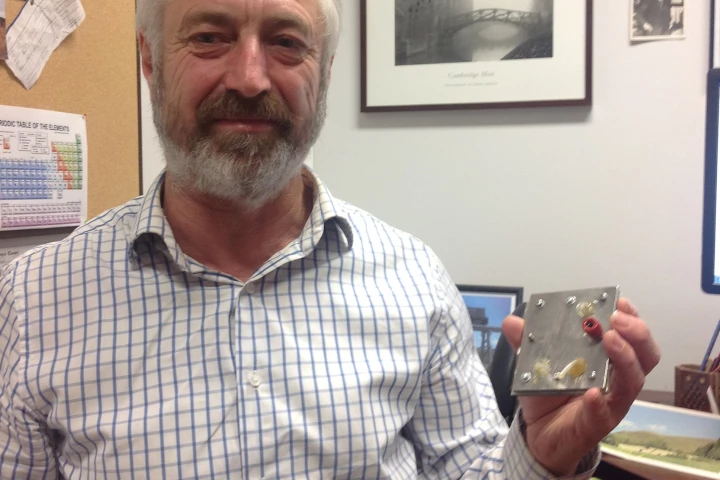 Researchers at RMIT University in Melbourne, Australia, have come up with the concept of a proton flow battery that could expand the reach of hydrogen-based electrical energy systems as well as provide a potential alternative to lithium ion batteries.