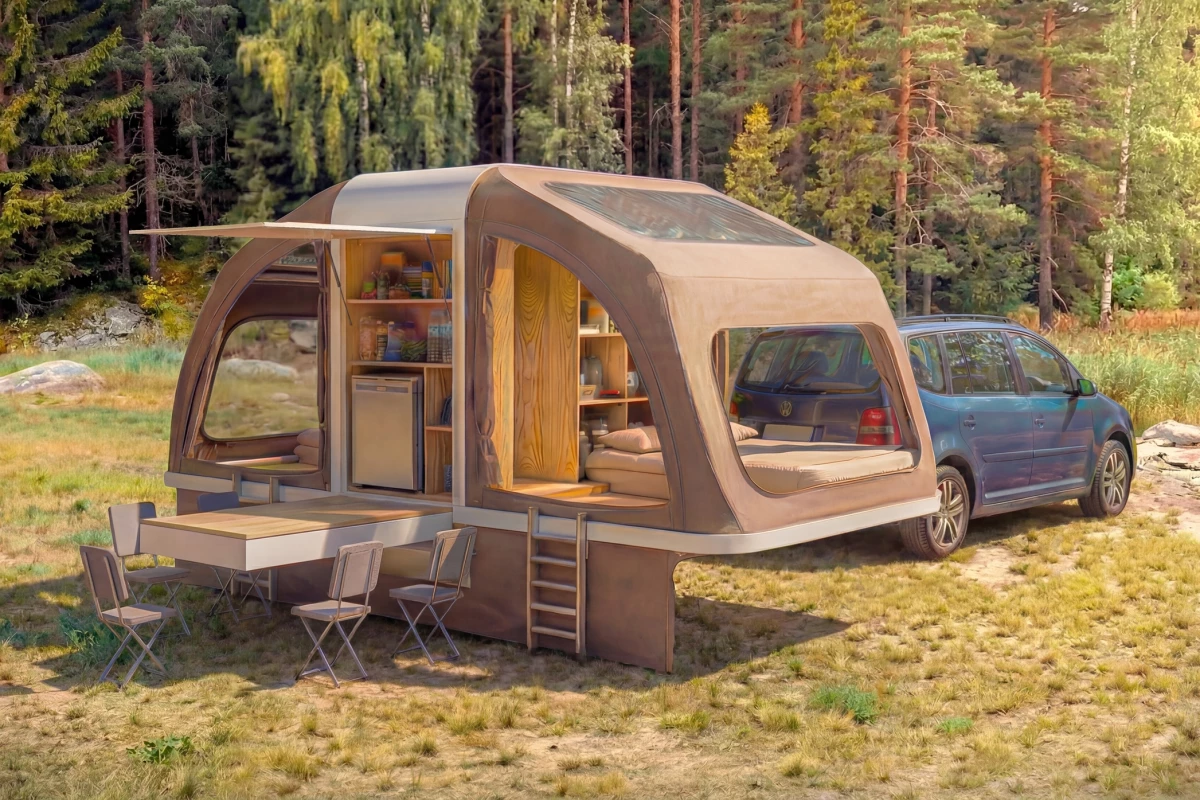
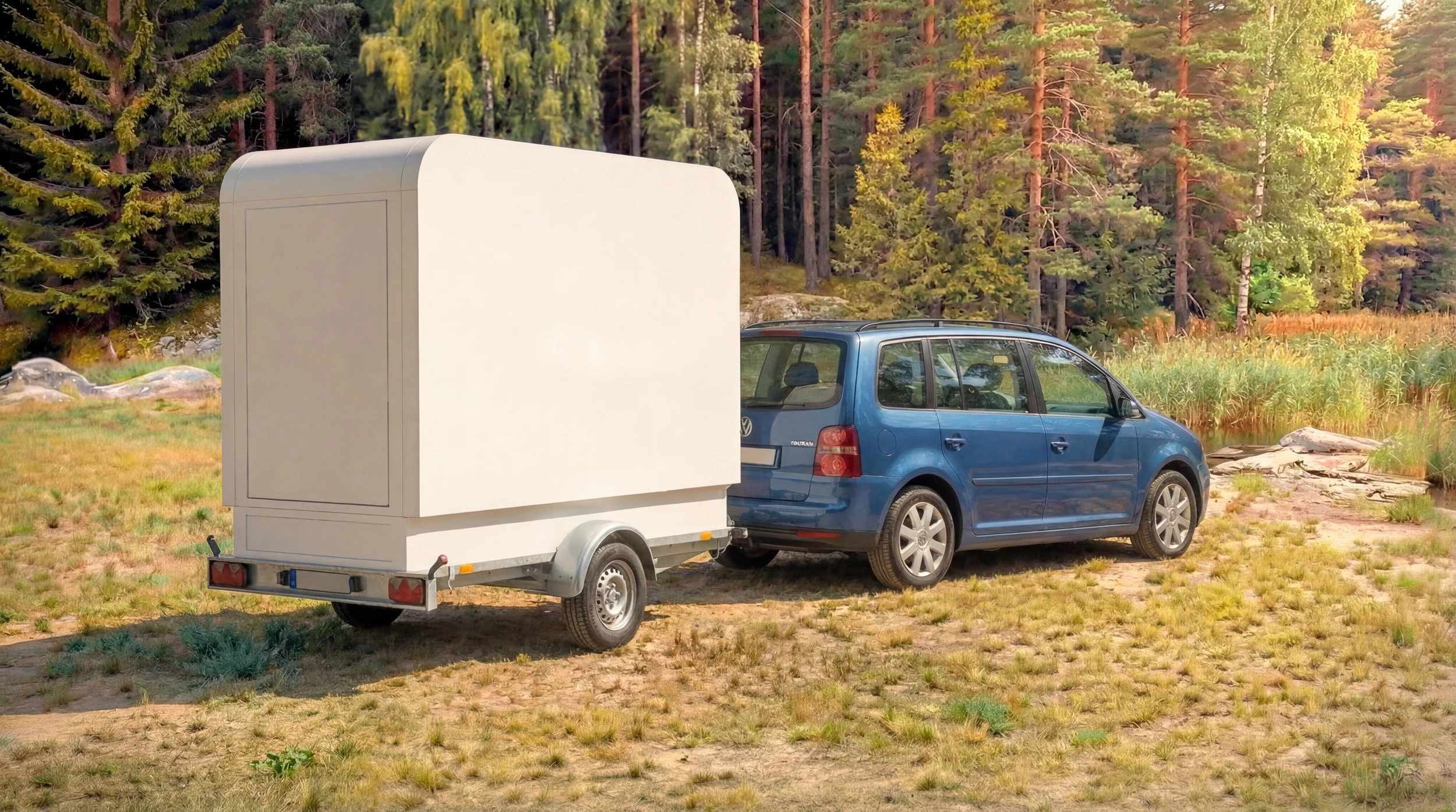
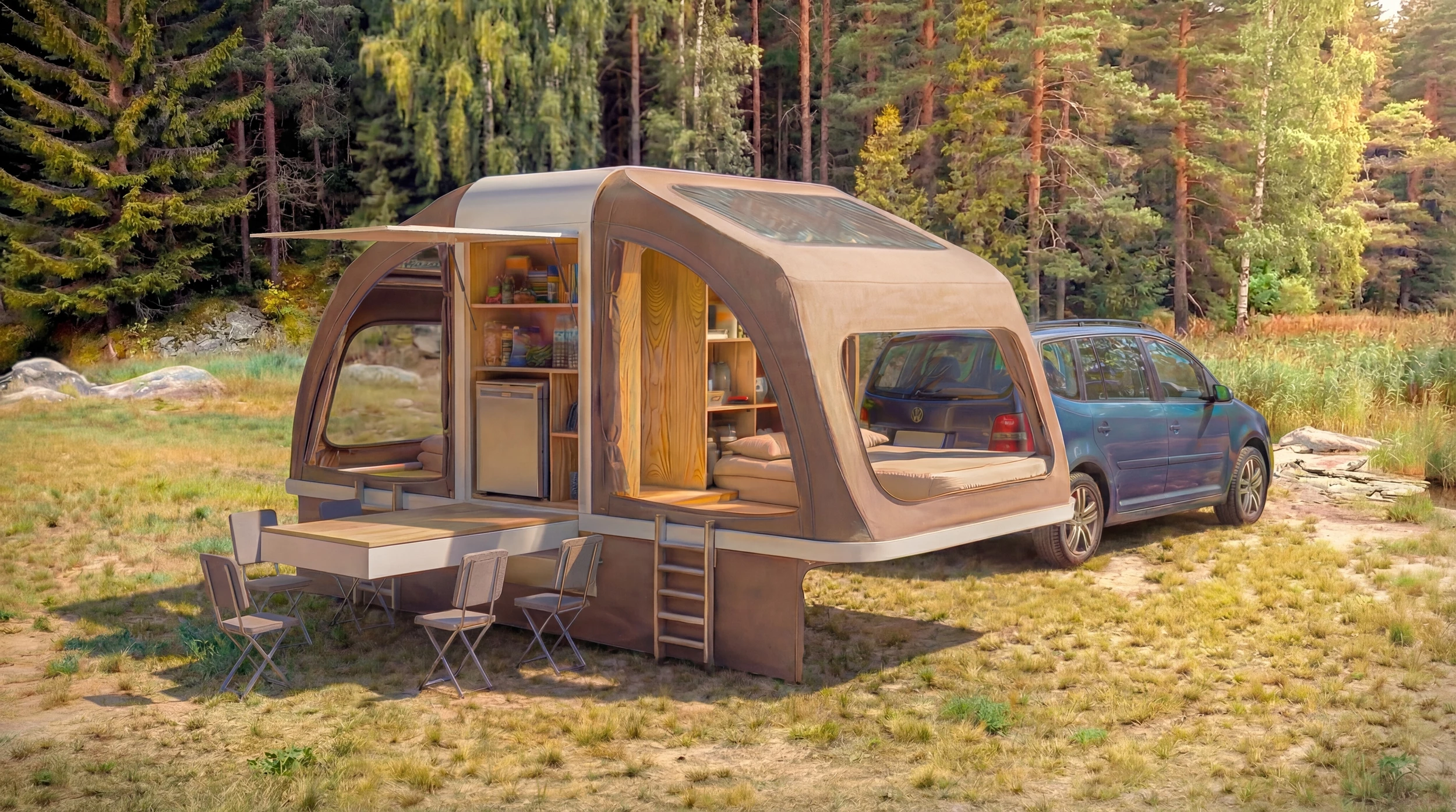
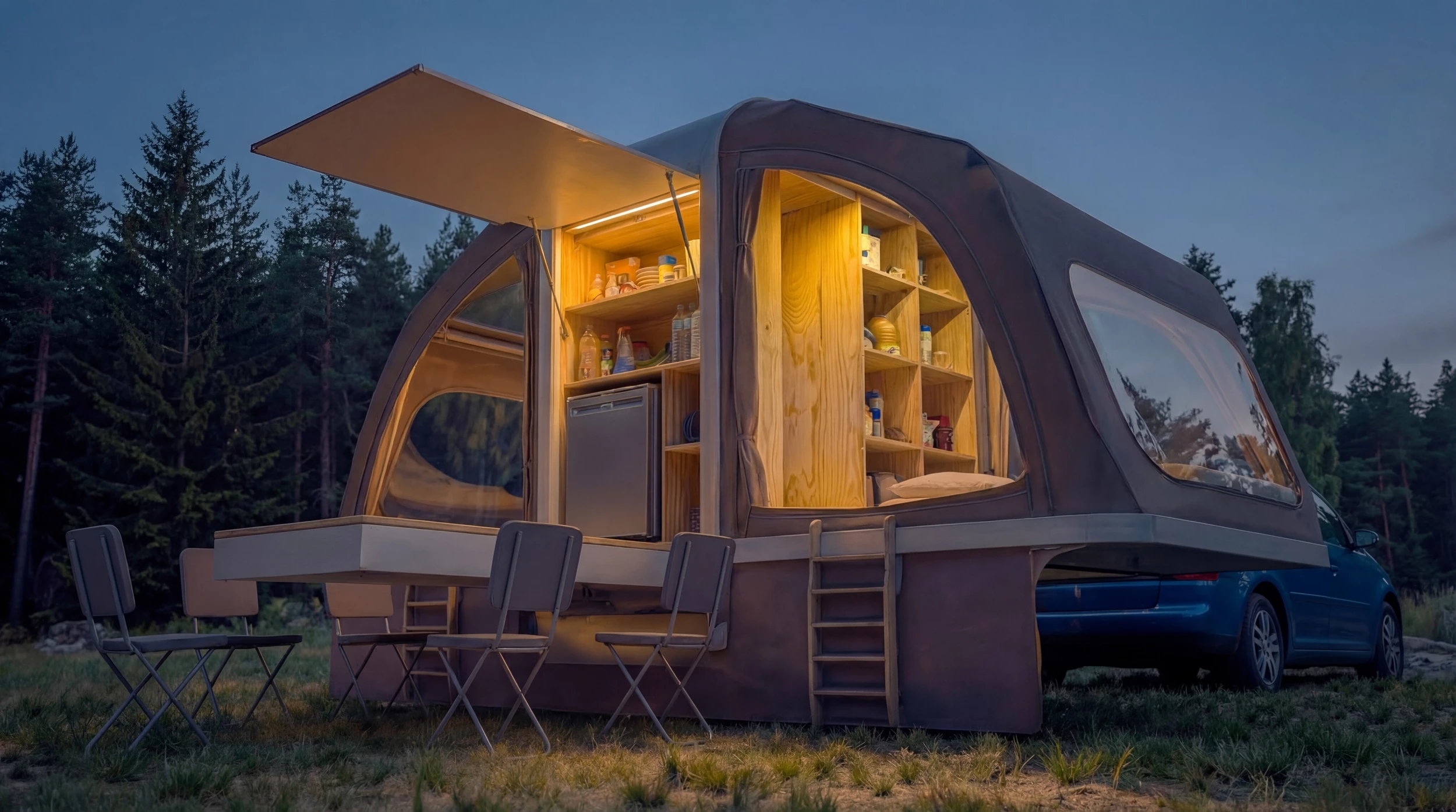
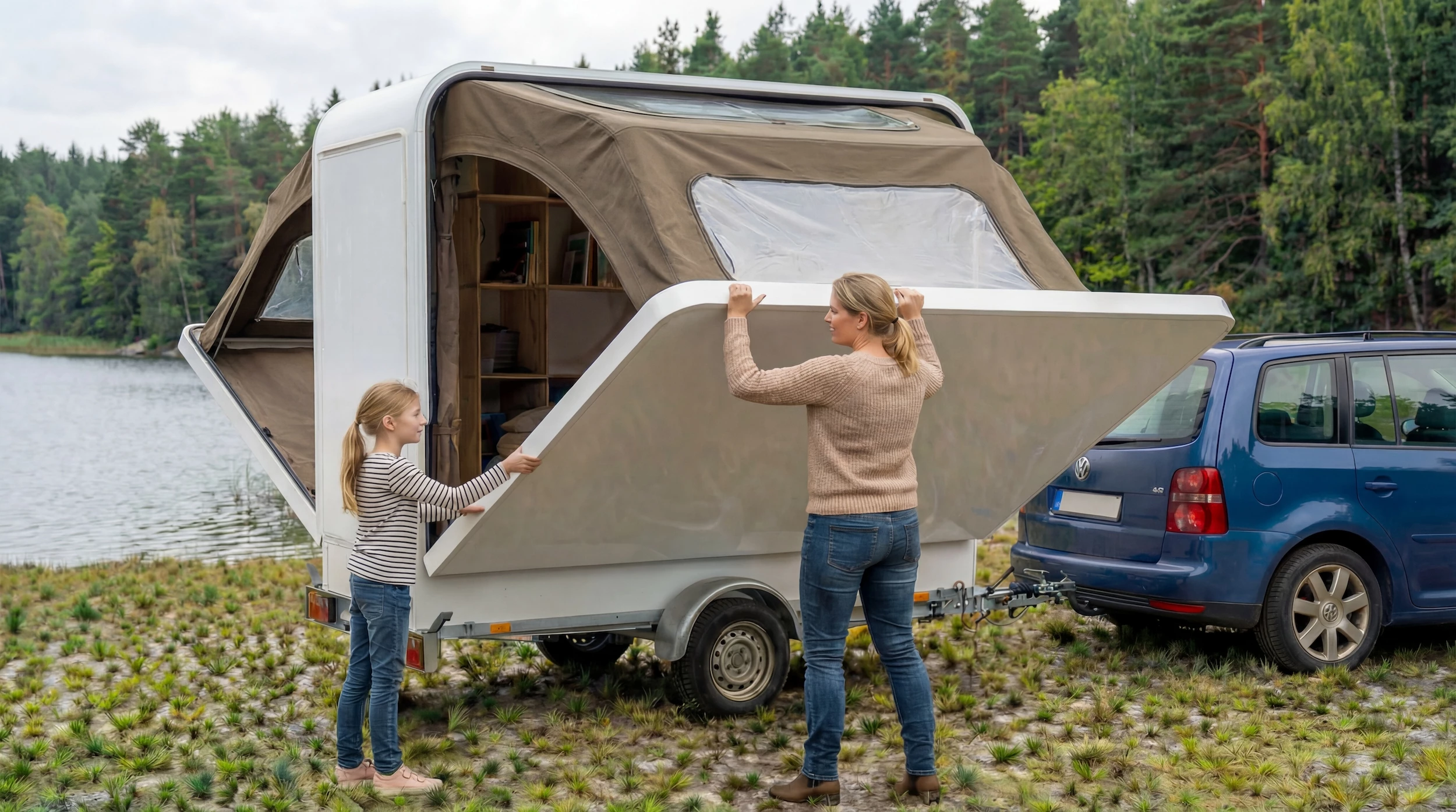


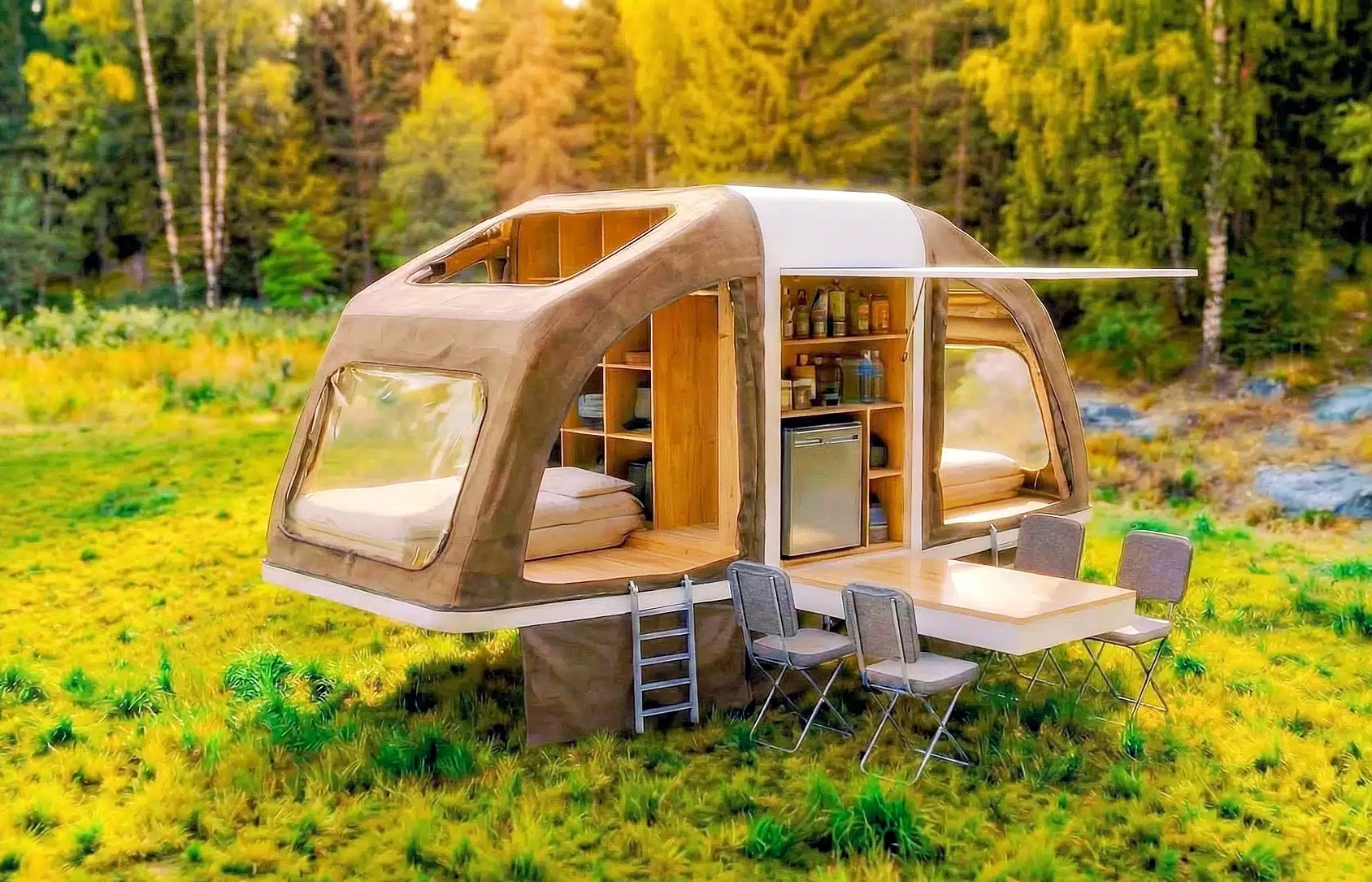

One of the more out-there concepts to emerge from CMT 2026, the Wingcube is a unique style of trailerable expanding camp pod. It folds up into a tall cube slim enough to tow comfortably aboard a utility trailer, even around the narrowest roadways. After parking, the cube grows to more than three times its packed size, dropping its wings into sheltered bedrooms and sliding out an open-air dining area.
We had hoped to see a real, live Wingcube in person at CMT but were disappointed to find it was still just at the "pretty pictures on a computer screen" stage. Inventor Paul Schulz had entered it into the Campfire of Ideas startup competition in an effort to win €20K to help bring the concept to reality. He was unsuccessful, losing out to a much simpler, more universal RV tool in a real catch 22: he needed the funding to build the prototype, but a prototype would have been the best way to wow judges and win the prize.
Schulz tells us he's currently finalizing a more detailed design while simultaneously working to secure the funding he needs to start a company and pursue a retail model. Once the design is finalized, he'll begin construction of the prototype, with a goal to complete it by the end of 2026.
The specifics of the design might change between now and 2027, but the general form should remain. The Wingcube is a tall, narrow box that tows easily on top of a separate trailer. It then expands at camp by way of two fold-out sidewalls. The walls fold down manually, automatically pitching the integrated tent frame as they go, similar to how a folding rooftop tent sets up. Within a matter of minutes, the small box blossoms into a sliced mushroom-shaped tent camper with floors well above the ground.
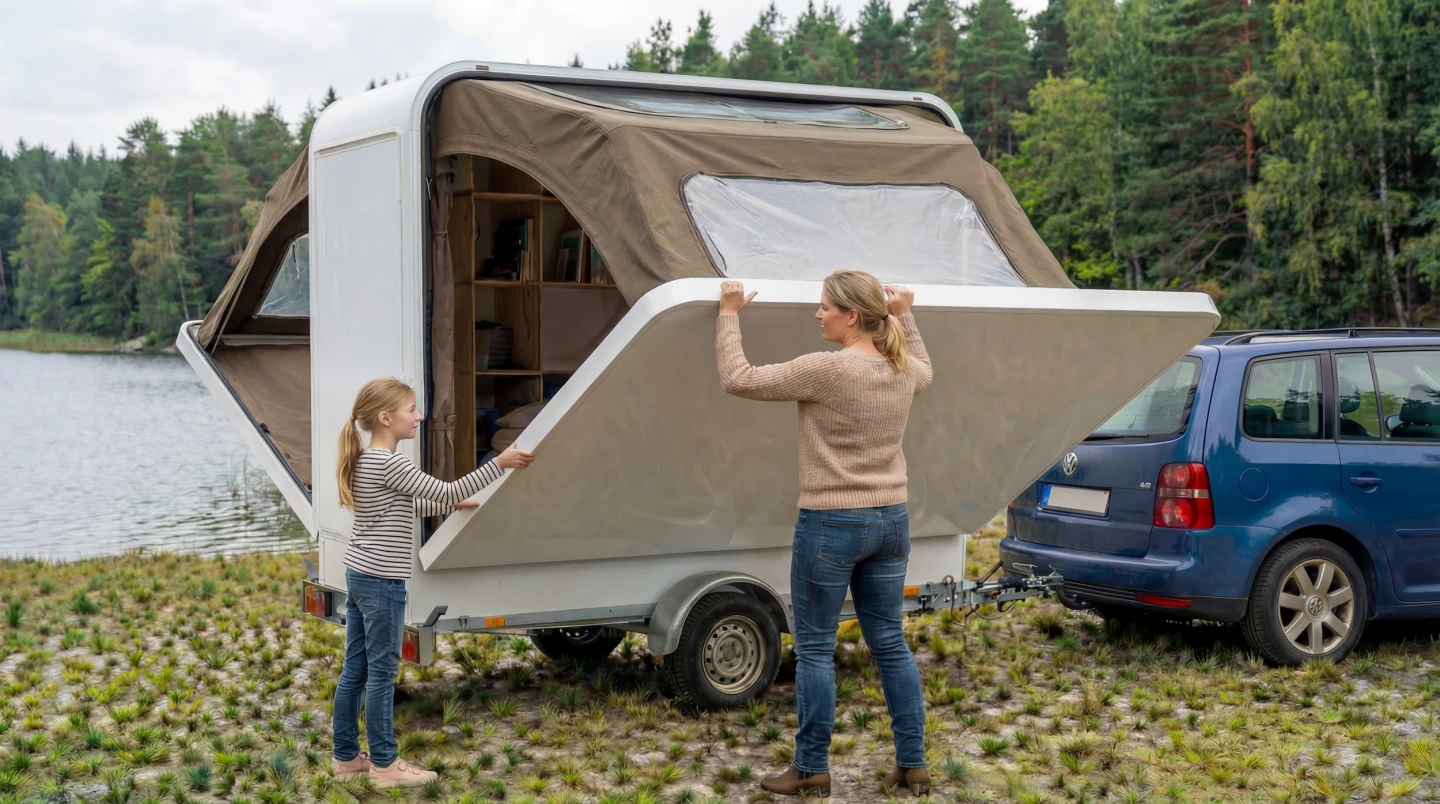
In the initial design, the two side tents serve as bedrooms, with the level, raised floors supporting thick double mattresses that appear more like beds from home than thin camping mats. If foam or spring mattresses prove too large for the folding action, the design could easily incorporate inflatables.
The bedrooms are currently the only defined part of the design, as Schulz explains his idea that the central box can be used as a kitchen or bathroom storage area or for more general storage. In the initial renderings, the center is filled out in part by a full food pantry and refrigerator just inside the lift-up front hatch. The table slides out from the lower part of that hatch to seat four people for outside dining. An optional awning over top that dining area would provide reprieve from the sun and inclement weather.

As distinct of a design as the Wingcube is, it isn't without its influences. Beyond being a more symmetrical hybrid-bodied spin on the common folding tent trailer, the Wingcube closely resembles an older concept from the 20th century: the Dutch-designed Markies expandable mobile home.
Initially penned in 1985 by architect Eduard Böhtlingk and completed as a working prototype 10 years later, De Markies was created to turn its namesake style of sun awning into something larger and livable, which it did by having two enclosed fabric awnings emerge from a central box via folding sidewalls. Each awning featured a more exposed-rib frame than seen on the Wingcube, and the central box itself was larger, a part of the sheltered living space, but the general idea was quite similar.

After two decades touring museums and design exhibitions and another of silence, the Markies project reemerged in 2021, and plans for a production model launch followed in 2022. We haven't heard much more about the project in the years since, or seen the production version at one point scheduled for 2025 debut, so it seems Wingcube still has a chance to make its mark as the first of the two to market.
Plans call for the Wingcube to fold up to a size of 2.5 x 2.1 x 1.2 m (8 x 7 x 4 ft, L x H x W), standing roughly 2.6 m (8.5 ft) high when mounted atop a trailer. Targeted weight is 500 kg (1,100 lb) for the pod itself, not accounting for the trailer. The interior tents would offer a peak of 1.9 m (6.2 ft) of standing height.
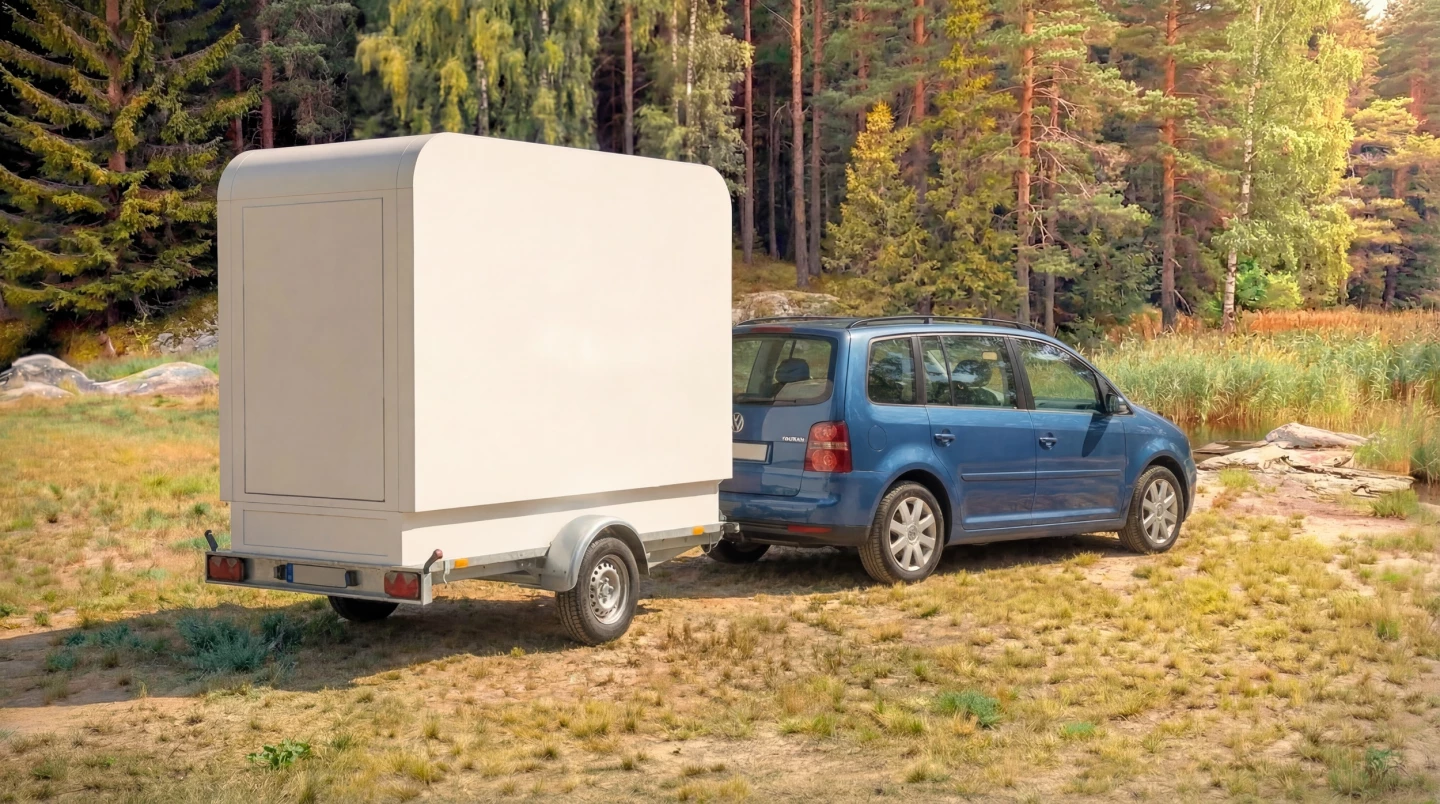
Those specs may very well change ahead of the prototype and production Wingcubes, as might targeted pricing. Schulz says he's aiming to get the Wingcube to market for a price around €20,000 (approx. US$23,750) by late 2027. We'll definitely aim to take a closer look once the prototype has been prepared.
Source: Wingcube