
What if you could draw energy from the night sky without effort? That's the question that researchers at the University of California, Davis are trying to answer with a new engine that generates power simply by sitting under the clear starry heavens.
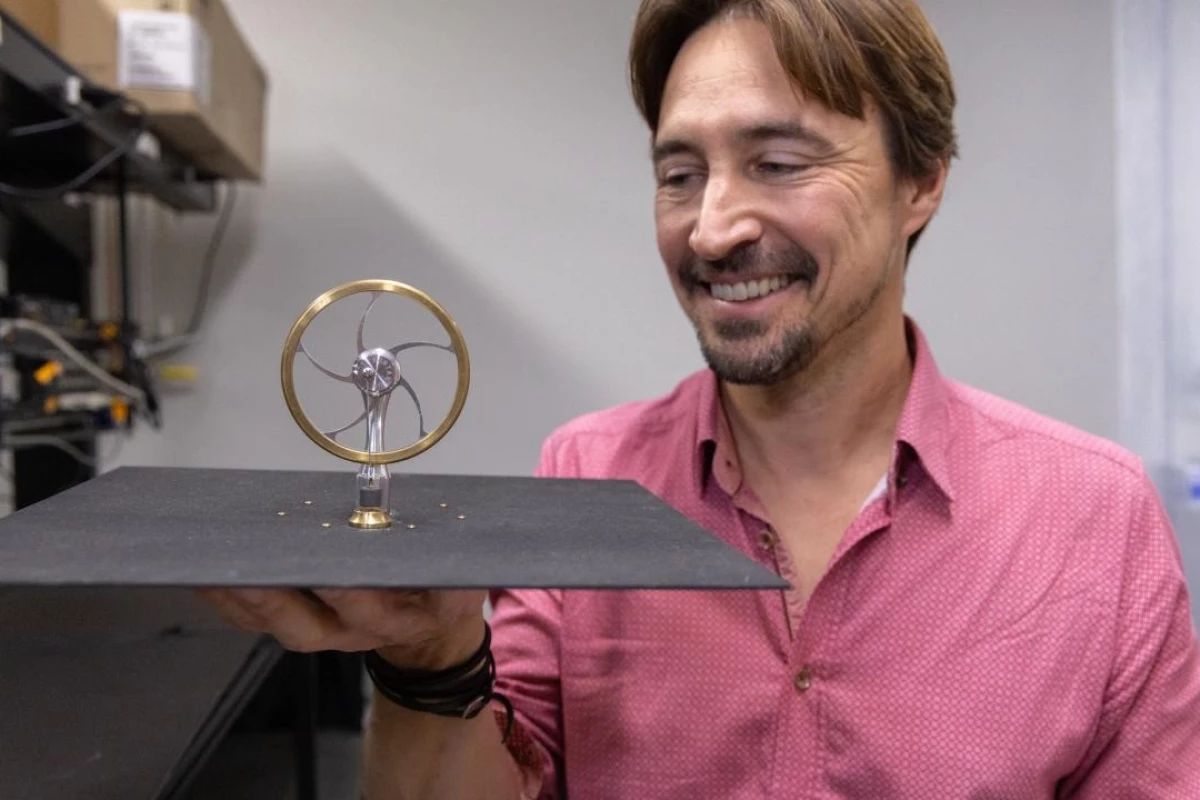
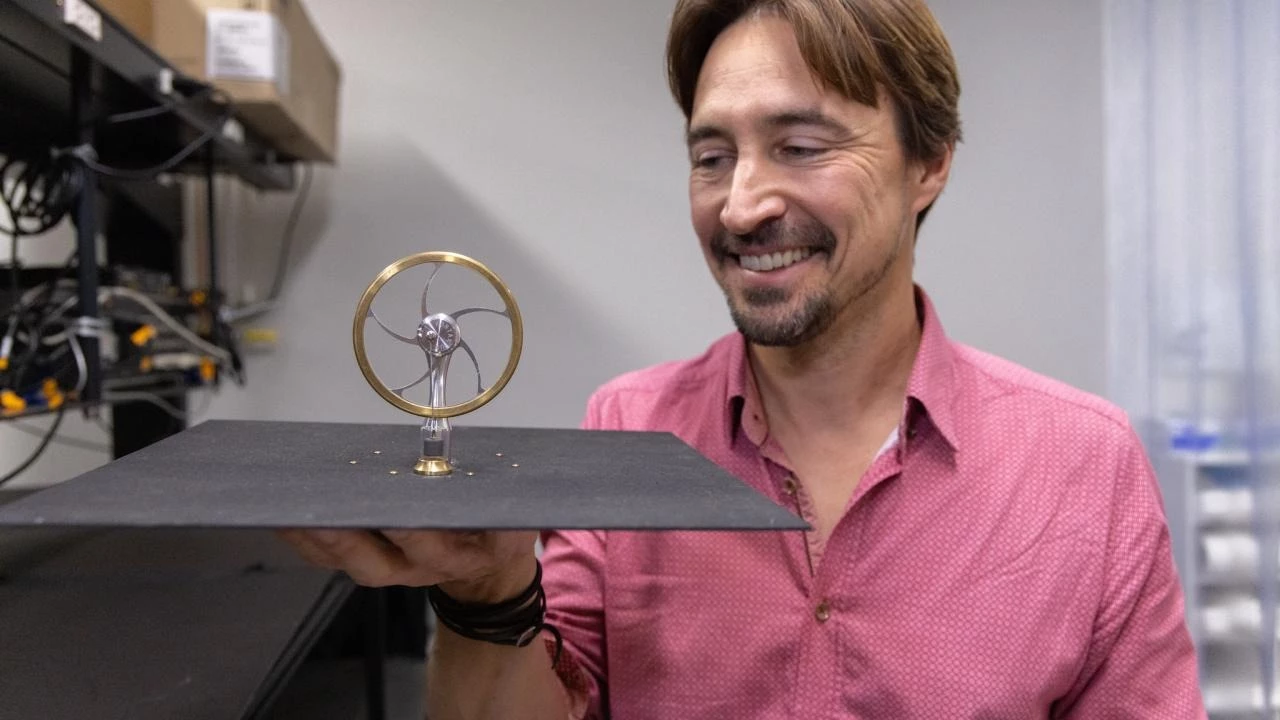
If you look up Stirling engines on the internet, you'll immediately find a load of toys and hobby kits for a device that runs seemingly by magic. It's a strangely simple machine, usually configured with a piston and a flywheel, that burns no fuel, is self-contained, and can be set in motion simply by warming it with a mug of hot water or, paradoxically, cooling it with a block of ice and giving the wheel a light push to get it going. So long as the mild heat or cold source is present, it will run.
It was invented in 1816 by Reverend Dr. Robert Stirling, a Scottish clergyman and engineer, as an alternative to steam engines, which, in those days, tended to get a bit explody. His Stirling engine was much safer because it worked on a different principle than steam. Instead of relying on the expansion of high-pressure steam, the Stirling engine is a closed system with a working gas, usually air, that generates power by having one part of the engine cycle relatively hotter than another part. As the gas moves between the hot and cold spaces, it moves a piston, which moves the wheel.
The clever bit is the temperature differential. Steam engines and internal combustion engines (indeed, most thermal engines) need a very large gap in temperature between the hot engine and the colder outside world to generate power. Think of it as being something like a waterfall. The taller the falls the further the water drops and the harder it hits when it reaches the bottom. This is why you do not shower under Niagara Falls unless you want a fatal pummeling.
The Stirling engine also needs the temperature gradient to work, but its design means that this can be much lower, so it can run by setting it on a nice cup of tea. That's because it can exploit very small temperature differences with great efficiency. It's also very quiet, self-contained, and has few components. This is why, though the technology failed to compete with later steam engines and internal combustion engines, these days it's used for cryocooler systems, auxiliary submarine propulsion, heat recycling, and radioisotopic power systems for spacecraft.
Now, UC Davis is taking the Stirling engine a step beyond by using it to generate power by setting it outside after dark.
If you've ever gone for a walk after the Sun goes down in a dry region with clear skies, like a high desert, you're likely to discover that you should have brought a jacket because, though the ground is warm to the touch, the air is freezing.
That's because without any water vapor in the air, there's not much between the ground and outer space to keep the heat that's accumulated during the day from radiating away – especially in the 8 to 13 µm range of the light spectrum. And since the temperature of space is about -270 °C (-454 °F) things can definitely get chilly.
It also means that there's a heat gradient for the Stirling engine to work off of.
What the engineering team did was equip the engine with a sheet of specially designed material to insulate between the warm ground and the cold air. Using an undisclosed paint, they made the sheet radiate heat into space, resulting in a hot reservoir below and a cold reservoir above with a variant in excess of 10 °C (18 °F) in most months.
The upshot is that this arrangement allowed the engine to produce 400 milliwatts of power per square meter, or enough to run a small fan that could shift enough air to circulate carbon dioxide in a greenhouse.
Indeed, the team says that running air ventilators is one application for the provisionally patented, low-power system, though it might find other uses for similar low-demand tasks that work best without external power and minimal supervision.
The research was published in Science Advances.
Source: University of California, Davis