
If you want to spoil a sailor's day, then a ship collision is the way to do it. That's why Texas A&M University has come up with its Ship collision avoidance of Machine learning And Radar Technology for Stationary Entities and Avoidance (SMART-SEA).
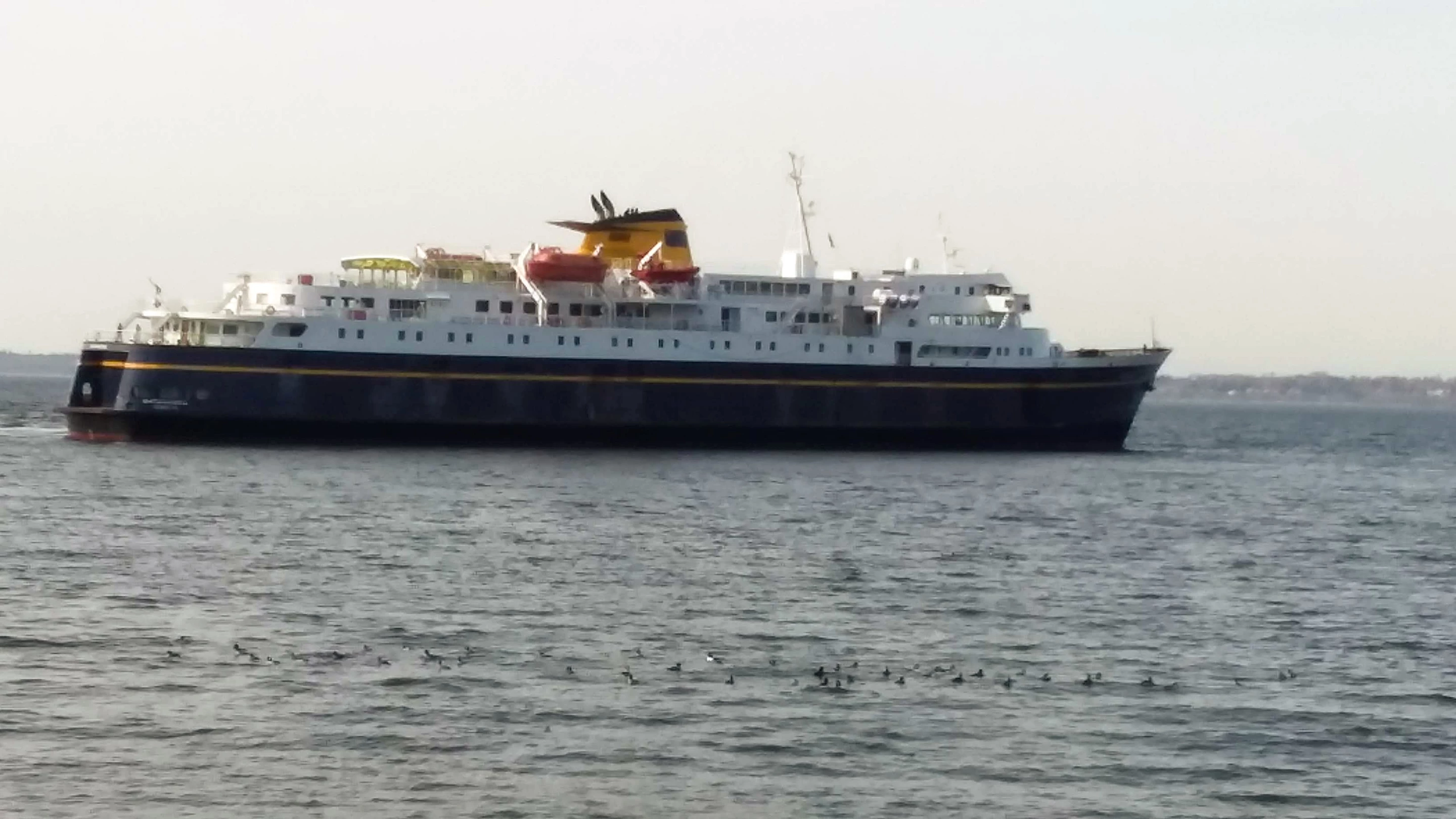
If you thought a fender bender was nasty, then imagine two container ships slamming into one another. Actually, that doesn't take much imagination because collisions involving everything from rowboats to supertankers are all too common. Google "ship collision" and you'll find a depressing parade of images of tankers, freighters, containerships, warships, yachts, bridges, piers, and assorted bits of geography coming into unwelcome contact.
Insurance companies would love it if this was due purely to human error, but there's much more to the story than poor seamanship, though there's a depressing amount of that these days. It's also the reason why building an anti-collision system for ships is much more complex than the ones used to make motor cars play nice on the road.
The problem is a convergence of physics, technology, geography, sea conditions, weather, and human psychology – especially if the ship in question is an extremely large one.
For example, a large, fully-laden ship can't stop on a dime. In fact, if you visit the bridge of a containership you might find a placard reminding the crew of the stopping distance, which can be measured in miles even if the engines are in full reverse. That's why a Man Overboard emergency on a large ship often has a depressing ending.
Related to this is that big ships don't turn like cars. When the rudder is put over, the stern swings out first, so that if the vessel is in restricted waters, trying to avoid something ahead can result in hitting something behind. Then there's the squat effect when the ship is in shallow water where the passage of the ship can cause a drop in pressure, sucking the hull downward.
You can add into these factors including radar limitations, blind spots, sensor time lags, and communication barriers combined with windage, currents, waves, and other sea conditions. The result is a lot of things that can go wrong and the need to rely heavily on the Captain's skill, judgment, and experience.
Developed under a one-year contract by the U.S. Department of the Interior (DOI) and the U.S. Department of Energy (DOE) through the Ocean Energy Safety Institute (OESI), A&M's SMART-SEA is under the direction of Dr. Mirjam Fürth, an assistant professor in the Department of Ocean Engineering. Its purpose is to mitigate human error in maritime navigation by developing an improvement on fully autonomous navigation systems by keeping a "human-in-the-loop" advisor.
According to A&M, SMART-SEA uses raw radar data instead of post-processed AIS (Automatic Identification System) data, which allows it to detect moving objects in all weather conditions. In addition, machine learning is used to classify and identify stationary hazards and to correlate sensor data to better understand the ship's behavior. Meanwhile a hybrid-physics-AI framework to produce maneuvering models to deal with uncertainty with currents and winds.
Behind all of this is a tiered logic system that's based on seafarer experience culled through focus groups by Texas A&M Galveston faculty who are former professional mariners to categorize decision-making skills. This works with a Modified Velocity Obstacle (VO) algorithm combined with an Asymmetric Grey Cloud (AGC) model to assess risks and calculate the best way to avoid collisions while compiling with International Regulations for Preventing Collisions at Sea (COLREGs).
"Many of these collisions are caused by human error," said Fürth. "By using data to provide seafarers with real-time instructions, we hope to reduce marine collisions."
The research was published in Process Safety and Environmental Protection.
Source: Texas A&M