

Astronomy
From quasars to black holes, Refractor is going to the edges of the known universe to give you the latest on the final frontier.
Random related stories from our 25-year archives

Asteroids whizz past Earth on a regular basis, usually only a few meters wide. But next month we’re due for a close encounter with a monster space rock measuring 4.4 km (2.7 mi) across, making it the largest near-Earth object to come this close since NASA began tracking them almost 20 years ago.

Water on the Moon isn't kept in convenient reservoirs, it’s locked away in the lunar soil. Now, a team of scientists has found that thirsty astronauts could one day refresh themselves fairly easily – by throwing a cup of Moon dirt in the microwave.

NASA has monitored potentially hazardous asteroids for decades, but some factors couldn't be accounted for. The new Sentry-II system has now gone online, allowing astronomers to calculate the orbits and impact chances of asteroids far more precisely.

The James Webb Space Telescope has been used to confirm the existence of an exoplanet for the first time. Known as LHS 475 b, this Earth-sized world is a cosmic stone’s-throw away and is likely the first of many planet discoveries by Webb.

The James Webb Space Telescope hasn't even finished unfurling itself after its December 25 launch and NASA says that its mission could already be extended beyond 10 years thanks to excess fuel for its onboard thrusters.
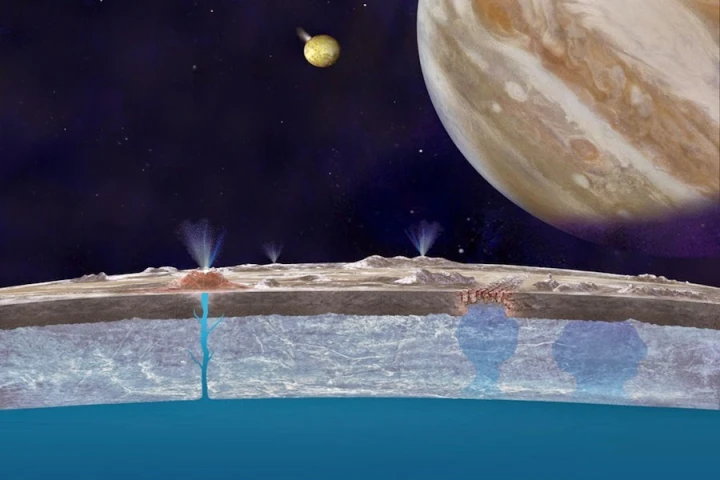
One of the most promising places in the solar system to search for life is Jupiter’s moon, Europa, an icy world with a slushy, salty, subsurface ocean. Old data has turned up new evidence of water plumes spraying through the icy shell into space.
Latest News
-
 November 24, 2026 | Mike McRaeAstronomers simulated 4.5 billion years of our Solar System’s evolution to see whether the presence of an unaccounted-for planet could account for the wonky arrangement of icy bodies beyond Neptune. What they found was intriguing.
-
 October 28, 2026 | Mike McRaeLast week, our solar neighborhood became a little more interesting with the potential discovery of a new icy world out in the Solar System’s fringes, concealed against a crowded backdrop of stars.
-
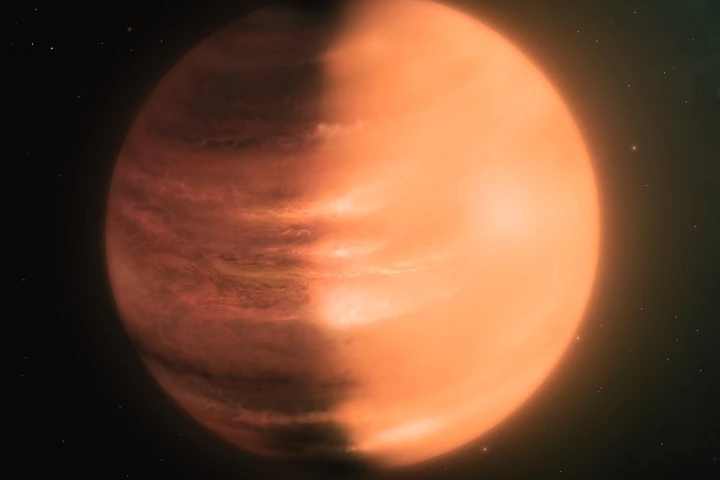 July 29, 2026 | Chris YoungAn international team led by researchers from the University of Oxford has discovered two of the lowest-density giant planets on record.
-
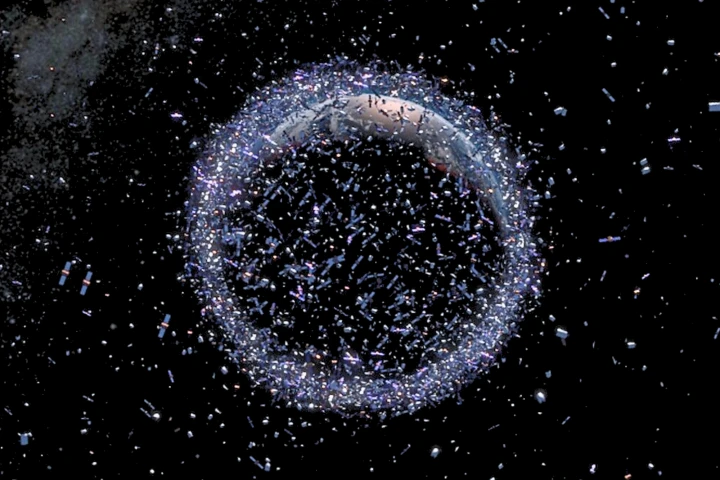 July 27, 2026 | Chris YoungFor the first time, a European Southern Observatory (ESO) study has quantified the threat to astronomy posed by a large number of highly reflective satellites planned to launch in the coming years.
-
 July 07, 2026 | Chris YoungFor the first time in more than 15 years, the International Academy of Astronautics (IAA) Search for Extraterrestrial Intelligence (SETI) committee has significantly revised the protocols governing how scientists “evaluate, verify, and announce evidence of extraterrestrial intelligence.”