
Bacteria
-
 We've already heard about experimental self-healing concrete, that can repair cracks within itself. Now, scientists have gone a step further, utilizing bacteria to create building materials that can be grown on-site – and that regenerate when broken.
 -
 Researchers at Rice University have developed a new air filter made of graphene foam, which can kill captured microbes with small zaps of electricity.
 -
 Graphene is incredibly thin, flexible, strong and electrically conductive, but it’s tricky to manufacture on large scales. Now researchers at the University of Rochester have recruited bacteria to make the stuff, which is cheaper and faster than current methods and doesn’t require harsh chemicals.
 -
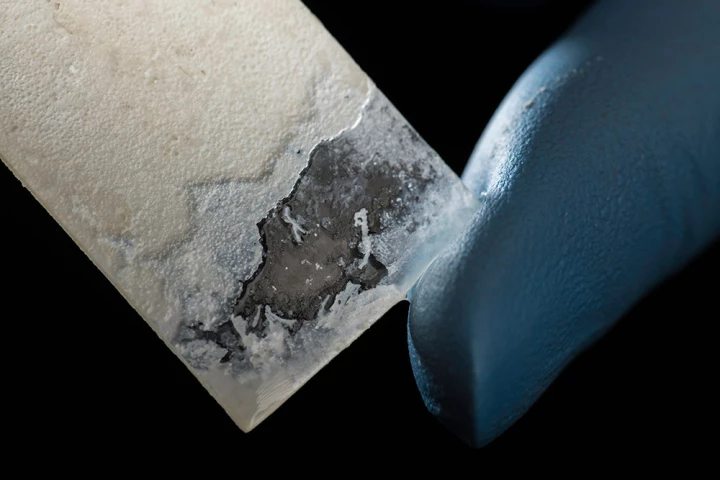 Besides simply looking nice when used in jewellery, mother-of-pearl is also one of nature's hardest, stiffest, most stable materials. Scientists have now utilized bacteria to develop a cheap and eco-friendly method of replicating it, for possible use in a variety of areas.
 -
 When calcium chloride de-icer is spread on sidewalks or roads, it reacts with the calcium hydroxide in concrete, creating calcium oxychloride. Also known as CAOXY, this substance expands within the concrete, causing it to crack. Adding bacteria, however, may keep that from happening.
 -
 Bacteria are a huge problem in hospitals, where colonies can build up on instruments and cause potentially fatal infections in vulnerable patients. Now, researchers at Aston University have developed a new type of antimicrobial material that’s made using a centuries-old stained glass technique.
 -
 Could your home one day be powered by patches of mushrooms? Probably not, but scientists have nonetheless created a "bionic mushroom" that does indeed generate electricity – and it may pave the way for more practical bio-electric systems.
 -
 Strong as steel and tougher than Kevlar, spider silk is one of nature’s most impressive materials. Researchers from Washington University in St. Louis have now engineered bacteria to produce biosynthetic spider silk that they say performs as well as the real stuff.
 -
 Researchers at the University of British Columbia (UBC) have developed a new way to build solar cells containing bacteria, which are more efficient than similar systems and can even work on dim, cloudy days.
 -
 Look around any hospital, and you'll see plenty of hand-sanitizer dispensers. Unfortunately, not everyone uses them, and their germs can spread rapidly on commonly-touched surfaces such as door handles. With that in mind, a University of Leeds spinoff company has created bacteria-killing door pads.
 -
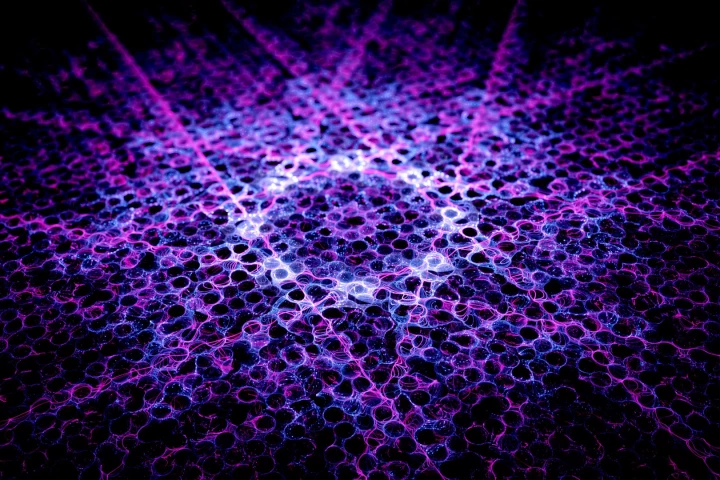 Researchers from Rice University have used graphene to make a bacterial bug zapper. A form of the material called laser-induced graphene (LIG) has previously been found to be antibacterial, and now the team has found that those properties can be kick up a notch by adding a few volts of electricity.
 -
 Due to its simple structure and rapid rate of reproduction, the bacteria E. Coli is favored in scientific research. E. coli have been used to do everything from creating antibiotics to manufacturing propane. Now, researchers have paired the bacteria with robots to create a manufacturing power duo.
Load More