
Northwestern University
-
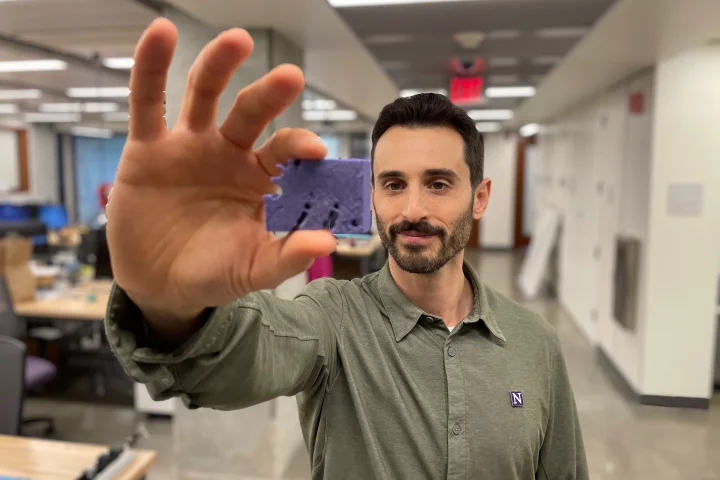 Evolution is a very slow process, due largely to the fact that nature doesn't "know" in advance which features of an animal will be beneficial. A new AI-based algorithm does know, however, allowing it to design robots within a matter of seconds.
 -
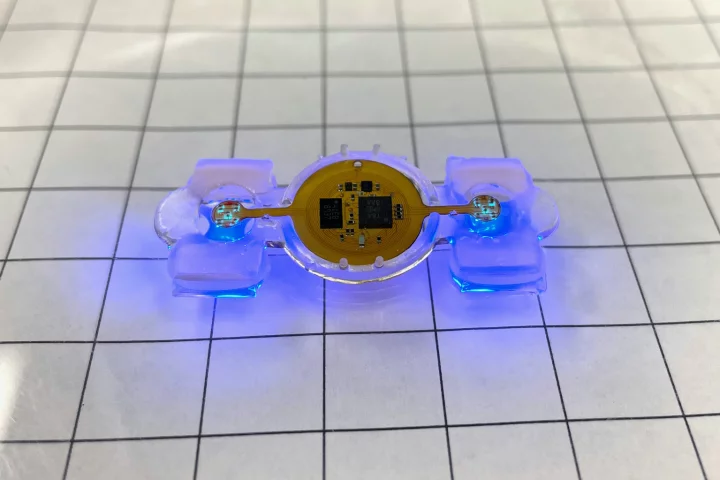 Back in 2012, we heard about tiny biped "biobot" robots that used actual muscle tissue to walk. Well, the descendants of those bots are now equipped with LEDs, which allow them to be remotely steered in a practical fashion.
 -
 Researchers at Northwestern University in Illinois have demonstrated the world's smallest remote-controlled walking robot. These tiny machines can bend, twist, crawl, walk, turn and jump without hydraulics or electricity, using shape-memory alloys.
 -
 Blind corners have long troubled drivers, but researchers have now developed a holographic camera technology that can peer around corners by reconstructing scattered light waves, quickly enough to spot fast-moving objects like cars or pedestrians.
 -
 Researchers have proposed a fascinating way to eliminate CO2 in the notoriously hard-to-abate shipping sector. The ships would use existing marine fuels, run through solid oxide fuel cells, and all CO2 would be stored back in a partitioned fuel tank.
 -
 A new thermoelectric material may be the most efficient one yet. The new and improved polycrystalline form of purified tin selenide has all the right properties to make it a practical material for converting waste heat into electricity.
 -
 As the world's strongest artificial material, graphene may have a lot to offer the world of construction, and scientists have offered another example of this by using it to create a novel form of cement that is highly resistant to water and cracks.
 -
 Ordinarily, if you want to change the shape in which an object is 3D-printed, you have to alter the computer model that tells the printer what to do. A new and simpler technique, however, allows the printer to initiate the changes itself, as the print job is in progress.
 -
 The Japanese folding paper art form of kirigami has a lot of potential for engineering. Scientists have taken this technique down to the nanoscale for the first time, opening up new possibilities in applications ranging from robotics to aerospace.
 -
 As a way of demonstrating advances in energy and where they might lead us, a team of researchers has built a Game Boy that requires no battery, instead powering itself from a combination of solar energy and the user’s interactions with the device.
 -
 Once discarded, spongy polyurethane foam typically just ends up in landfills, where it takes up a lot of space. Thanks to a newly-developed process, however, it could soon be recycled into higher-quality rubbers and hard plastics.
 -
 Scientists are continually looking at better ways to prevent ice buildup on planes, among them a Northwestern University team that is claiming a new surface coating inspired by mint leaves can reduce frost formation by up to 60 percent.
Load More