
Radio
-
 After more than a century, an era comes to an end as the world's longest-running long-wave radio service shuts down. On June 27, 2026, the BBC switched off its Radio 4 long-wave broadcast for good, with an even more startling cancellation in the works.
 -
 If you enjoy building or tinkering with electronics, the Kode Dot pocket-sized creator tool or electronics multitool or whatever else you want to call it can help you get wildly creative with your projects, and make it a lot easier to test them.
 -
 Scientists at the University College London have set a new world record in wireless data transmission speeds, sending a blistering 938 Gigabits per second (Gbps) over the air through a combo of radio and light technology.
 -
 Radio telescopes are picking up strange signals from an intelligent lifeform – ourselves. A new study has shown that satellite constellations like SpaceX’s Starlink swarm are unintentionally leaking signals that can interfere with vital observations.
 -
 San Francisco-based tech company Somewear Labs has taken the wraps off a pocket-sized military multi-networking communication device called Node that can automatically switch between internet-like mesh radio and satellite communications.
 -
 GPS has its limitations in urban areas where signals can get noisy. Now, engineers in the Netherlands have developed “SuperGPS” – a hybrid positioning system that combines wireless and optical connections to pinpoint locations within centimeters.
 -
 Researchers at NIST have shown that a cloud of atoms can be used as a receiver to pick up video transmissions. The team demonstrated this “Atomic Television” by transmitting live video feed and even video games through the atoms to a monitor.
 -
 Swim coaches have a difficult job, as they have to shout in order for swimmers to hear them – and even then, they still may not be heard. The Sonr system is designed to address that problem, using one-way radio communications.
 -
 Powercast is set to unveil three new products at CES 2020, including a wireless charging grip for Nintendo Switch Joy-Con controllers, which can charge the devices from about 2 feet from a wireless power transmitter.
 -
 The SLAC National Accelerator Laboratory has developed a compact antenna that can transmit radio signals underwater, and even through solid earth. The new 4-inch (10-cm) antenna exploits the piezoelectric effect to generate Very Low Frequency (VLF) waves that normally require antennae miles long.
 -
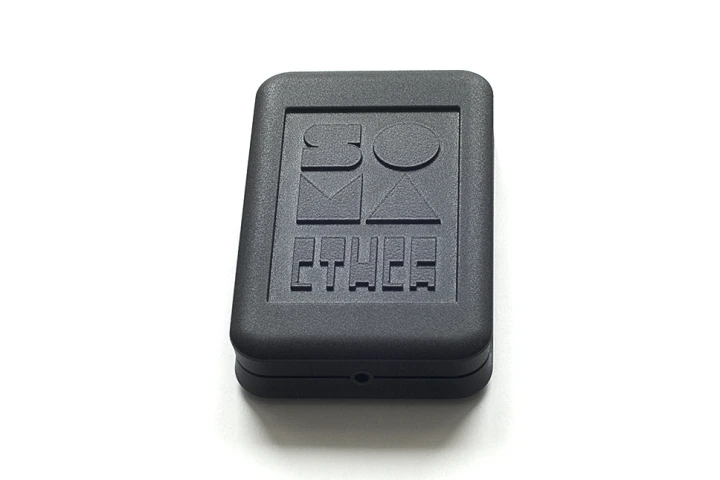 Soma Laboratory has developed a handheld gadget that taps into the hidden voices of everyday modern objects, such as display screens, park railings and electronic doors. Ether picks up secret electromagnetic whispers and records the audio to a cabled audio recorder.
 -
 As crucial as antennas are, the rigid metals they’re made of can limit what devices they can be built into. To help with that, researchers at Drexel University have developed a new kind of antenna that can be sprayed onto just about any surface.
Load More