
University College London
-
 A landmark study is due to start in the coming months, and if successful it could ultimately revive our immune system in older age and even treat chronic illnesses like autoimmune disease. The Phase 1 trial is aiming to rejuvenate senescent T cells.
 -
 Scientists at the University College London have set a new world record in wireless data transmission speeds, sending a blistering 938 Gigabits per second (Gbps) over the air through a combo of radio and light technology.
 -
 Researchers have alloyed arsenic with phosphorus to create single-atom-thick ribbons that are highly conductive, making them ideal candidates for use in next-generation batteries, solar cells and quantum computers.
 -
 Stars are hot balls of plasma, but astronomers have now spotted a super strange one that may have a solid surface. Its intense magnetic field is strong enough to overcome its blistering temperatures and “freeze” its outer layers into a solid crust.
 -
 While there are now a number of robotic hands that can grasp objects, it's usually impossible to change a grasped object's orientation within the hand without releasing it. A new robotic hand is able to do so, however, via its rolling fingers.
 -
 A team of scientists at the University College London has used 3D tomography to shed new light on the Antikythera Mechanism – the world's first computer, which was an accurate model of the Cosmos as it was known to the ancient Greeks.
 -
 Chromium is used to make tool steel or stainless steel, and it’s thought to have been invented around the late 19th and early 20th centuries. Archaeologists have now discovered that Persians were mixing chromium into steel way back in the 11th century.
 -
 A new internet speed record has been clocked at an incredible 178 terabits per second (Tb/s) – fast enough to download the entire Netflix library in under a second. It's achieved by modulating light in new ways before beaming it down optical fibers.
 -
 When it comes to accurately reading the brain's electrical signals, many systems utilize implantable electrodes. A new technology is reportedly less invasive yet just as accurate, as it swaps regular electrodes for ultra-thin wires.
 -
 They charge much faster than lithium batteries, they can put out massive power, and they last thousands of cycles with minimal deterioration. This energy density breakthrough could bring supercapacitors into the EV and consumer tech worlds.
 -
 Researchers at University College London have created a new record for the fastest ever data transfer rate for digital information, at an incredible 1.125 terabits per second.
 -
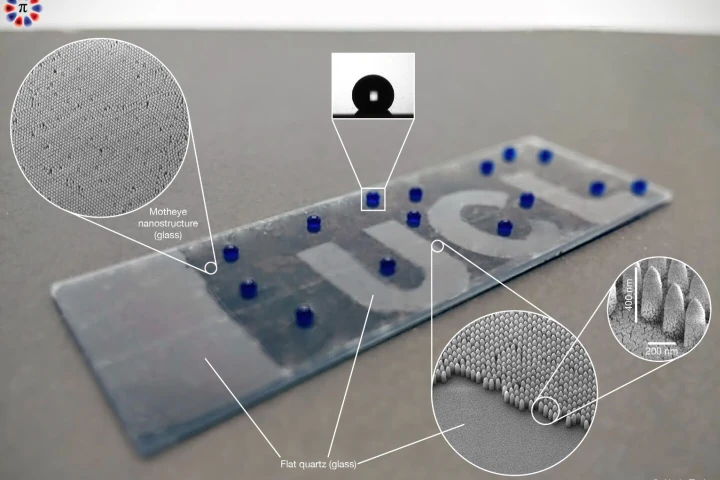 A revolutionary new type of smart window could cut window-cleaning costs in tall buildings while reducing heating bills and boosting worker productivity. Partially inspired by the reflective properties of moth eyes, this smart window is said to be self-cleaning, energy-saving, and anti-glare.
Load More