
University of Hong Kong
-
 Humankind's colonization of Mars is approaching, and with it will come self-sustaining biospheres, autonomous rovers, and, perhaps, mud houses. Scientists have created a recipe for 3D-printing houses on Mars using Martian sand, yeast, and gelatin.
 -
 If anyone could defeat the “man of steel,” it would be a “man of stainless steel.” However, even stainless steel has its electrochemical limits. Scientists have created a version that can withstand conditions only a “man of titanium” typically does.
 -
 Flying robots do have advantages over their ground-going counterparts, but they're not very energy-efficient. A new bot addresses that tradeoff by using a wing-assisted mechanism to hop instead of walking or flying in the traditional sense.
 -
 A new light-activated ink can change color on demand. It’s made up of colored microbeads that rise in response to different wavelengths of light to change a surface color, which could be useful for new displays or active camouflage systems.
 -
 Although many fossils are simply lying exposed on the soil's surface, finding all of them would require a great deal of walking over varying terrain. A new autonomous hexacopter drone could help, as it uses a laser to hunt for fossils at night.
 -
 Whenever you try to improve steel, there are usually tradeoffs involved. It’s a balancing act between different properties. Now, engineers have developed a new type of “super steel” that defies this, staying strong while still resisting fractures.
 -
 When a motorist enters an overpass that runs parallel to a ground-level road, it's possible that their GPS navigation system will think that they're still ON the lower road. A new system created at the University of Hong Kong is designed to keep that from happening.
 -
 Researchers from New York University Shanghai and the University of Hong Kong discovered that playing action-based video games can strengthen a person's visual motor skills and possibly improve real-world skills such as driving.
 -
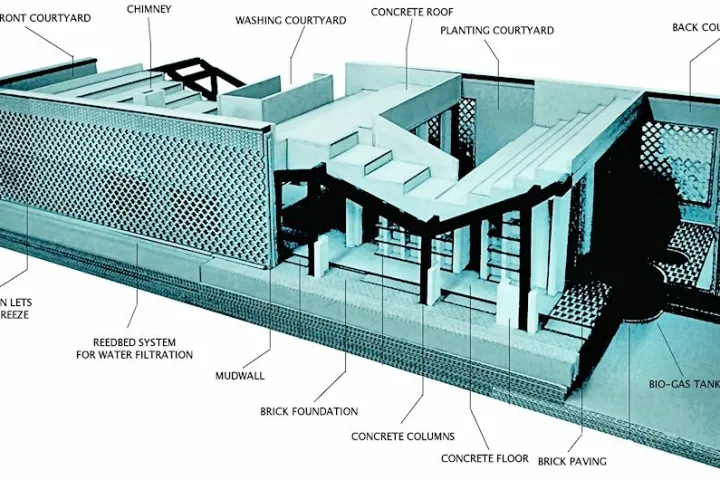 Award winning architect John Lin and his colleagues at Hong Kong University are designing a traditional rural China for the future!