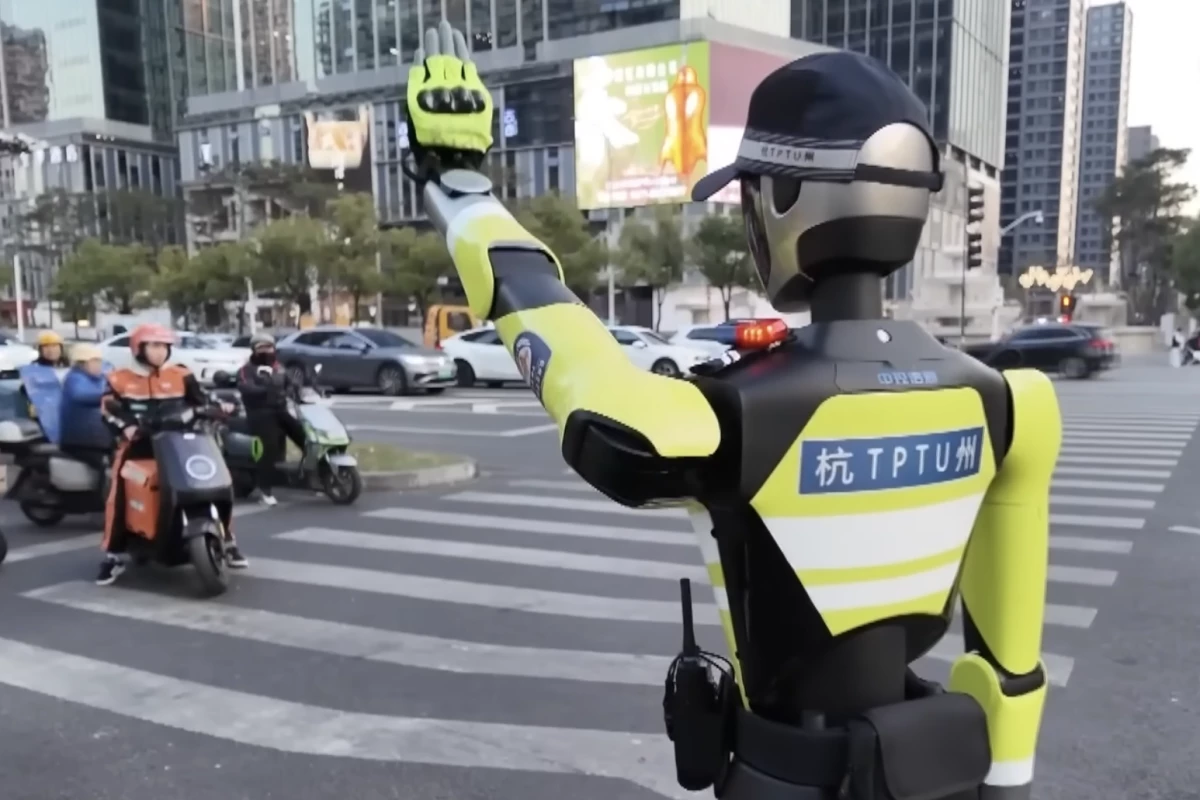



Hangzhou is the latest city in China to take traffic control to a new level, rolling out a new AI-powered robot police officer to direct vehicles and pedestrians at a major intersection and issue polite warnings to law-breakers.
This 1.8-m-tall (5-ft 11-in) humanoid traffic cop – Hangxing No. 1 – has made quite an impression so far at the busy Binsheng Road and Changhe Road intersection in Binjiang District, where it's directing buses, cars and bikes, spotting violations and issuing verbal warnings. It sports high-definition cameras and sensors, can blow a whistle and is integrated with the intersection's traffic signal system to respond to light changes.
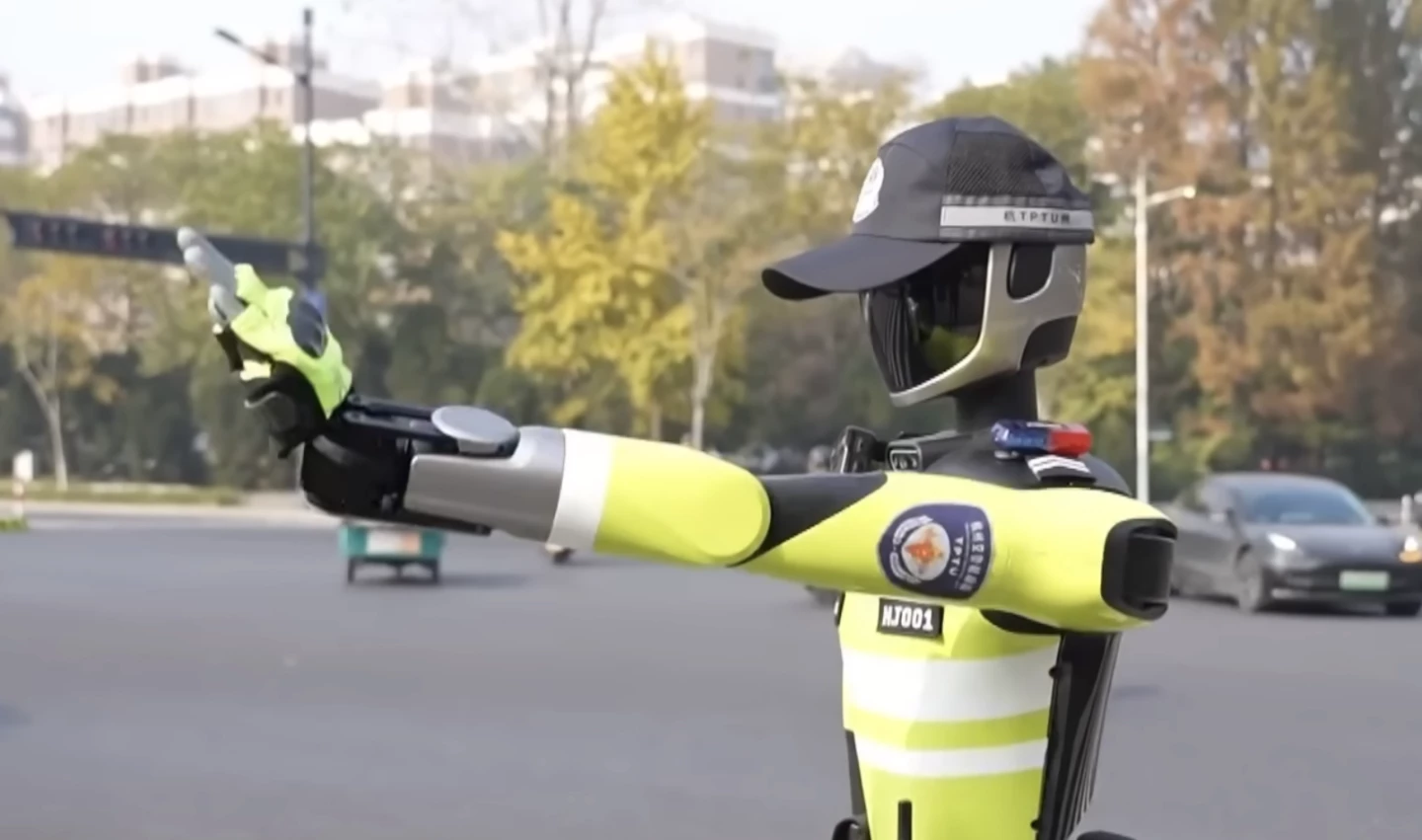
While it's so far designed to be an adjunct to existing human officers, rather than a replacement, police department officials have plans to upgrade it with large language model (LLM) capabilities that will enable it to offer directions and have more engagement with people using the road. Right now, it performs the standard "stop" and "go" motions to oncoming traffic and can identify riders without helmets, jaywalkers and intersection rule-breakers.

Hangxing No. 1 took up its post at the start of December, as part of the Hangzhou Traffic Police Tactical Unit's pilot program of robot officers, and has so far proved especially popular with pedestrians.
It's not the first robocop patrolling Chinese streets, with EngineAI's PM01 model also donning the hi-vis uniform to help out on Shenzhen streets in and Logan Technology's RT-G spherical bot quite literally rolled out in Wenzhou last December. And in June, Chengdu got its own humanoid traffic-cop to help out on the western city's busy streets.

All we can say is the technology has come a long way since the AnBot went on duty at the Shenzhen airport in September 2016. That model – which resembled a Dalek crossed with a bar fridge – was, of course, cutting-edge at the time. Given the rapidly moving pace of robotics development, we imagine this new Hangxing No. 1 model may also look obsolete in not nine years but one or two.
Source: CGTN