



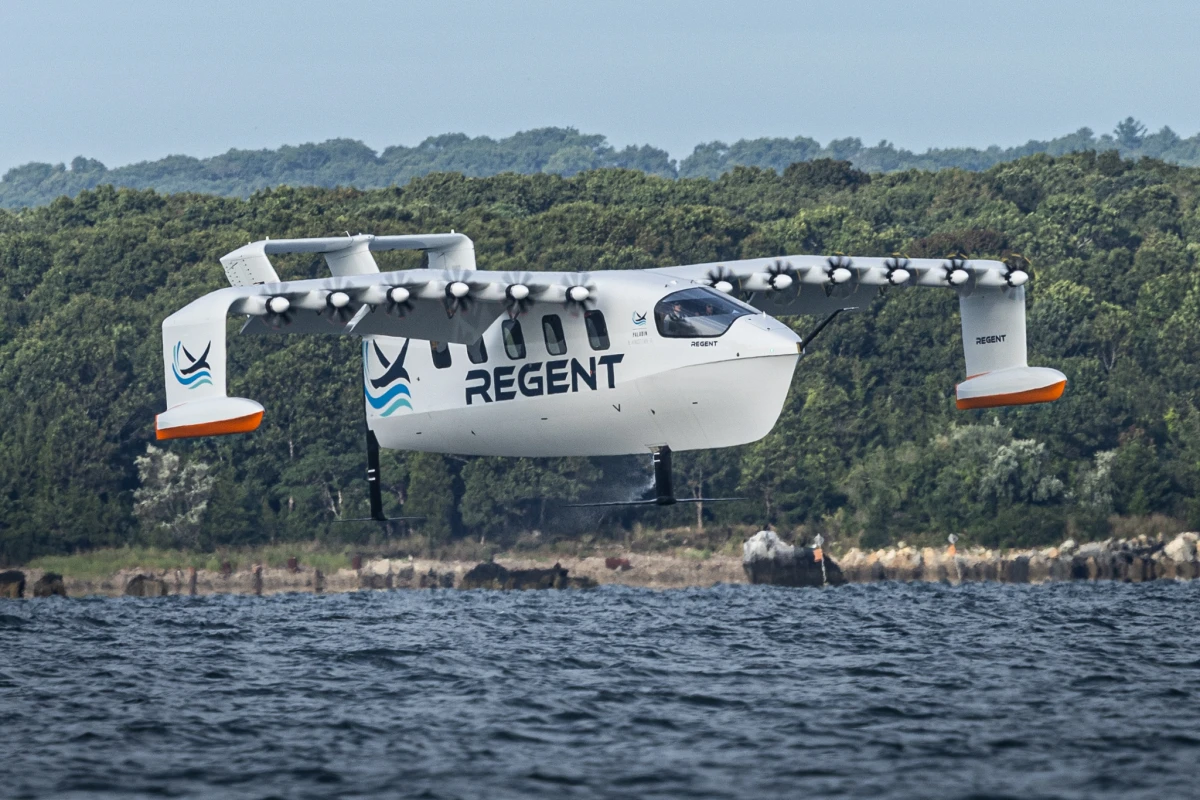



One of the world’s most unusual aircraft has taken to the air in its first crewed flight. Regent Craft's Viceroy is an all-electric "seaglider" that combines a floating hull, wing-in-ground (WIG) effect technology, and hydrofoils into a single vehicle.
Aeroengineering often spits out some fascinating innovations, but it isn't often that you see three rolled into the same aircraft at the same time – and in a seaplane at that. When the Viceroy prototype took off on September 2, 2026 from Narragansett Bay, North Kingstown, Rhode Island, it was probably one of the most unique test flights in recent history.
For one thing, the aircraft was an all-electric number powered by a dozen electric motors strung along the leading edge of the wing. This was a little bit unusual from a visual perspective, but not that unusual on its own – however, it is odd to see on a seaplane. It's even odder on a seaplane operating on a novel aerodynamic principle.
Officially, the Viceroy is a wing-in-ground effect (WIG) maritime vessel. That means it uses the wing-in-ground effect to increase lift. It does this, put simply, by flying low with a short, wide wing that traps a cushion of air between the aircraft and the ground, allowing it to carry a much larger payload than a standard vehicle of equal size.
It's an impressive idea and one that the Soviet Union invested a great deal of time and money in with the hopes of developing sea-skimming missile platforms. But this turned out not to be practical because of a number of drawbacks to WIG craft.
For one thing, they tended to suffer from pitch instability and poor handling at low speeds in rough, open waters. In other words, however well a WIG craft might perform once airborne, it would be an absolute bear between leaving dock and taking off.
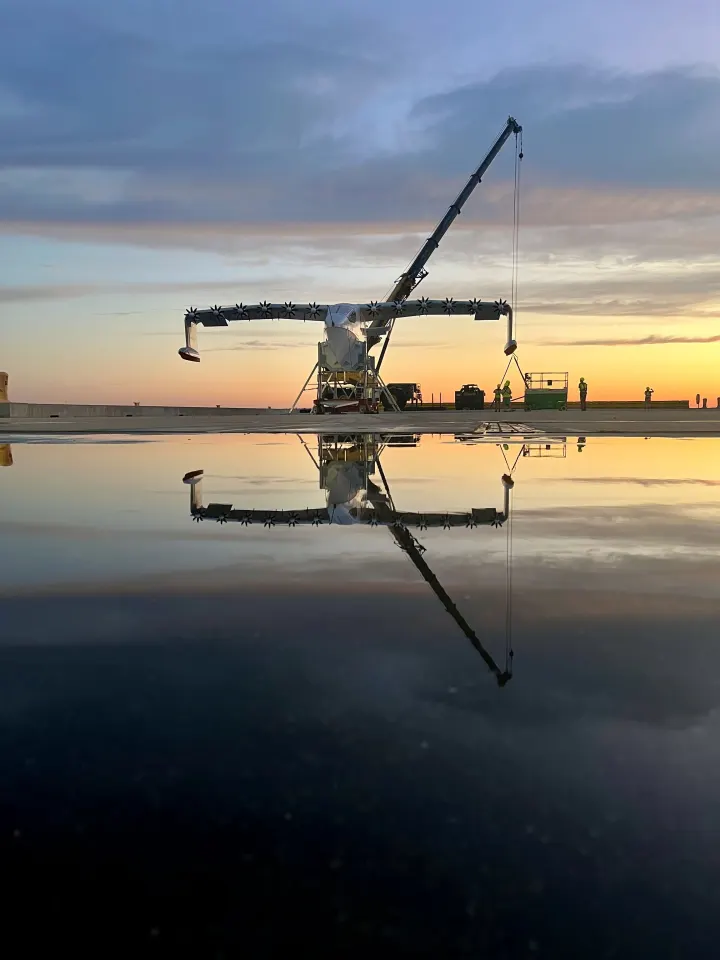
To avoid this, the Viceroy introduces a novel solution. It has hydrofoils, which raise the aircraft out of the water at mid-speeds. This cuts wave drag, allowing it to run faster and with better maneuverability, providing greater stability and allowing a smoother takeoff.
For the maiden flight, the Viceroy had two pilots at the controls as it covered a distance of 1,956 ft (596 m) at an altitude of 33 ft (10 m) during a 30-second flight using a triple-redundant digital fly-by-wire system for automatic pitch, roll, and altitude control. That might not seem like much, but the idea of the initial test was to validate the fundamentals of the design.
Source: REGENT Craft


