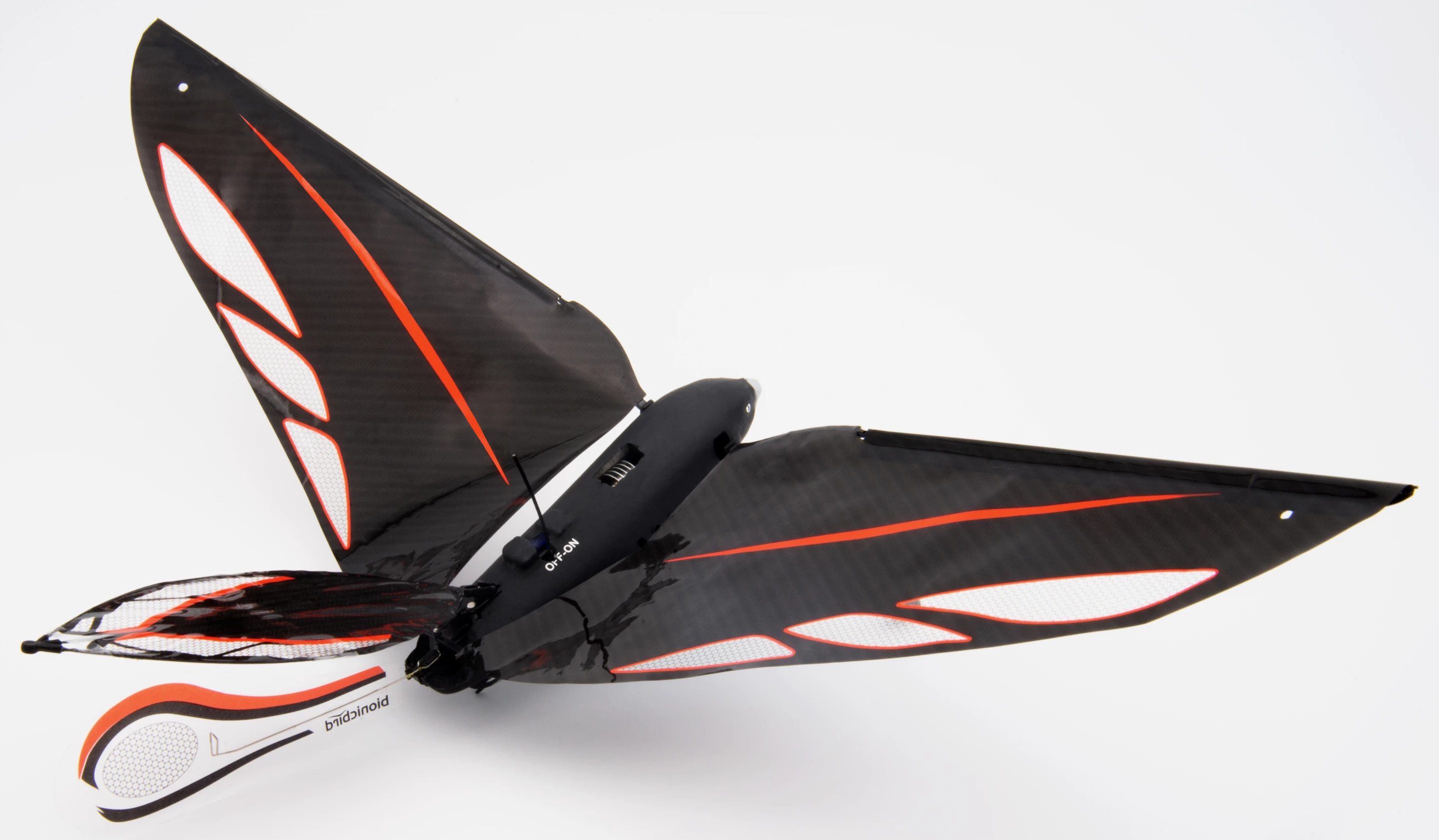

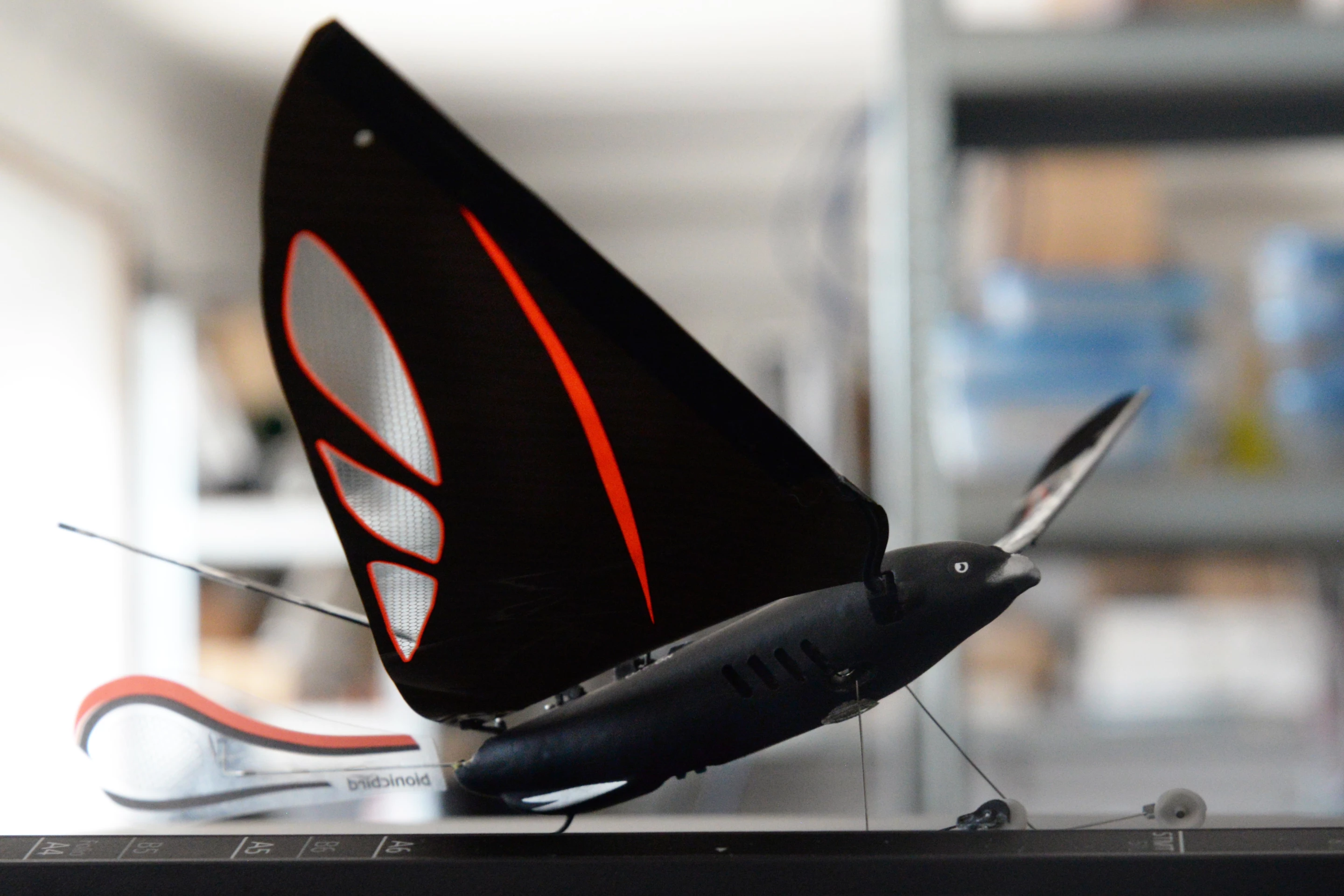
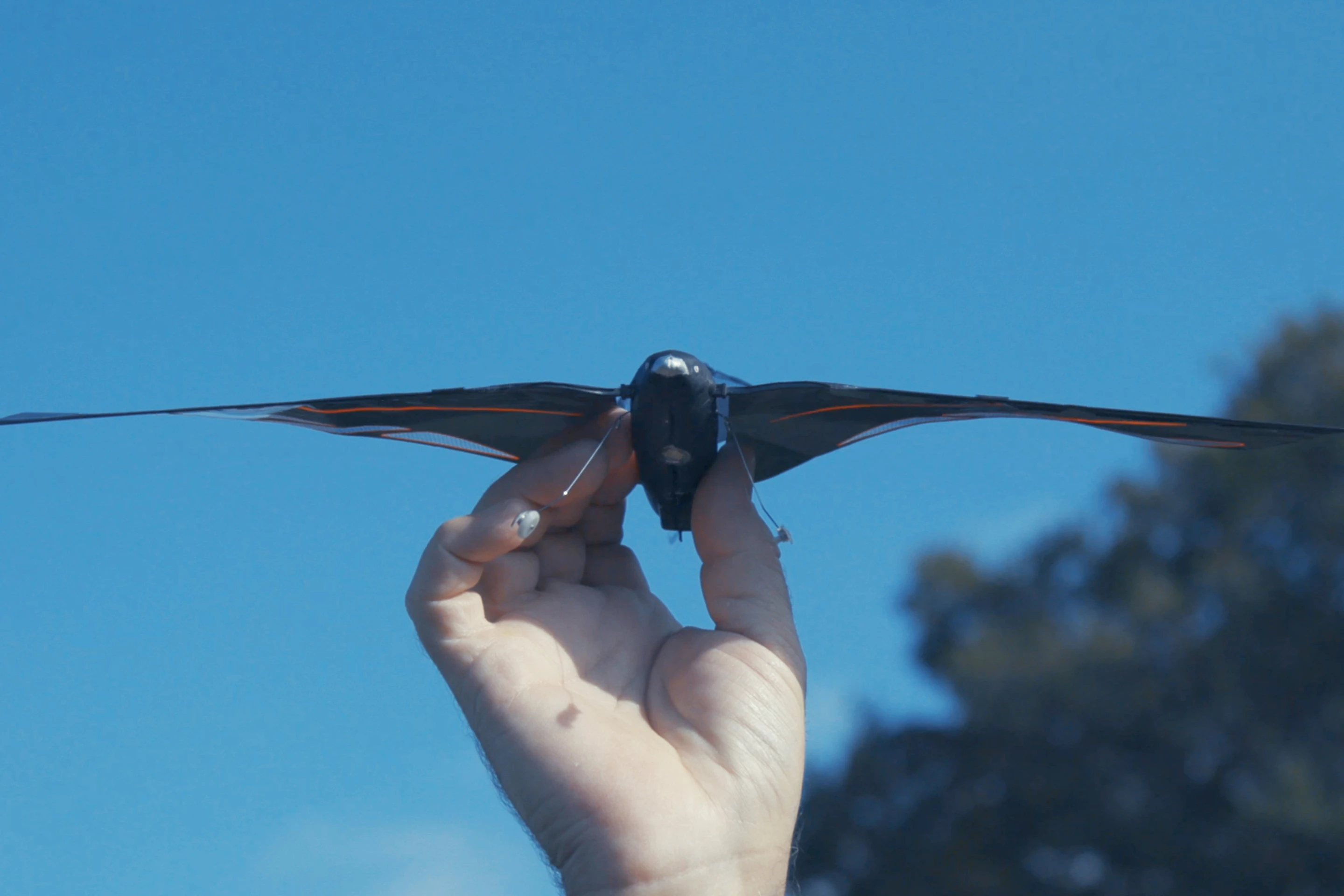
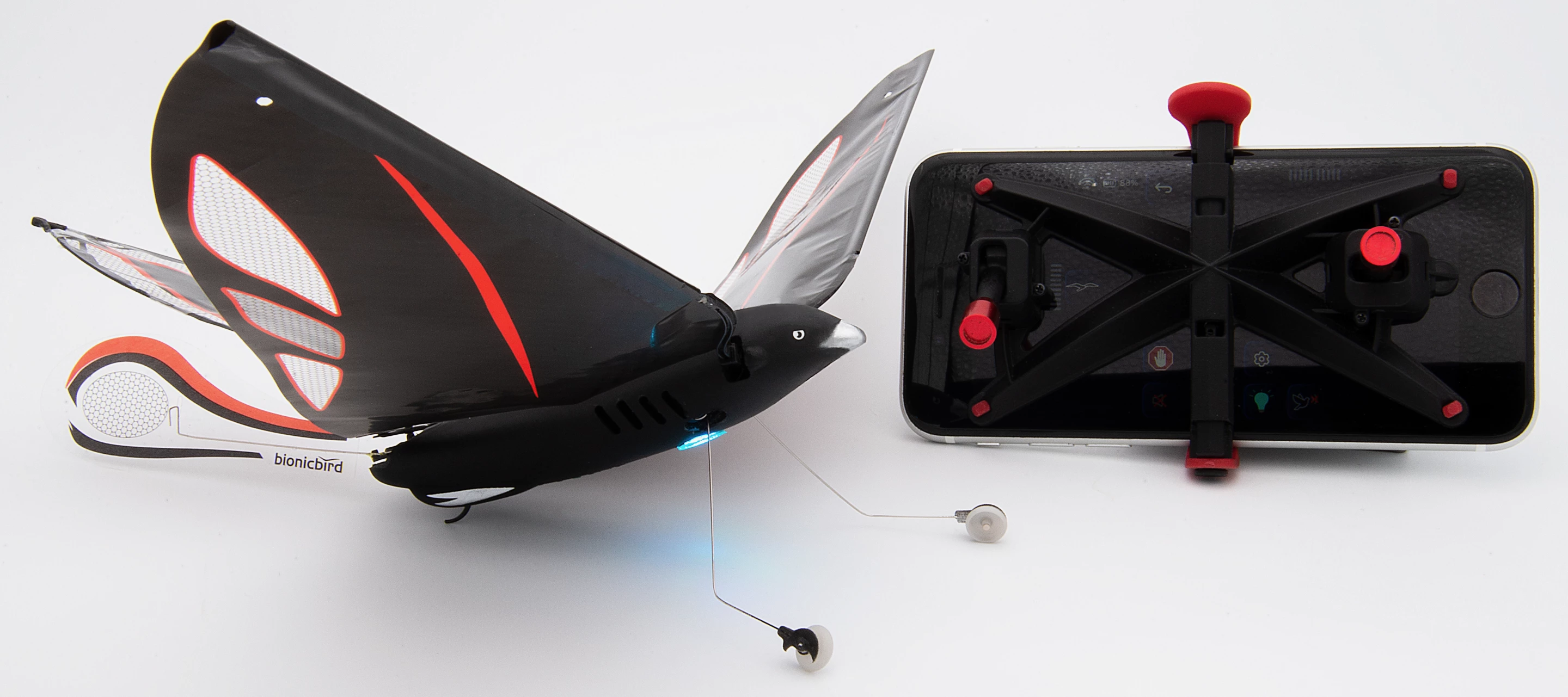

Many readers will remember the MetaFly, a remote-control robotic insect that flies by actually flapping its wings. Well, its inventor is back with a much more capable robotic swift (you know, the bird), which is currently on Kickstarter.
Like the MetaFly and the Bionic Bird before it, The Swift was created by French aeronautical engineer Edwin Van Ruymbeke. And yes, just like its two predecessors – and like other ornithopters – it does indeed fly by flapping its wings. It's controlled via an iOS/Android smartphone app.
But what makes The Swift so special?
Generally speaking, ornithopters can only fly at one fairly brisk speed, limiting them to use in wide-open outdoor spaces. The Swift gets around that limitation, with two interchangeable tails.
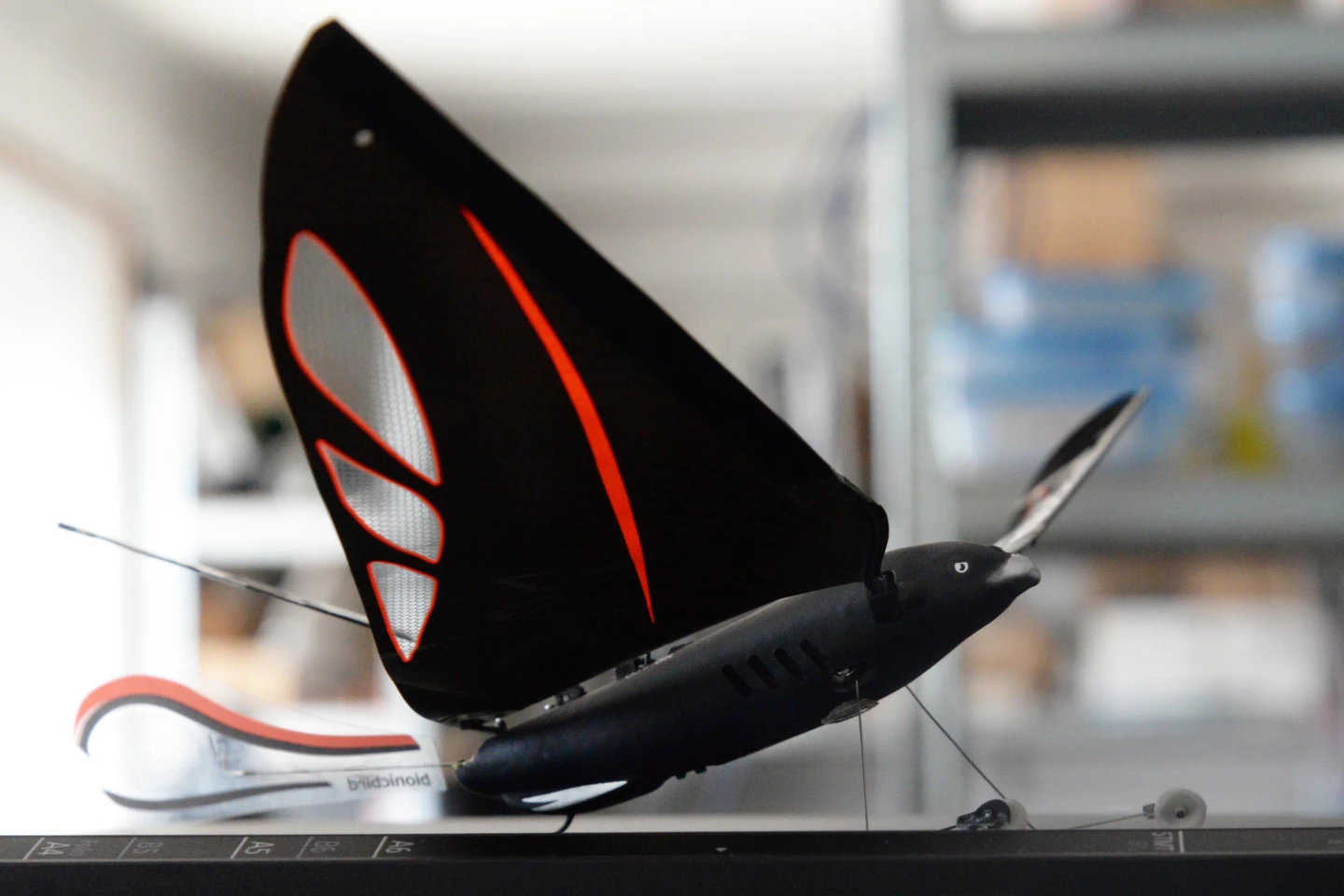
With its Speed tail in place, it can reach speeds of up to 31 km/h (19 mph). Swapping in its Precision tail, however, allows it maintain stable, controlled flight at speeds as slow as 3.5 km/h (2 mph). What's more, the app offers five settings per tail to fine-tune speed, glide, and response.
So yes, using the Precision tail, you can fly The Swift indoors.
It's aided by real-time IMU (inertial measurement unit) corrections and adjustable assist levels, but even if you do crash, it's supposedly no big deal. The ornithopter is made of EPP (expanded polypropylene) foam, carbon fiber rods and titanium, so it's reportedly quite resilient.
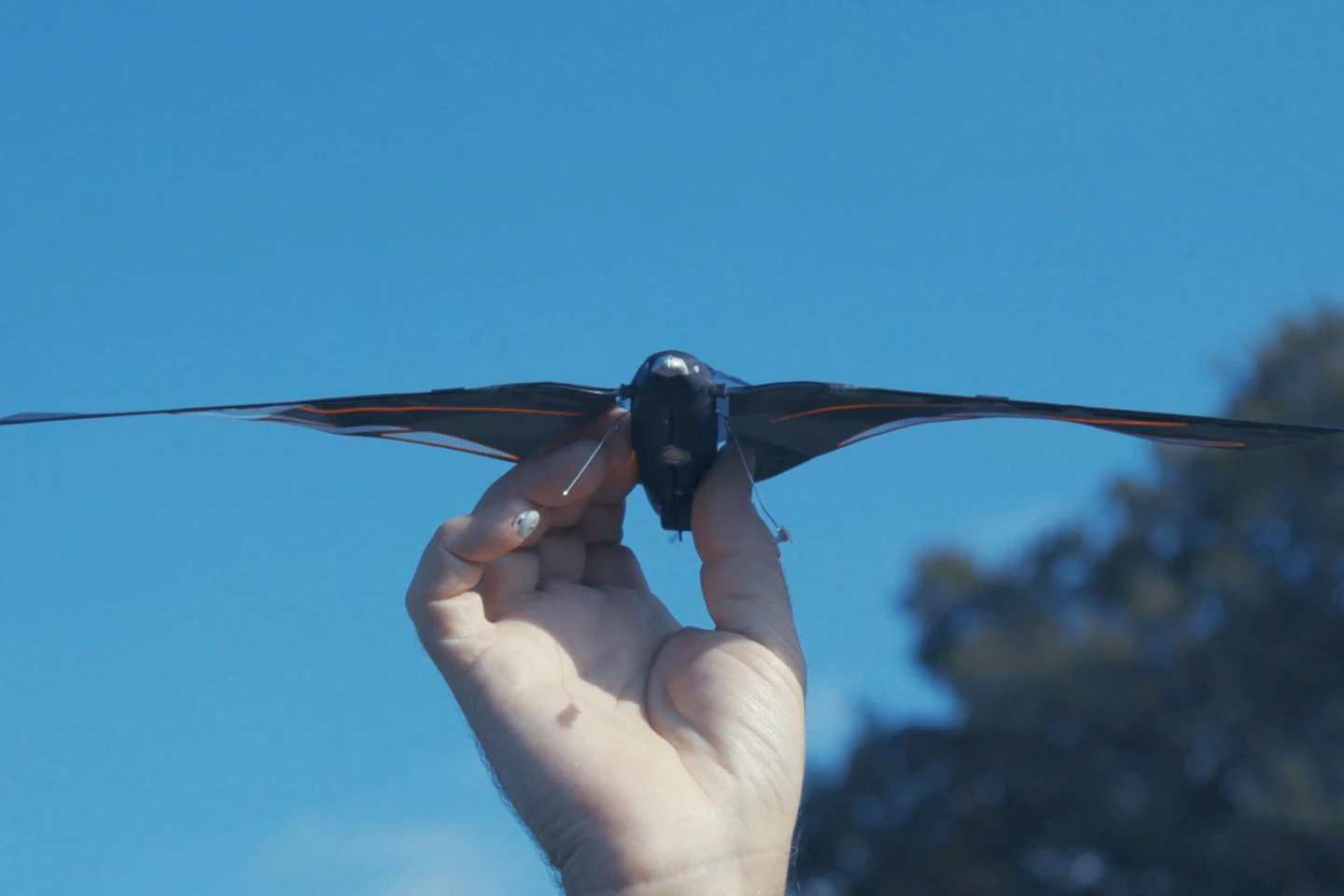
The whole thing is claimed to tip the scales at 10.9 grams (0.4 oz) and should be good for 10 to 12 minutes of flight time per battery-charge. It has a remote control range of 150 meters (492 ft).
One interesting optional extra is a little something known as the X-Play. It's not a full standalone joystick remote, but is instead a capacitive joystick attachment that straps onto the touchscreen of the user's smartphone, turning it into a joystick remote.
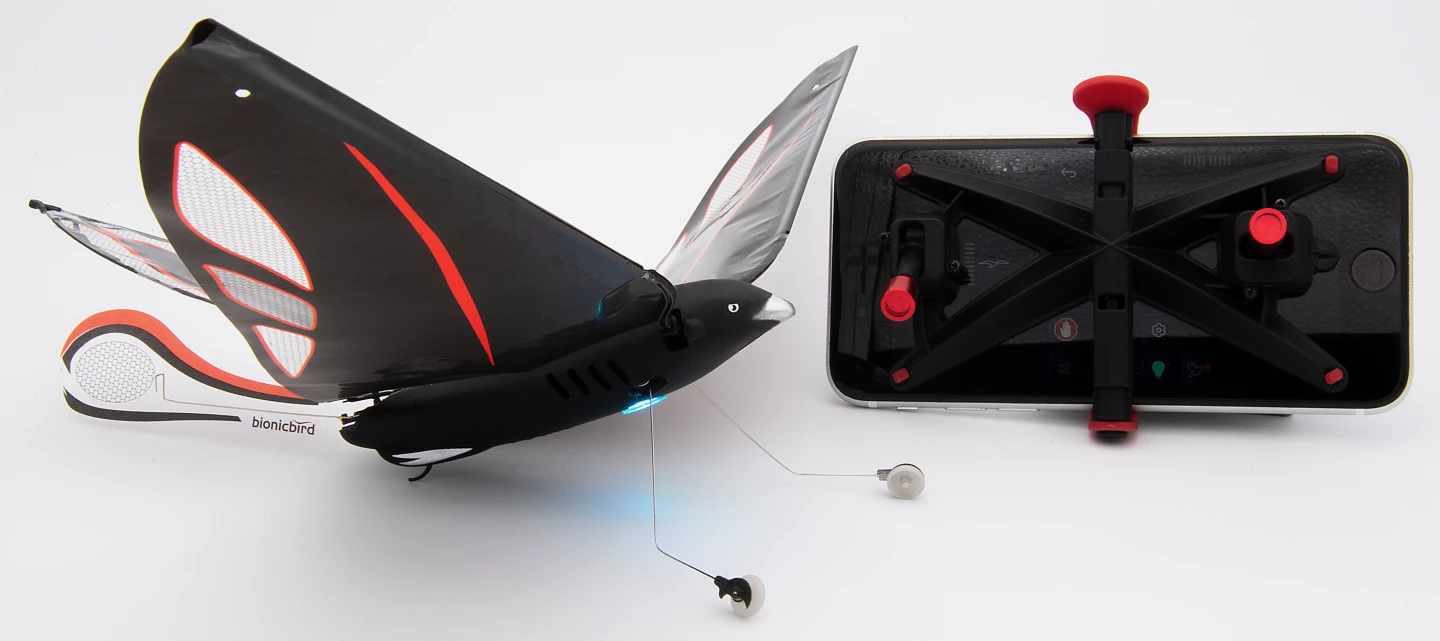
Assuming The Swift reaches production, a pledge of €109 (about US$129) will get you one. The planned retail price is €156 ($185).
You can see it in flight, in the video below.
Source: Kickstarter
Note: New Atlas may earn commission from purchases made via links.