

Architecture

Europe's largest 3D-printed housing project creates 36-home community

Europe's largest 3D-printed housing project creates 36-home community
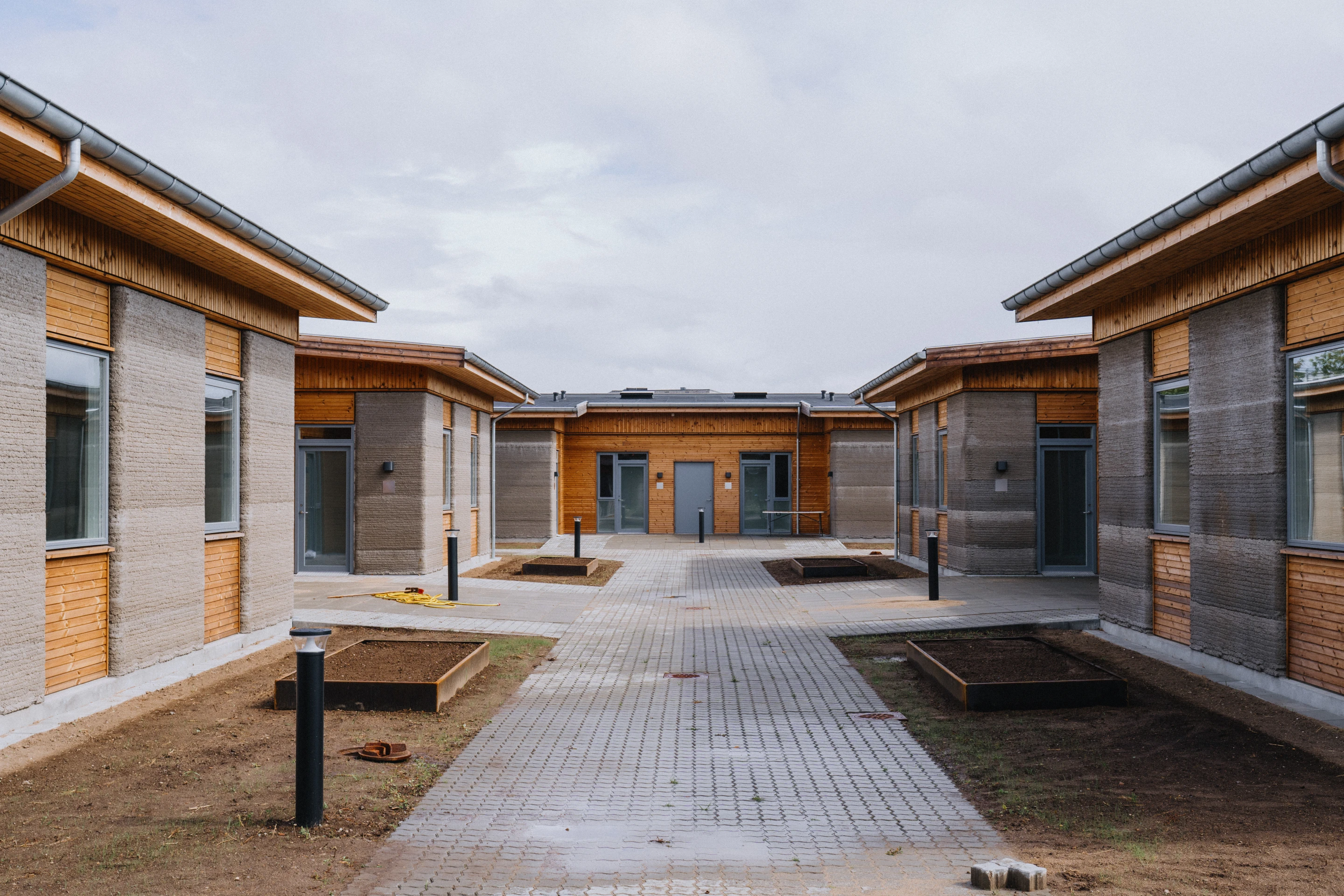
Skovsporet consists of 36 self-contained student apartments spread across six single-story buildings
View 9 Images
Skovsporet consists of 36 self-contained student apartments spread across six single-story buildings
1/9
Skovsporet consists of 36 self-contained student apartments spread across six single-story buildings
The Skovsporet project was printed using a COBOD BOD3 3D printer
2/9
The Skovsporet project was printed using a COBOD BOD3 3D printer
Once Skovsporet's 3D-printed work was finished, human builders were tasked with adding the roofs, doors, and everything else required to turn a concrete shell into a home
3/9
Once Skovsporet's 3D-printed work was finished, human builders were tasked with adding the roofs, doors, and everything else required to turn a concrete shell into a home
Skovsporet was completed in 12 months, including both the 3D printing work and traditional building work
4/9
Skovsporet was completed in 12 months, including both the 3D printing work and traditional building work
Skovsporet's 36 apartments are arranged across six buildings that share landscaped outdoor spaces
5/9
Skovsporet's 36 apartments are arranged across six buildings that share landscaped outdoor spaces
Large windows and skylights bring plenty of daylight into the Skovsporet apartments
6/9
Large windows and skylights bring plenty of daylight into the Skovsporet apartments
Each Skovsporet apartment contains its own kitchen, study area, lounge, bathroom, and sleeping area
7/9
Each Skovsporet apartment contains its own kitchen, study area, lounge, bathroom, and sleeping area
Wooden and cork detailing helps soften the concrete interiors of the 3D-printed Skovsporet apartments
8/9
Wooden and cork detailing helps soften the concrete interiors of the 3D-printed Skovsporet apartments
Some of the Skovsporet apartments' sleeping areas are raised, like a loft bed, enabling space for study underneath
9/9
Some of the Skovsporet apartments' sleeping areas are raised, like a loft bed, enabling space for study underneath
View gallery - 9 images

3D-printed construction is still definitely on the cutting edge, but it's moving toward the mainstream remarkably quickly. The latest major stride comes from Denmark, where a team has completed what it calls Europe's largest 3D-printed housing project, creating a community of 36 self-contained student apartments.

Created by SAGA Space Architects in collaboration with 3DCP and COBOD, Skovsporet is located in the town of Holstebro and was commissioned by an affordable housing organization for a local university campus.

Wooden and cork detailing helps soften the concrete interiors of the 3D-printed Skovsporet apartments

The 36 apartments are divided across six single-story buildings, which share courtyards, landscaped gardens, walking paths, and bicycle parking. In a nice touch, 90% of the trees already on the wooded site were preserved during the build process.

The project was primarily constructed using a COBOD BOD3 3D printer, which extruded a cement-like mixture from a nozzle to build up the basic structure of the apartments in layers. Just three people were needed on site to keep an eye on things, and during the build, printing time fell from several weeks on the first building of six apartments to just five days on the last.

Skovsporet's 36 apartments are arranged across six buildings that share landscaped outdoor spaces

Once all the printing was finished, human builders then came in and added the roofs, furniture, doors, and glass, and everything else required to turn a concrete shell into a home.

"This student housing project proves that 3D printing is no longer just an experiment," says Sebastian Aristotelis, co-founder and lead architect of SAGA Space Architects. "We have gone from printing small prototypes to creating 36 real homes and an entire community. That is the scale where technology starts to matter as a serious tool for architecture."

The student residences range in size from 40 to 50 sq m (431 to 538 sq ft) and each apartment is designed as a standalone home with its own kitchen, study area, lounge, bathroom, and sleeping area. Daylight is maximized with lots of windows and skylights, and the decor softens the telltale ribbed concrete (a result of the layered printing process), with wood, cork, and what looks like drywall – a far cry from some of the dingy student accommodation many of us had to put up with.

Some of the Skovsporet apartments' sleeping areas are raised, like a loft bed, enabling space for study underneath

Skovsporet took 12 months to complete, including the work by the human builders, and students are expected to move into the homes in the coming weeks. We've no word on the budget, but SAGA Space Architects told us that it stayed within a strict cost framework for social housing. Looking to the future, the firm sees Skovsporet as an important step in bringing 3D-printed construction into mainstream building, and plans to use what it has learned in future projects.

Source: SAGA Space Architects

View gallery - 9 images
No comments
0 comments
There are no comments. Be the first!