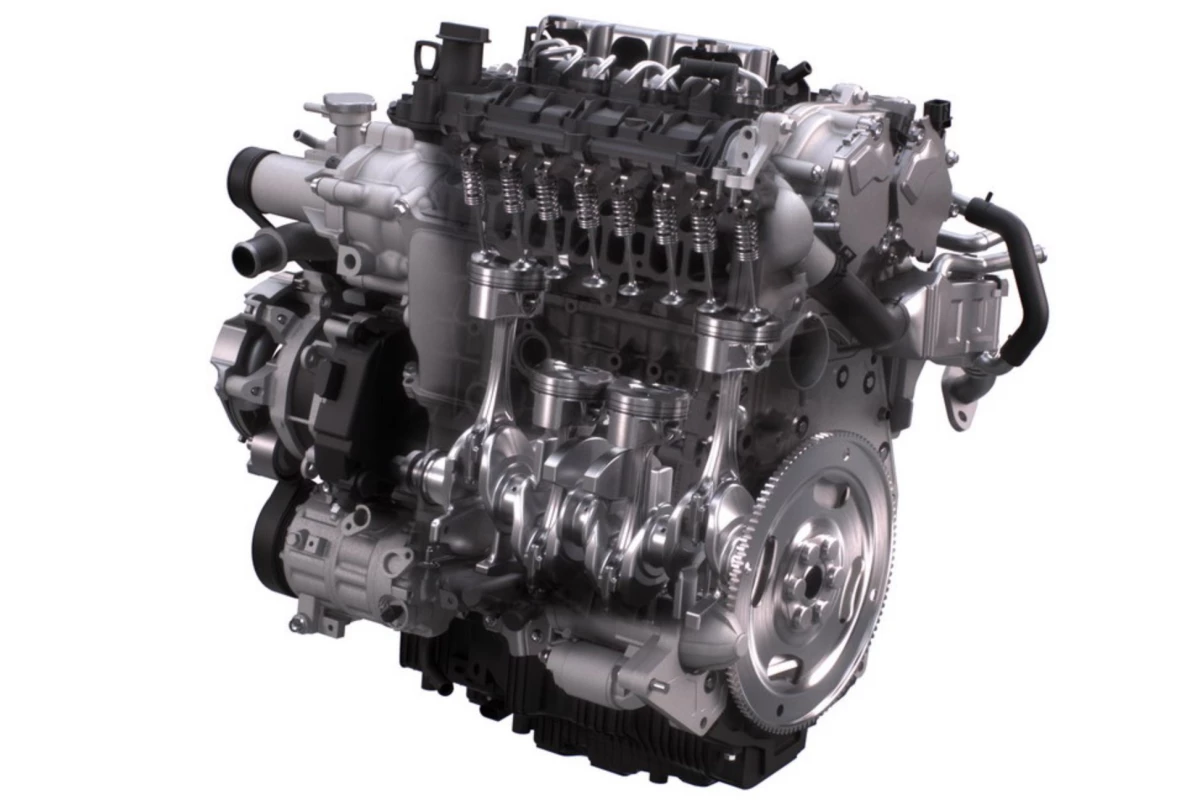
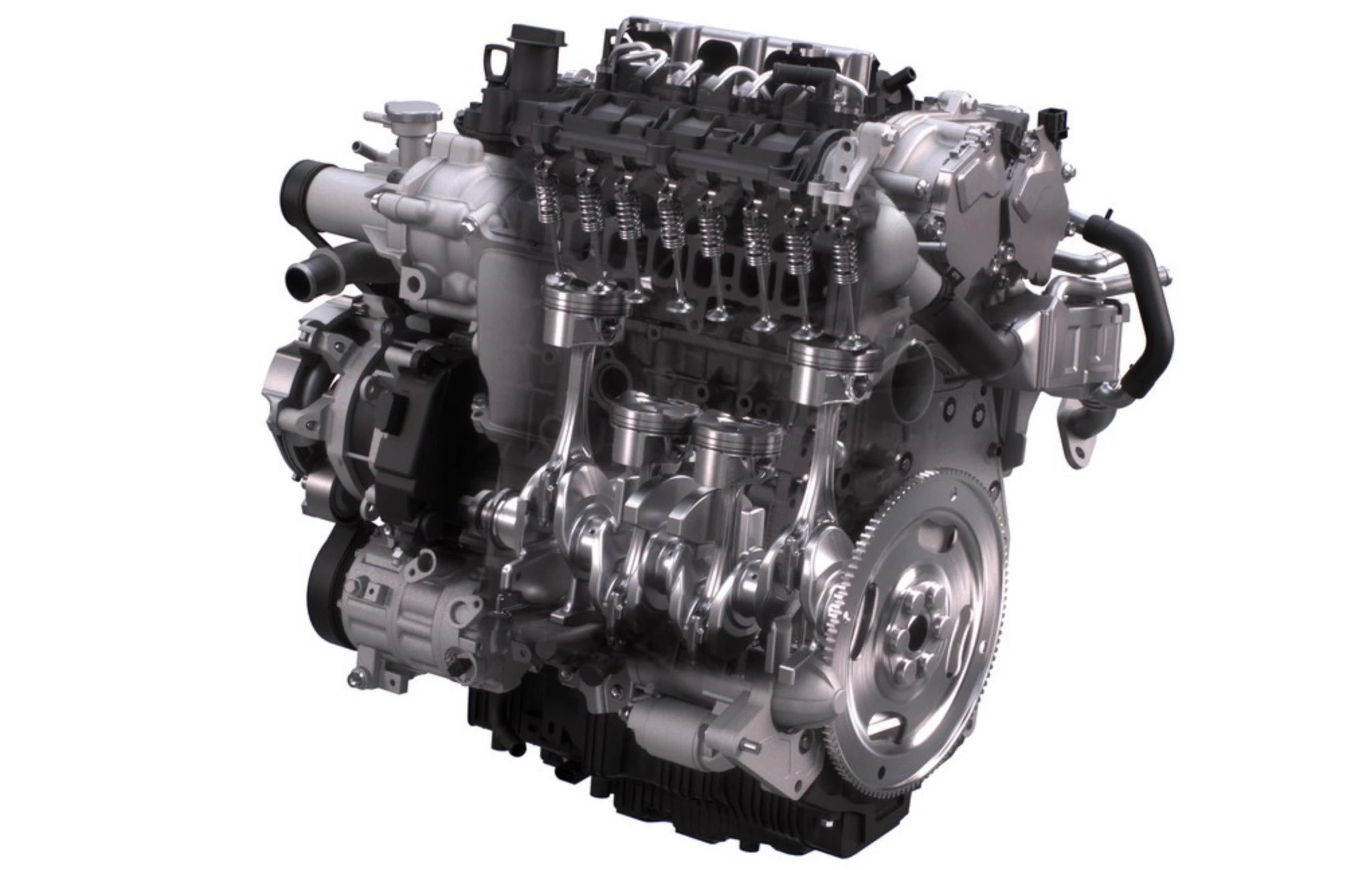
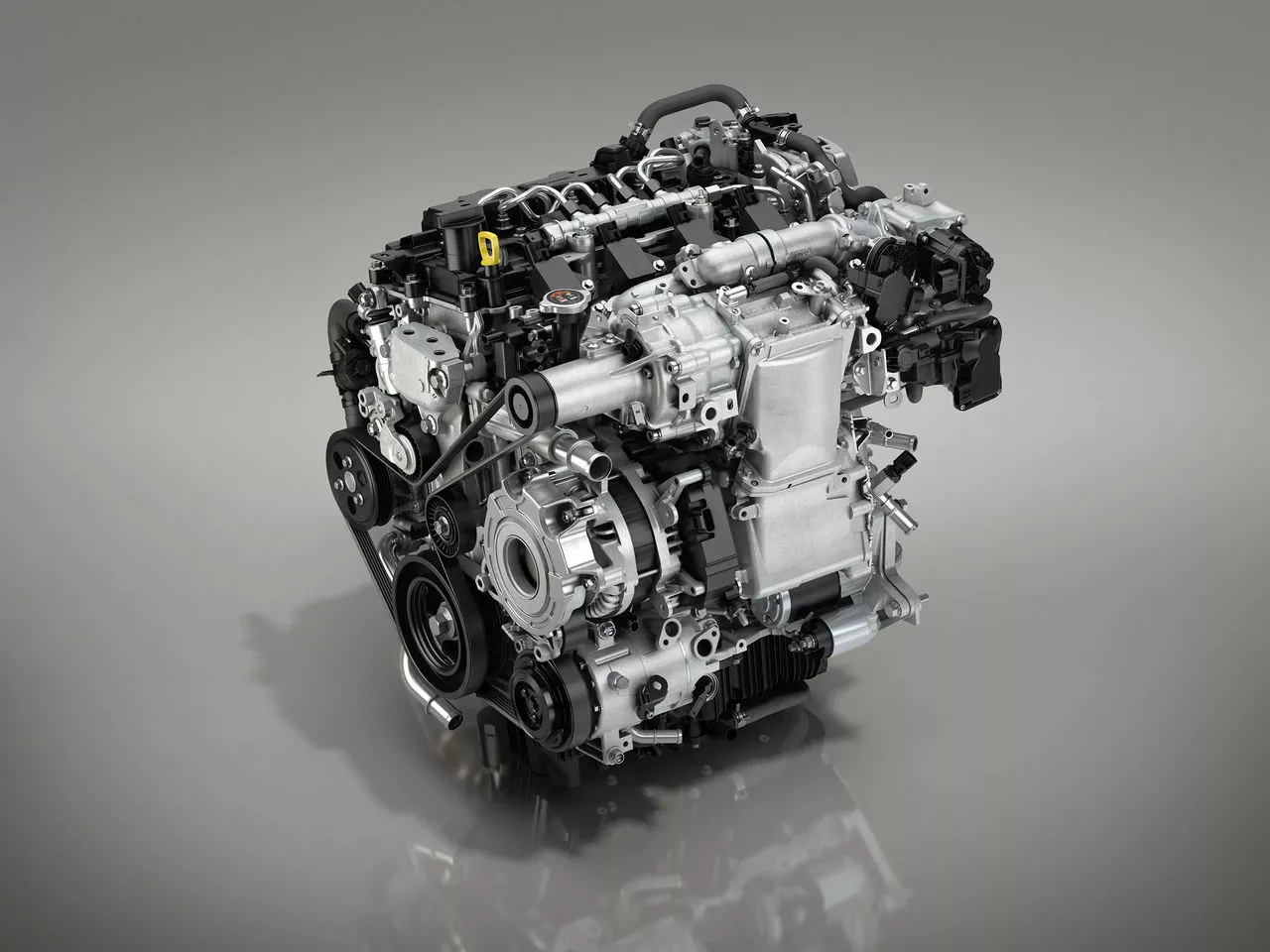

Despite its critics and moves toward electrification, the internal combustion engine is not yet dead. Though its design for passenger vehicles may have begun to reach its apex with Mazda’s Skyactiv designs.
Largely ignored by the industry, the Skyactiv engines have progressively improved everything about the internal combustion engine (ICE) and have done so without costly turbocharging or efficiency-killing reburns. And with a vision towards a future where engines become air purifiers rather than polluters.
Gasoline vs Diesel
Gasoline-powered engines have heat efficiency and burn rate problems. They’re highly efficient in terms of variable power output and combustion control thanks to spark ignition. But they are thermally inefficient and polluting.
Diesel engines are extremely good at producing power with less heat and at producing power (torque) at a predictable rate. But they are inefficient for variable power output and terrible with emissions.
Combining the two would make for a Holy Grail of engine design, but doing so has been problematic. Initial attempts usually ran into knock (unpredictable ignition) or other control issues. Buildup in the engine was also often a problem. The challenges lie mostly in the big difference between gasoline and diesel engine designs; specifically compression ratios and fuel mixtures.
Gasoline engines typically run at an air-fuel mixture of about 14.7 parts air to one part fuel. Diesel usually runs much leaner, at anywhere from 25:1 to 40:1, depending on the compression ratio. Which is another big difference between the two engines. Gasoline engines generally run at about half the compression ratio that a typical diesel engine would. A gasoline engine design usually peaks compression at about 12:1 whereas many diesel engines peak at 25:1. Compression ratio is key as the higher it is, the more efficient the engine is at converting combustion into pressure on the crankshaft (motion) instead of heat.
Enter HCCI
In previous high-compression gasoline engine designs, a combination of the high compression of diesel with gasoline would become what’s called Homogenous Charge Compression Ignition (HCCI). This design further includes a leaner fuel mixture to reduce consumption versus output.
HCCI faces one major issue, however: unpredictability. Diesel engines control ignition by injecting fuel at the top of the cylinder compression stroke. But that last-milisecond injection means little fuel vaporization, so the fuel burns dirty and often not completely. Were gasoline injected the same way, it would be even worse. But gasoline that’s been injected to vaporize during the intake stroke faces pre-ignition problems due to variances in engine use, such as temperature, pressure, and oxygen:fuel mixtures. So spontaneous ignition can happen too early or too late in the stroke under HCCI.

Mazda’s Skyactiv is introduced
Mazda first introduced the Sky and Mazda P engine series in the early 2000s before updating to the higher compression Skyactiv-G (gasoline) series. The diesel version (Skyactiv-D) appears in several models and is, for the most part, a pretty standard low-compression diesel engine. Albeit with far lower NOx and particulate emissions. The Skyactiv-G was first unveiled in 2010 and the first rendition was used in the Mazda Demio (aka Mazda2).
Larger displacement versions of the -G were introduced through the rest of the Mazda lineup from 2013 to present. The -G was also used in the Mazda-made Toyota iA/Yaris. The Skyactiv-G is produced as both inline four- and inline six-cylinder engines. They are all aluminum with compression ratios ranging from 13:1 to 14:1 and displacements ranging from 1.3 to 3.3 liters (1,298cc - 3,283cc). Most are naturally aspirated with the exception of the lower-compression 2.5L Turbo and 3.3L Turbo. It’s worth noting that these early Skyactiv engines did not have HCCI, which is why their compression ratios are relatively low.
The Skyactiv-G’s introduction soon led to a hybrid model, called Skyactiv-Hybrid, which combined the -G with Toyota’s Hybrid Synergy Drive. Short-term licensing with Toyota, however, expired before an in-house hybrid was fully developed. That came later as the e-Skyactiv-G, a mild hybrid design used in smaller Mazda models such as the 3, CX-30, and CX-5. Similarly, Mazda has experimented with a compressed natural gas (CNG) and rotary (R) version of the Skyactiv design, neither going past prototype stage thus far. The Skyactiv-R was unveiled in 2023 as a potential range-extending generator for electric or hybrid-electric vehicles.
Eventually, Mazda figured out how to prevent knock (unintended combustion, aka detonation) with gasoline in a higher compression cylinder. Engineers changed how fuel is both injected and ignited. Mazda calls this system, used in its newer Skyactiv engines, Spark Controlled Compression Ignition (SPCCI). As with conventional gasoline ICE designs, gas is injected during the intake stroke to vaporize into the intake air, but in a very lean mix (about 30:1 or leaner). The compression portion of the cylinder cycle pushes the compression to near-combustion at that lean mix. Then a tiny amount of fuel is injected right at the spark head as the plug ignites. This predetonation causes a sudden increase in pressure that ignites the vaporized fuel in the cylinder, burning it all simultaneously. The result is fuel burned without localized rich pockets (which form soot), at lower overall combustion temperature (which reduces NOx), and with higher thermal efficiency (more muscle for the fuel used).
This revolution of the Skyactiv system begat the Skyactiv-X engine, which incorporates HCCI (as SPCCI). This engine boosts compression to 16:1 and operates far leaner than its predecessor and at fuel efficiencies that are 20-30% higher than before. No turbocharger is used, but a small Roots-type supercharger expands the compression ignition window by adding more air to the engine to allow leaner fuel mixes – especially at higher speeds where avoiding knock is more problematic. The Skyactiv-X design also allows standard gasoline engine operation at somewhat lower compression when under heavy load (e.g. high speed/torque situations).
The Skyactiv-X is featured in the Mazda3 and CX-30 models (2019 model year to present) and is currently only a four-cylinder, but a six-cylinder is being developed.
Skyactiv-Z hybridizes the -X
That may change, however, as Mazda has announced the new Skyactiv-Z. This is another evolution from the -G and -X into a new, hybrid design that meets much higher emissions standards. Aimed at Euro 7, LEV4, and Tier 4 regulations, the -Z is a 2.5-liter inline-four that will debut in the 2027 CX-5 Hybrid.
The Skyactiv-Z engine has two big advantages over its predecessors: it can run on an even leaner fuel mix–thanks to adding electric motor power, and it includes heat insulation technology. This tech converts heat normally lost in engine operation into power to run the same motor that is improving efficiency. Mazda hasn’t said how that happens yet, but it would mean that meeting stricter exhaust gas emissions (usually done by lowering engine heat output by reducing power) could be done without power loss. Our guess is this will be achieved by either waste heat recovery or thermoelectric generation. Maybe a combination.

Thermal efficiency has already been a large part of the Skyactiv engine design process. The first Skyactiv-G has a good Brake Mean Effective Pressure (BMEP) at middle RPM range, which directly results in better thermal efficiency. The Skyactiv-X took that a step further, broadening the range of effective BMEP. The Skyactiv-Z will be far more effective than that, Mazda says.
The Skyactiv-Z will most likely appear first as a strong mild-hybrid or gasoline-electric hybrid before moving towards further electrification. Mazda’s engineers designed the -Z to be electrified from the get-go, so the amount of electrification is fairly flexible. It’s possible to use the Skyactiv-Z as anything from a main propulsion unit with mild hybrid all the way to a range-extender for a battery electric vehicle. Mazda says it is also experimenting with carbon-neutral fuels and zeolite-based exhaust pipe scrubbing technologies. This could eliminate or even become a net-negative carbon dioxide result – Mazda’s engineers see a future with engines producing a negative CO2 outcome.
Engineers at Mazda are envisioning a near-future where the apex of internal combustion engines means they’re doing more than just propelling a vehicle around roads and highways. They’d also be air purifiers, removing CO2 as they go. An outcome that would require no significant infrastructure changes, no fundamental changes to automotive design, and without requiring a lot of new materials with impactful sourcing.
That would definitely be the apex point for combustion engines.