
Luna Systems, a Dublin-based startup, has built something that might actually make urban cycling less nerve-wracking: an AI-powered rear-view camera that acts like the collision warning systems already standard in modern cars. The device, called Luna Oculus, watches your back and (metaphorically) screams when danger approaches.
The technology won't stop cars from buzzing too close or miraculously patch potholes, but it does offer something valuable: a few extra seconds to react. In city cycling, that might be the difference that matters.
"Our product will focus on the rider and letting them know when they are at increased risk," explains Andrew Fleury, Luna's CEO, over email. "If possible, we want the rider to take action to reduce their risk and try to assume a better road position relative to the situation."

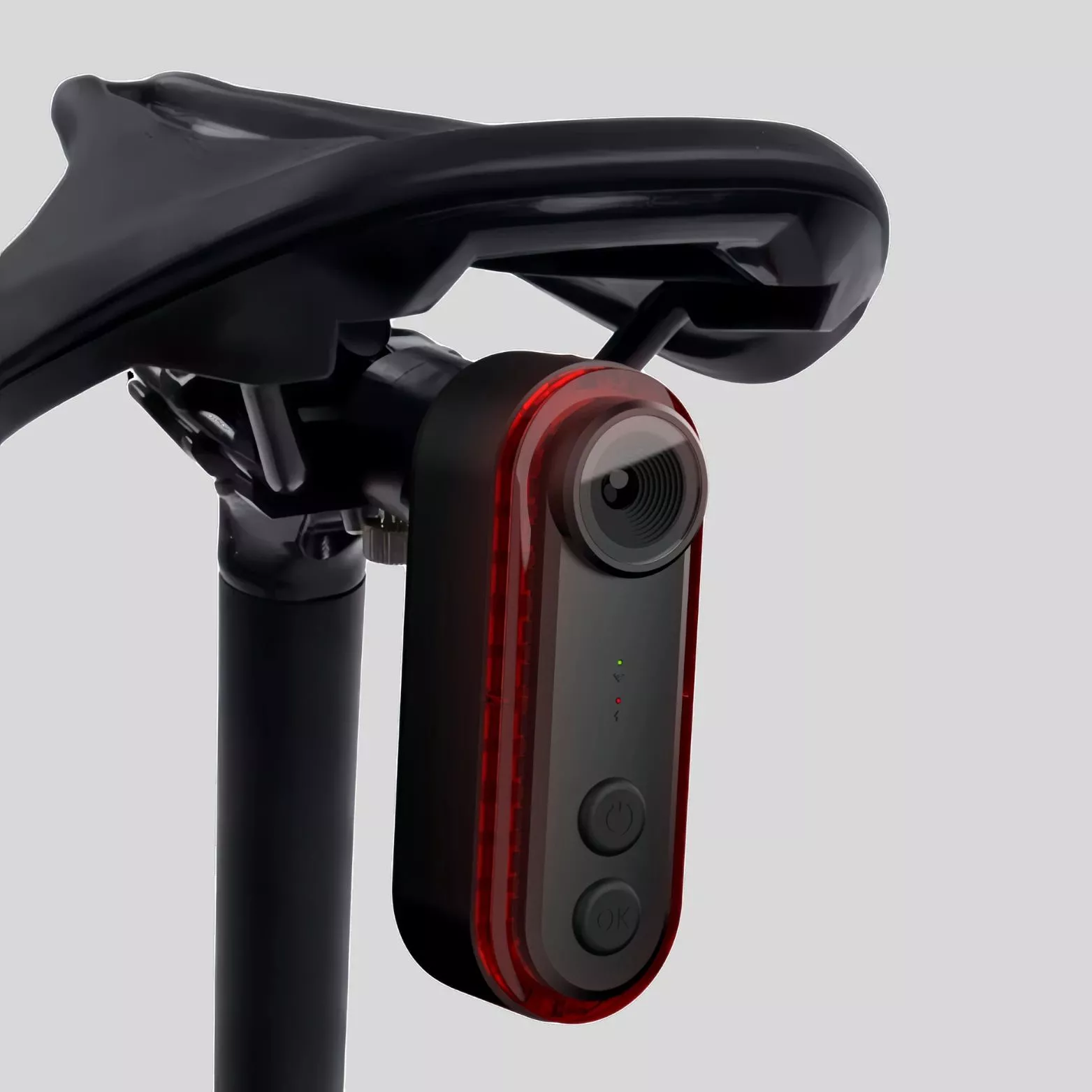
The Luna Oculus mounts on your bike like a regular rear light – because it is one (which puts out 90 lumens). But inside that housing sits a 1080p camera with six hours of battery life on a single USB-C charge. The system runs AI models that can identify cars, trucks, buses, and other bikes approaching from behind. The live video feed goes straight to your phone securely mounted to your handlebar, so you can see what's coming.
When a vehicle gets too close, the system escalates alerts based on risk level. You choose how you want to be warned – visual cues, audio pings, or both – and you can adjust the distance threshold that triggers an alarm. The goal is maximum awareness with minimum distraction.
Another key feature of Luna is that all the AI processing happens on the device itself. No cloud dependence means no latency lag when a truck is breathing down your neck. "Luna is built on a new category of AI chip that is specifically designed for low-power applications," says Fleury. "This means that we can run AI models in an extremely power-efficient way. Model optimization for such light-weight applications is essentially our core competence as a company."
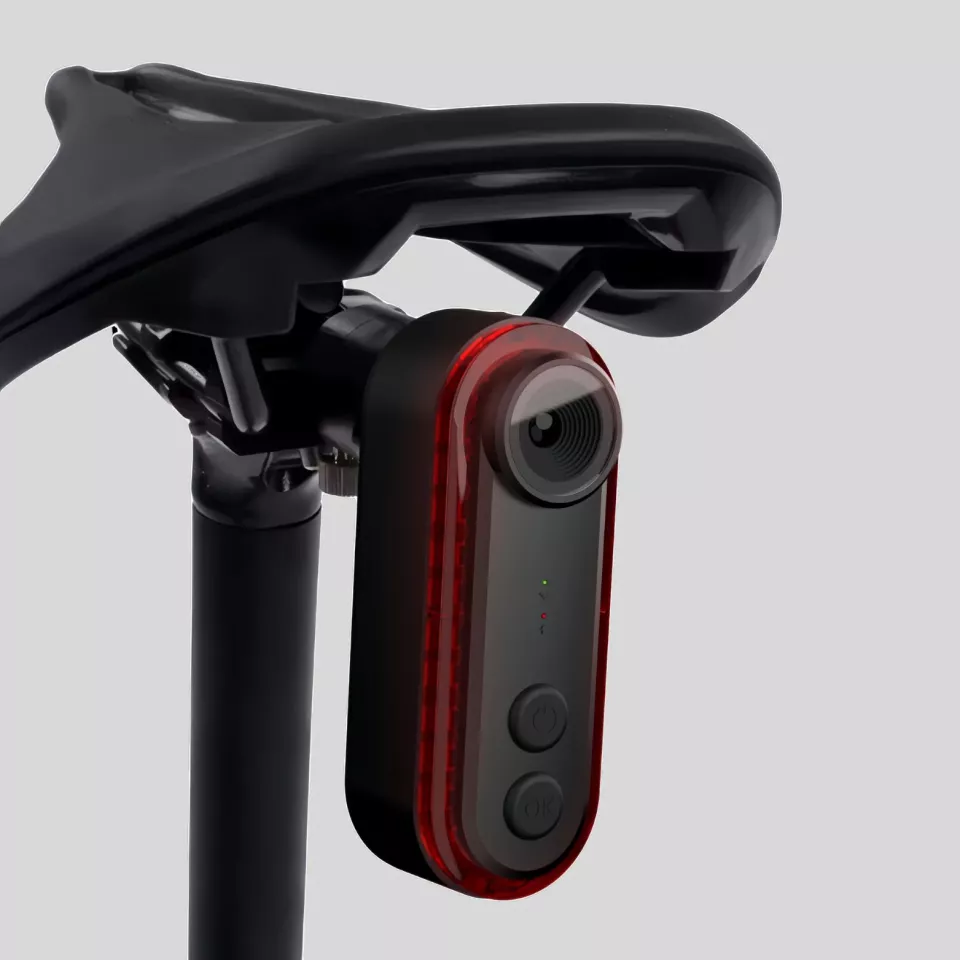
Luna Oculus doesn't just warn you, it remembers. The system automatically records dangerous incidents during your ride: close passes within 1.5 m (4.9 ft), vehicles tailgating, aggressive maneuvers. It geotags these moments and maps them, building a picture of which sections of your route are the most dangerous.
This mapping feature differentiates Luna from competitors like the Beam RS 1000, which also offers AI-enhanced camera alerts and automated incident recording but lacks mapping features.
If you're willing to share your data, Luna can aggregate this information across multiple riders to create collaborative danger maps – crowdsourced intelligence about where the roads are most hostile to bikes. "Luna also provides incident clips with post-ride mapping (blackspot identification for route safety insights)," Fleury notes. "Additionally, we intelligently record all risk incidents that you may experience in your ride so you also have evidence in case the worst situation arises."
Camera-based alert systems have obvious problems after dark. Luna handles this through a combination of enhanced preprocessing and motion detection algorithms. In low light – dawn, dusk, well-lit night scenes – the system maintains object detection capability.

According to Fleury, in very dark or pitch-black conditions, the device still catches cars approaching thanks to their headlights, though it loses the ability to identify unlit objects like pedestrians or other cyclists.
"We always maximize the detections that are possible in the conditions," says Luna’s CEO. Rain and dirt are managed through the camera housing design, and if the lens gets obscured, the system prompts you to clean it.
All of which sounds promising, but the tech isn't shipping quite yet. Luna launched an Indiegogo crowdfunding campaign in 2024 where the expected retail price was given as €199 (about US$235), including a complimentary 12 months of app access – after that it's projected to cost €72 per year to use the service. "Consumer shipments are targeted for mid‑to-late 2026 and we'll be keeping everyone updated on timing and also pricing through our official channels in the coming months," Fleury confirms.
The company raised €1.5 million in seed funding last month and aims to hit €5 million in total by the end of 2026. For now, Luna is focused on bikes, but Fleury hints at potential motorcycle applications down the road. "We may also offer an aftermarket device for motorcycles in the future, but for now we focus on OEM and Tier 1 projects."
Source: Luna Systems