Although it's now long been standard for multi-speed mountain and gravel bikes to have a single chainring and no front derailleur, that arrangement can be hard on the chain. Orient offers a solution, with an "auto-shifting" dual chainring setup.
For those of you who may be too young to remember, there was a time when all multi-speed bikes had two or even three chainrings – just like many road racing and touring bikes still do.
While this system allowed for a wide range of potential gear ratios, the recommended ratios that were actually used involved combining the larger outer chainring with the smaller outer cassette cogs, and combining the smaller inner chainring with the larger inner cassette cogs.
Doing so avoided cross-chaining, a problem in which the chain is placed at an extreme diagonal angle. Riding with the chain at such an angle increases friction and strain on the chain – and other drivetrain components – meaning it will have to be replaced sooner. Cross-chaining also decreases how efficiently the drivetrain relays pedaling power from the crankset to the rear wheel.
Today's 1x single-chainring drivetrains are nice and simple to use, but when the chain is on the very largest or smallest of the cassette cogs … well, it may not quite be cross-chaining, but it's still being placed at a fairly steep lateral angle, subjecting it to strain.
That's where Orient comes in.
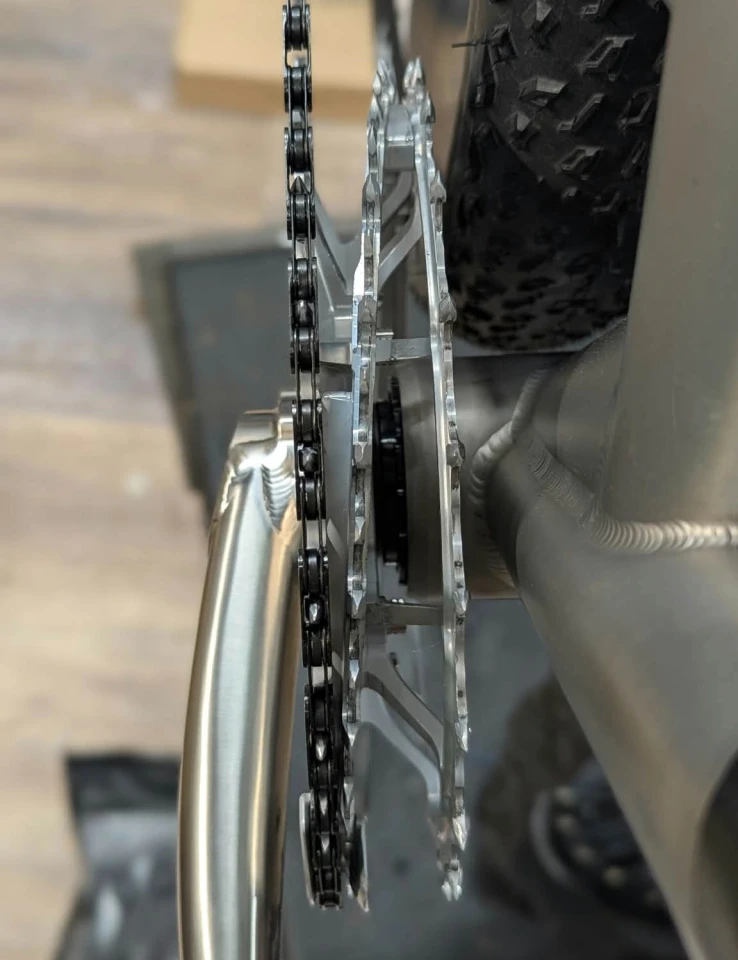
Invented by mountain bike racer/triathlete Andre Szucs, and being developed via his startup Marginal Gain, the device is a crankset featuring two side-by-side same-sized chainrings that are mechanically ramped together. It can be combined with existing third-party rear derailleurs and cassettes.
Here's how it works.
When you start pedaling with the chain on the smaller cogs on the outside of the cassette, the chain is also situated on the outer chainring. As you proceed to shift onto the larger cogs on the inside of the cassette, the lateral movement of the chain causes it to "derail" off of the outer chainring and onto the inner one. Shifting back to the smaller cogs likewise causes the chain to derail back to the outer chainring.
"It is primarily a 1x drivetrain system that utilizes two optimized chainlines: one dedicated to the smaller cogs on the first half of the cassette and a second dedicated to the larger cogs on the other half," Marginal Gain states on its website.
With that selling point in mind, it is hoped that Orient could pave the way for practical 15- or even 16-speed systems.
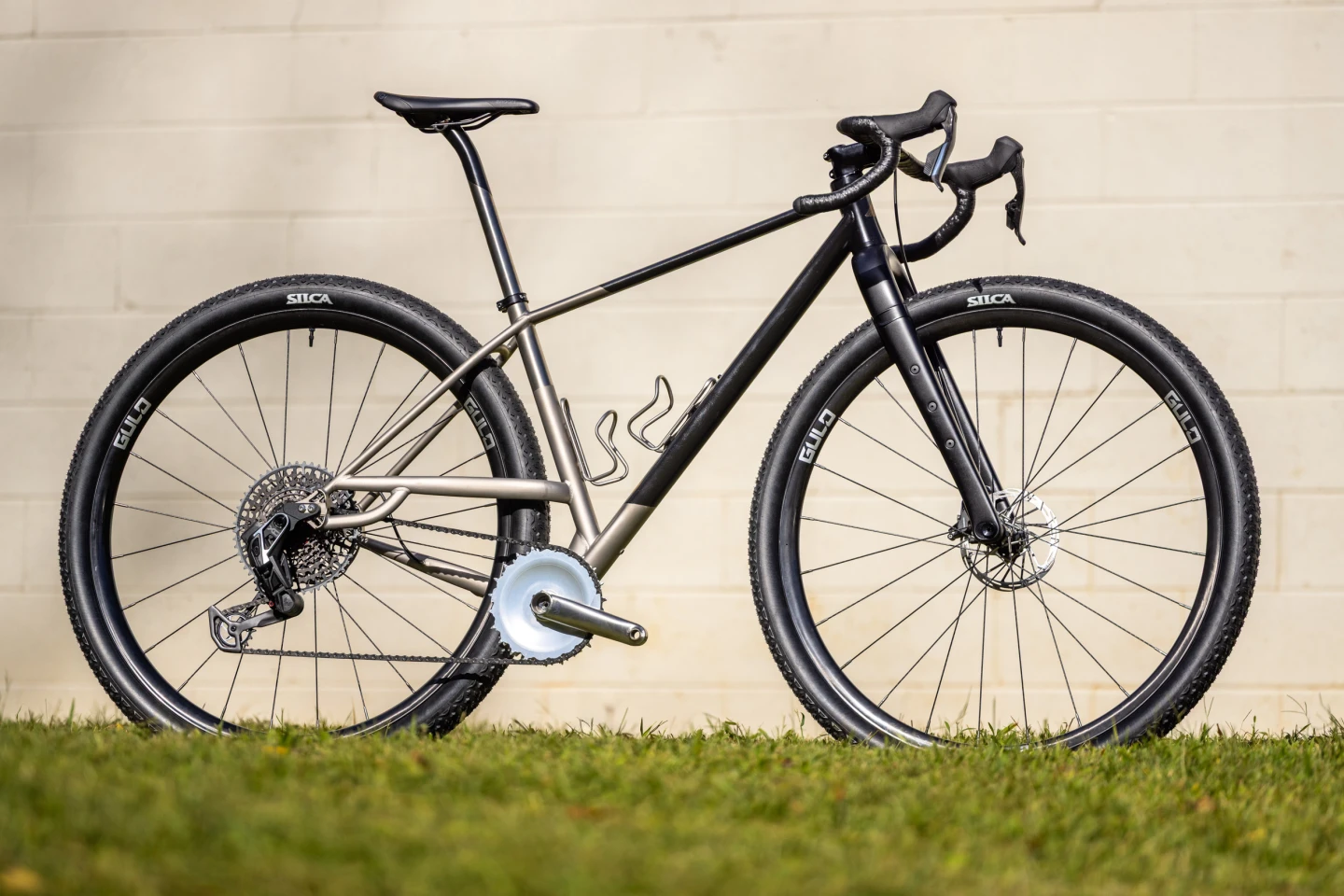
That said, the current version is thick enough that it can't simply be retrofitted onto existing frames. Therefore, in order to introduce the product to market, Szucs has teamed up with project partner Blackwater Bicycles to produce a titanium gravel frame that has a raised chain stay which allows it to accommodate an included Orient crankset.
He tells us that it should be available for preorder soon via the Marginal Gain website, for under US$3,000. There are also plans for a slimmer version of Orient that can fit on existing frames, which Szucs says should sell for under $500.
Source: Marginal Gain