

Computers

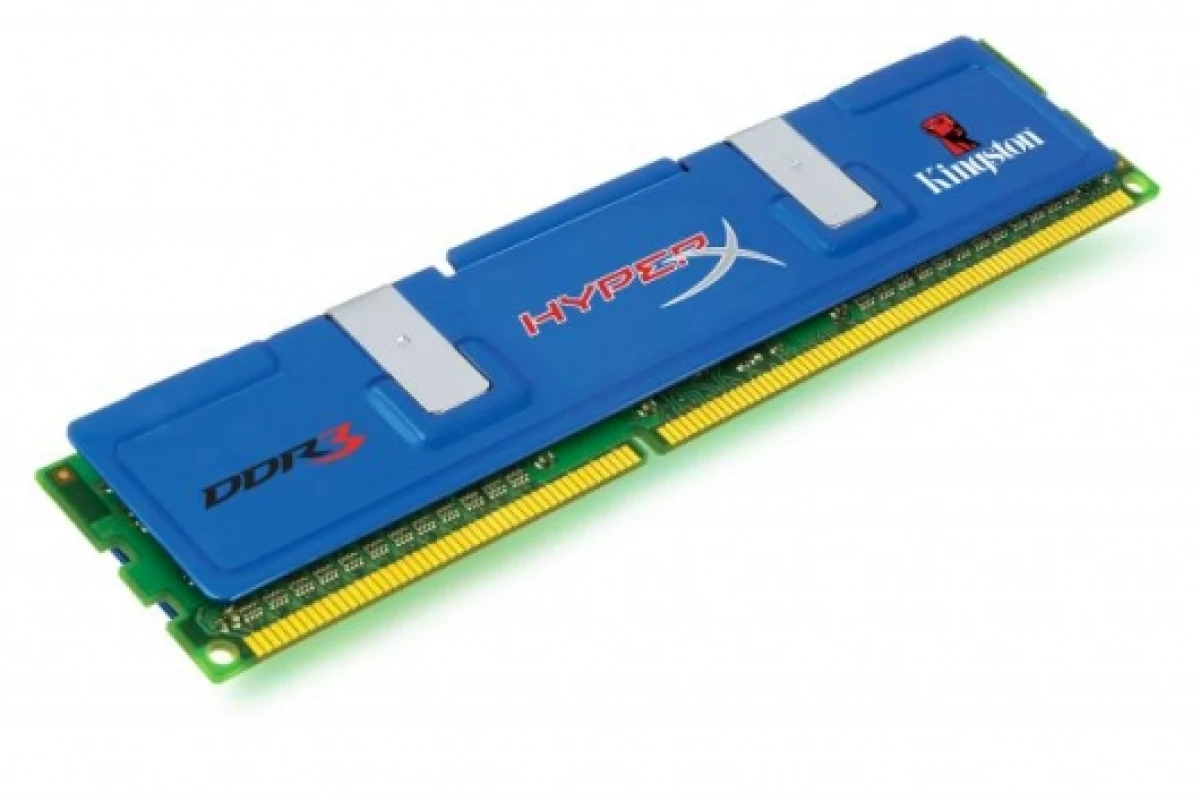
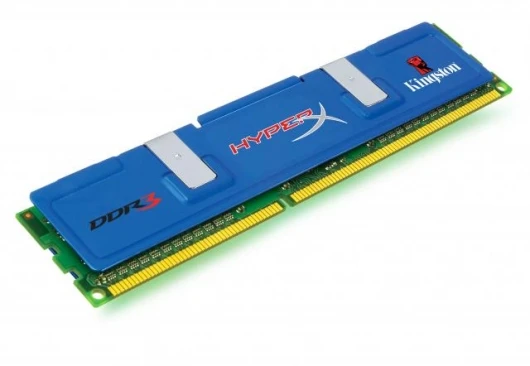
Kingston to debut DDR3 1500MHz HyperX memory modules at Computex

Kingston to debut DDR3 1500MHz HyperX memory modules at Computex
View 1 Image
1/1

May 22, 2007 Kingston Technology will be announcing important news concerning its HyperX high performance memory division during the world’s second-largest trade show, Computex Taipei, to be held in Taiwan from June 5-9, 2007. Travelers who visit the Kingston booth will witness live demonstrations of new DDR3 1500MHz HyperX and DDR2 800MHz ultra low latency HyperX memory modules. Kingston 512MB and 1GB DDR3 1066MHz HyperX memory modules recently passed Intel Platform (PMO) Validation, paving the way for the next generation of high-performance computing. DDR3 technology offers significant memory performance gains, at lower voltage and less power consumption.

Expected to be twice as fast as today’s highest speed DDR2 memory, DDR3's greater bandwidth is a perfect match for systems using dual and quad core processors. The lower voltage of DDR3 (moving to 1.5v versus 1.8v with DDR2) provides a more efficient memory solution for both mobile and server platforms. “I am pleased to see that Kingston is developing DDR3 memory technology, which will support Intel’s high-performance desktop platforms in 2007,” said Steve Peterson, Director of Client Chipsets, Intel Corporation. “This technology will also provide the bandwidth headroom necessary to support Intel’s product roadmap in the future.”

Initially launching in 512MB and 1GB capacity modules as well as 1- and 2GB memory kits, the new Kingston HyperX and ValueRAM DDR3 1066MHz modules are the cutting edge of memory technology. Kingston is currently sampling modules in limited quantities in capacities up to 1GB to support the next generation computer platforms shipping later in 2007.

1 comment
1 comment
bewani2462
It's fascinating to look back at this announcement from 2007. At the time, the shift to DDR3 was a monumental leap, promising the "bandwidth headroom necessary to support Intel’s product roadmap in the future." Reading this with today's perspective, it's incredible to see how prophetic that was.
The challenges Kingston and Intel were solving then—higher bandwidth for multi-core processors and lower power consumption—are the same fundamental challenges we face today, just on a vastly different scale.
This historical context makes the capabilities of a modern platform like a Xeon 32 Core 2.0GHz with 11.2GT/s UPI https://serverorbit.com/cpus-and-processors/xeon-32-core/2-0ghz-11-2gt-upi all the more impressive. The DDR3 1066MHz modules mentioned here, while cutting-edge for their time, would be completely overwhelmed by such a CPU.
Feeding the Cores: A single 32-core Xeon can generate a memory bandwidth demand that dwarfs what entire servers required in 2007. Today, we rely on multi-channel DDR4 or DDR5 architectures delivering hundreds of gigabytes per second of bandwidth to prevent those cores from starving for data.
System-Wide Synergy: The UPI (Ultra Path Interconnect) is key here. Just as DDR3 was essential for the nascent multi-core era, UPI allows multiple Xeon CPUs and their associated memory pools to act as a single, coherent system. The memory controller's role has evolved from a simple bridge to a critical, high-speed traffic director within a massively parallel architecture.
This post is a great reminder of how foundational memory technology is. The DDR3 standard paved the way for the incredible compute density we have today, where a balanced architecture of fast cores (Xeon), ultra-fast interconnects (UPI), and high-bandwidth memory is absolutely essential for performance.