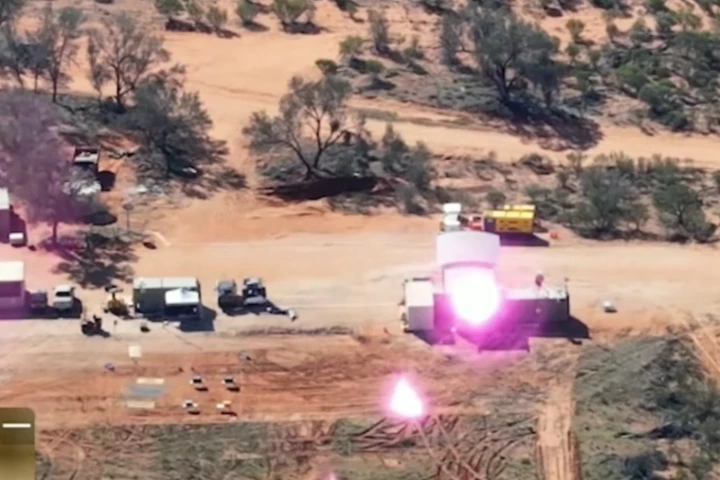
Nuclear power isn't just for naval ships anymore as demonstrated by the Nuclear Propulsion in merchant Shipping (NuProShip II) project led by the Norwegian University of Science and Technology which is looking at fitting nuclear reactors to heavy-duty commercial vessels.
About 80% of world trade goes by sea and without the constant traffic of cargo ships crisscrossing the globe, modern civilization would grind to a halt in no time. However, the global shipping industry accounts for 3% of all global greenhouse gas emissions, a figure projected to rise to at least 10% by 2030.
The shipping industry is committed to reducing these emissions as much as possible but there is an elephant-sized problem standing in the way. Shipping depends on heavy fuel oil and alternatives like green ammonia, hydrogen, and methanol fall short because these fuels are not available in sufficient quantities. Worse, the electricity that would be required to create enough green ammonia or hydrogen would exceed the total electricity production capacity of the world.
Equally daunting is the fact that some commercial ships – such as bulk carriers, oil tankers, container ships, and those used in offshore construction – require power sources that have high energy density and can sustain themselves over long ranges.
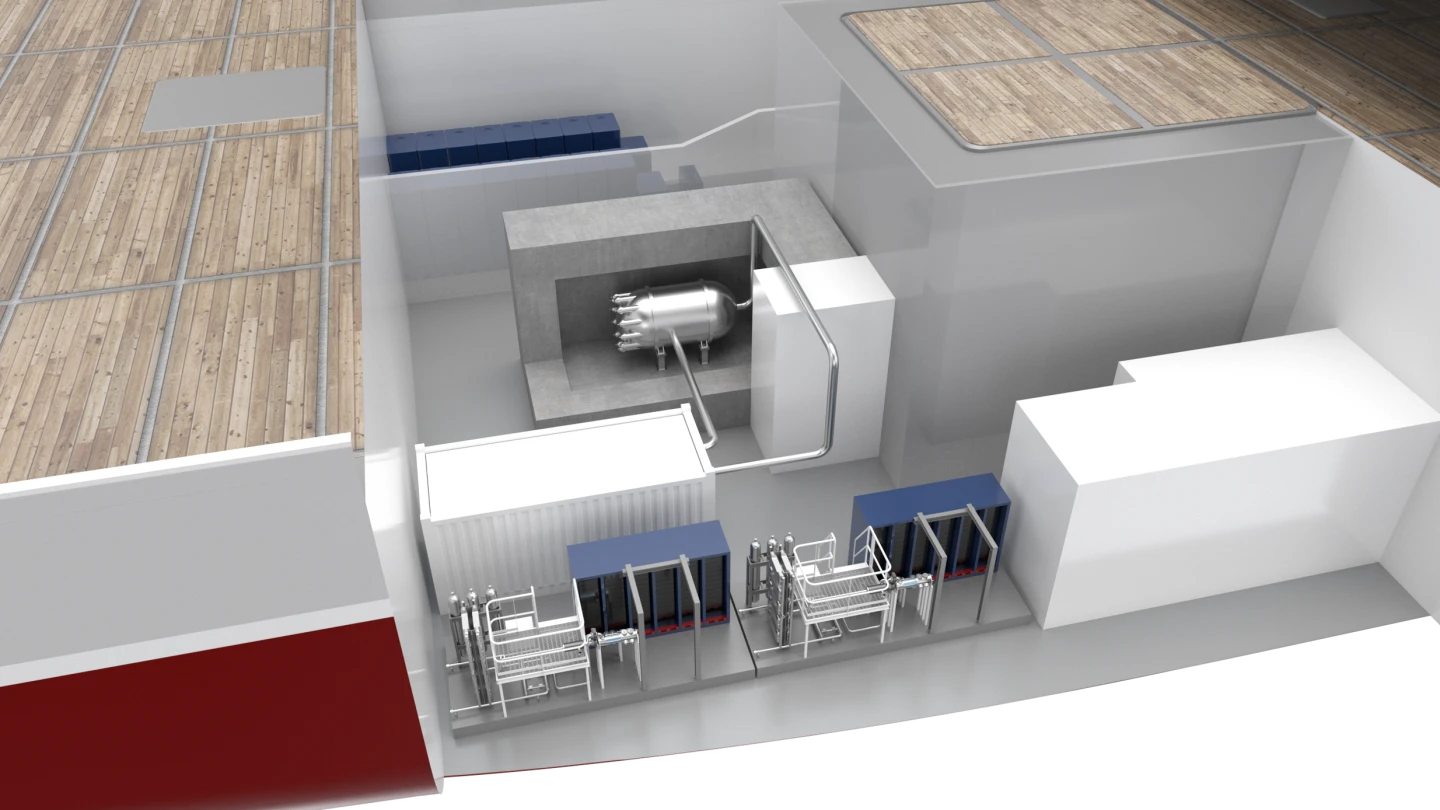
To overcome this, the consortium behind the NuProShip II project is looking at how to fit Gen IV small modular nuclear reactors to heavy commercial vessels. The project’s demonstrator concept is based on a 120-m (394-ft) Vard 3 offshore subsea construction vessel, designed by Fincantieri subsidiary Vard.
The idea is to come up with a simple, safe, self-contained reactor that can either be installed in a new ship or retrofitted to existing craft without having to rip out the gubbins from the engine room.
Several reactor concepts were assessed for vessels of different sizes, though they share key characteristics. Chief among them is the use of tri-structural isotropic (TRISO) fuel, consisting of ceramic-coated uranium particles capable of withstanding temperatures above 1,600 °C (2,912 °F). Such pebble-bed reactors are inherently safe because the nuclear reaction is self-regulating and they lend themselves to passive cooling systems while putting out about 15 to 45 MW of thermal power per module using supercritical CO₂ Brayton cycle reactors.
The cooling system is most likely to be helium because alternatives like molten salt and sodium don't play well when they come into contact with water. Meanwhile, using water as a coolant was rejected both on the grounds of complexity and the tendency of the public to associate water reactors with accidents like Fukushima. However, larger vessels would use lead-cooled reactors and perhaps molten salt.
Like their naval counterparts, one of the advantages of a nuclear-powered commercial vessel is that it would effectively have unlimited range and would only need to be refueled every five years. With more advanced reactor designs, it might not even need refueling during its entire service life. In addition, nuclear reactors would take up much less space than conventional diesel engines.
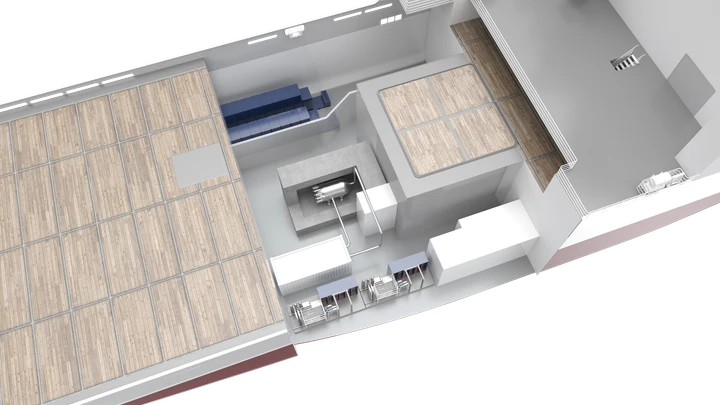
In regard to safety, the goal is to design the reactor plant as a self-contained unit installed in the engine space. Ideally, the ship would be designed to envelop the reactor, sealing it off in the event of a collision.
In isolation, it seems like a respectable advance on current technology and a report released by the project indicates that nuclear power would be a much more economical alternative to other green options and would not require government subsidies. However, there are a number of hurdles still to be cleared.
One of these is the need for infrastructure to maintain nuclear-powered ships, including installations at shipyards for refueling and handling low-level nuclear waste along with the necessary radiation shield, security, and non-proliferation protections. Another is the development of appropriate reactor designs suitable for ships. Ideally, these should be factory-sealed, containerized modules that can be swapped out in their entirety as they end their service life. They also need to be watertight and able to withstand total immersion and external fire.
Outside of these, there's also the problem of meeting the regulations surrounding nuclear power plants. In anticipation of this, NuProShip II plans to conform to US Nuclear Regulatory Commission rules, which are among the most stringent in the world and are the model for many international and national regulations.
"We are proud to contribute to the future of maritime innovation," said Henrik Burvang, Research & Innovation Manager at Vard Design AS. "NuProShip II demonstrates that nuclear-powered vessels are not just a vision, but a technically feasible solution. Our work lays the foundation for safer, more efficient, and environmentally responsible shipping. We hope this project brings real value to the continued development of maritime nuclear technology. It is also particularly valuable to have a professional ship owner and operator like Island Offshore in the project, proving that ship owners are focusing on this technology going forward."
Source: Vard