






Good insulation plays a crucial part in many industries, from space exploration and energy systems to electronics and cookware. The basic idea is simple: you want a material that can slow down the movement of heat, and prevent it from spreading from one area to another.
But there is an interesting nuance to this. Materials that are stiff and strong tend to be good at conducting heat, while materials that are soft and less durable tend to be better at blocking heat. For example, metal sheets allow heat to travel through very easily, while foam for insulating buildings is great at slowing down heat transfer through walls. Foam's downside is that it’s not as durable as metal.
The tricky part is this doesn’t really work the other way around that easily, meaning it’s hard to get both properties – stiffness and good heat insulation – at the same time.
This is the challenge that researchers at North Carolina State University decided to take on: what if we actually could have both? By using some advanced molecular engineering, they developed a new material that combines those two properties.
The researchers worked with a type of material called a two-dimensional hybrid organic-inorganic perovskite. This name sounds extremely complex, but the idea behind it is pretty simple: it is a material built from alternating organic and inorganic layers – think of a microscopic layered cake.
The organic layer is made from carbon-based molecules. The scientists altered those molecules, however, replacing flexible carbon chains with more rigid structures called benzene rings. This allowed them to control how the material behaves, and make it stiffer while keeping its insulating properties. The inorganic layer contains elements such as lead iodine.
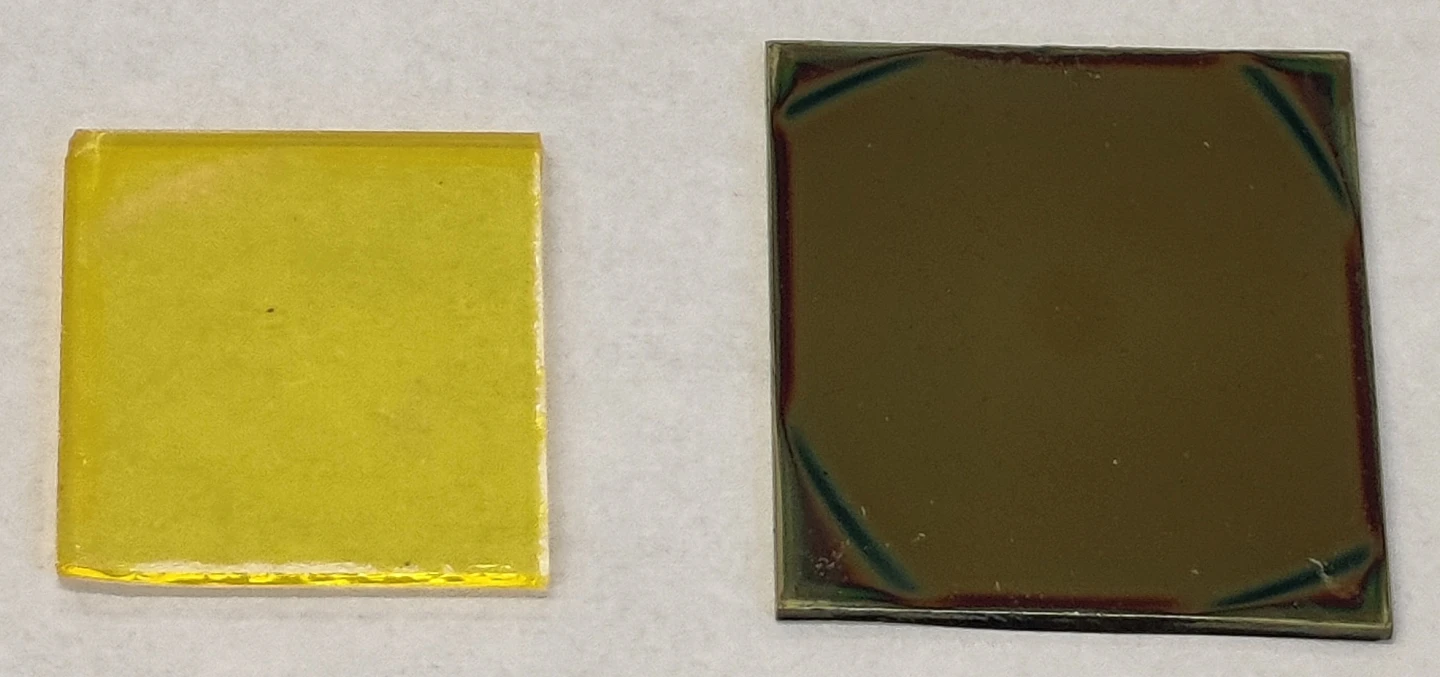
The results were quite impressive.
At room temperature, the new material had a thermal conductivity of about 0.04 watts per meter per kelvin. This simply means that heat escapes extremely slowly through this material, which is comparable to fiberglass insulation. At the same time, the material has a stiffness of 7.7 gigapascals. This number is nowhere near the stiffness of aluminum or steel, but it’s significantly stiffer than typical foams and aerogels, and pretty close to plastics or wood.
“The material we made is 700-10,000 times stiffer than silicone and five times better at insulating against heat,” says Jun Liu, co-corresponding author and an associate professor of mechanical and aerospace engineering at NC State. For context, silicone is widely used to insulate against heat, for example, in oven mitts.
The researchers say this method can potentially be easily scaled up, and such material can be produced as a thin foam or coating. That could eventually make it an important component in electronics, thermal barrier coatings, energy systems, and space technologies in the near future.
Source: North Carolina State University


