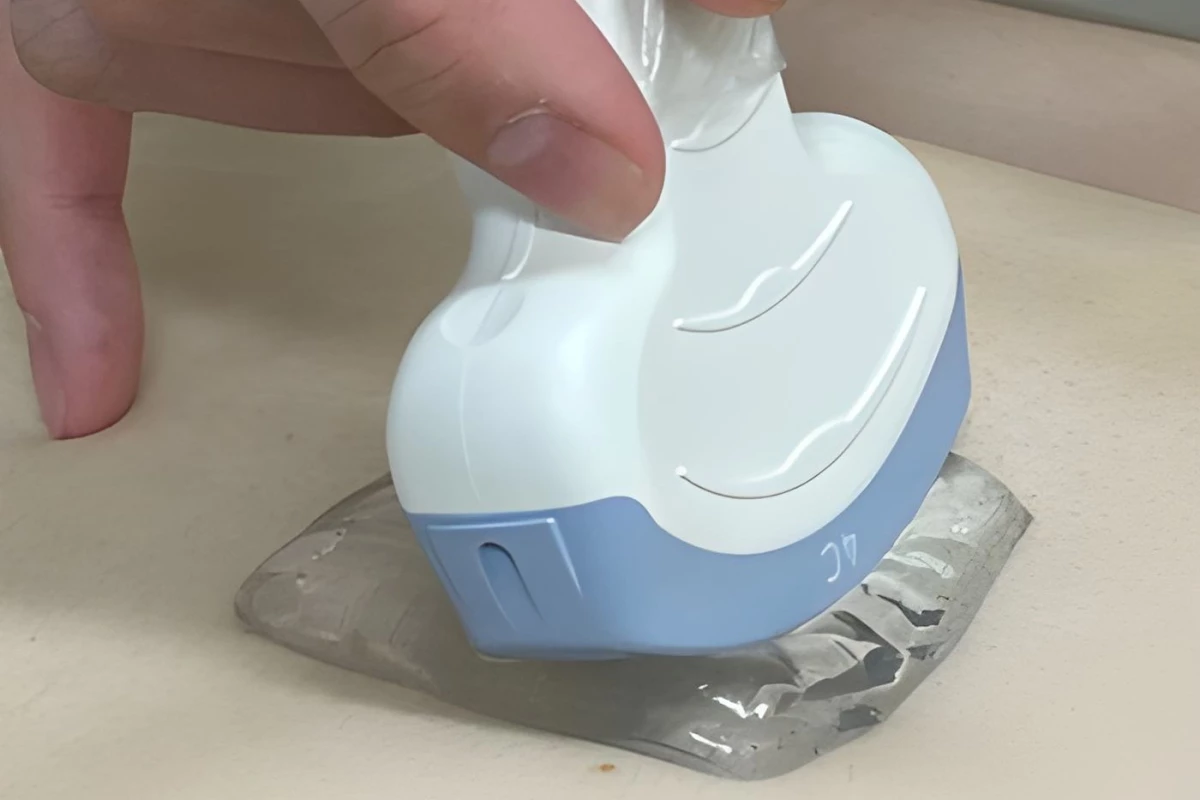
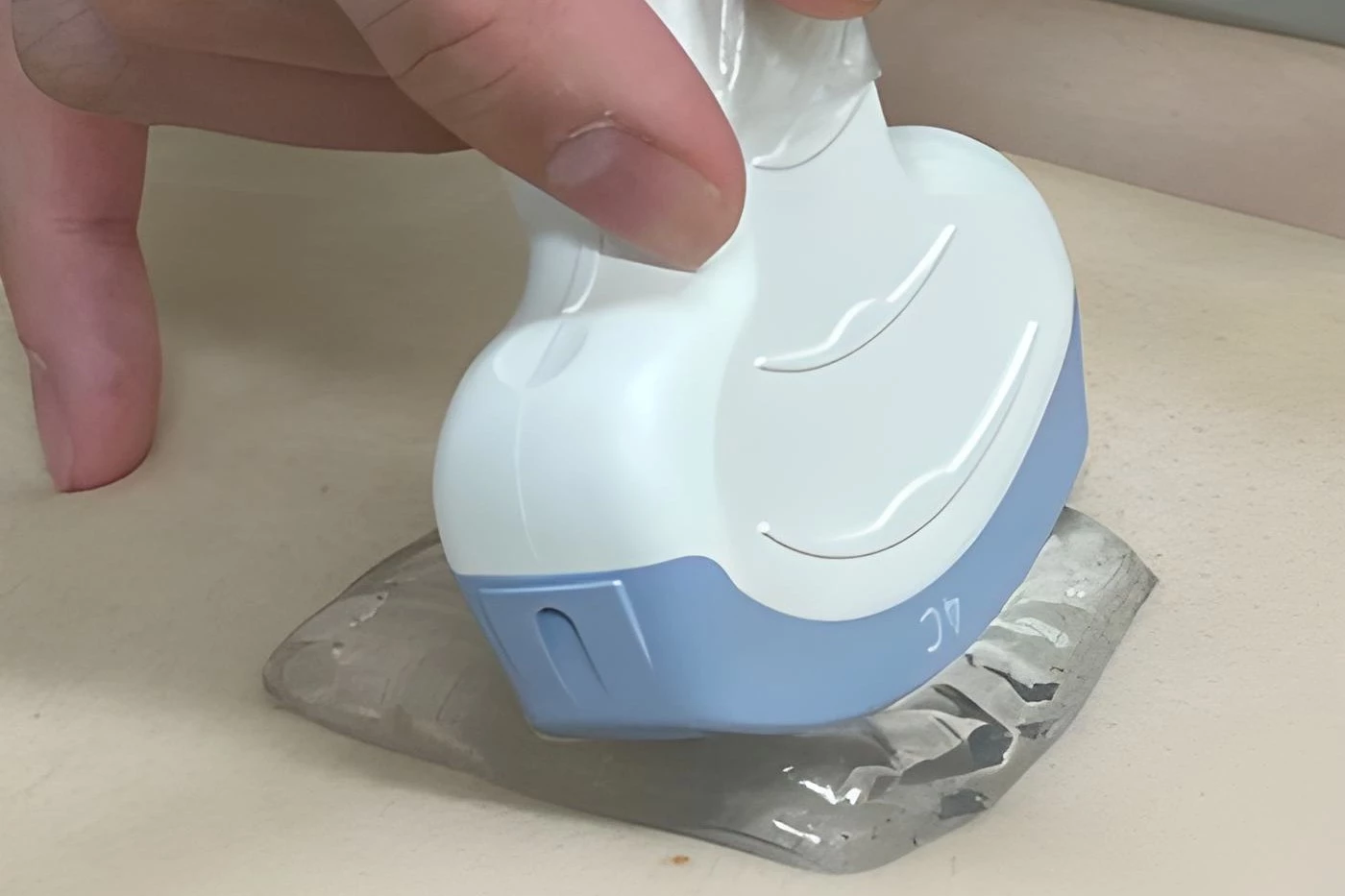

If you've ever had a sonogram you know that, even though the test isn't too hard to endure, the cold glob of gel that goes on your skin before you get "wanded" is pretty unpleasant. Japanese researchers have now come up with an alternative.
Even though it's cold, sticky, and kind of smells, sonogram gel is a critical part of the testing procedure. Not only does it help the sonogram machine's transducer – commonly known as a wand – glide easily over the skin, it actually ensures that there are no air pockets between the device and the skin.
The problem with the gel though, is not only that it makes patients all sticky after the test is over, but that it tends to dry out quickly. This can lead to multiple applications during testing which increases costs and, as we've established, patient discomfort. Also, ultrasound gel is not always manufactured as a sterile product, leading the CDC to issue a warning just last year about bacterial infection risks to patients.
Tackling these limitations, researchers at Japan's Kindai University developed a solid gel pad made from tamarind seed gum, an all-natural viscous substance that's often used as a thickener and stabilizer in foods and cosmetics. The pad is flexible enough to conform to body surfaces and has a property called syneresis, which means that it releases water as it contracts spontaneously. Syneresis is the phenomenon you can blame when you find a pool of water at the top of your yogurt.
In testing, sonographic images were taken from four healthy volunteers of their carotid arteries, thyroid glands, livers and hearts. The new solid gel pad produced images of identical quality to those made with traditional gel, but patients reported a much higher degree of satisfaction with the pads. In addition to proving its superior feel, the tests also showed that tamarind gum is a good candidate for sonography, as it doesn't interfere with the sound waves necessary to produce good images.
The pads remained stable between temperatures of 50-122 °F (10-50 °C) which, along with being easy to handle, means they could find a home in emergency field medicine or in other situations where it would be hard to store multiple bottles of liquid gels. Also, say the researchers, the greater patient comfort levels could reduce a barrier to testing for people who might otherwise avoid sonography.
“From an academic perspective, this study helps clarify how the properties of tamarind seed gum relate to the way ultrasound waves travel," says study co-author Yukinori Matsuo. "It presents a new approach to designing materials used in ultrasound examinations. In the future, this work may support ultrasound diagnostics that are easier to use, more patient-friendly, and more sustainable.”
The team says its initial research, which has been published in the journal, Scientific Reports, was a feasibility pilot study and that further research with a larger sample size is warranted to add to the preliminary data.
Source: Kindai University via EurekAlert