


“Remove the plank from your own eye before pointing out the speck in another’s,” goes the popular biblical proverb. For millions of people with geographic atrophy, the speck in their vision is far more literal and can eventually lead to blindness. Now, relief may be on the way, after a vision-restoring retinal implant received approval for sale in Europe.
PRIMA, a wireless retinal implant that restores functional vision in people blinded by geographic atrophy, has received CE marking, allowing its manufacturer, Science Corp., to launch and market it across Europe. The certification was issued under the European Union Medical Device Regulation following an assessment by certification body DEKRA and authorizes the vision-restoring system for commercial availability across 30 European countries.
Doctors can now begin offering PRIMA, previously classified as an experimental device, to eligible patients. Science Corp. says country-by-country reimbursement applications and clinical-site activations are underway, with the first commercial implantation expected soon in Germany.
So, what exactly does PRIMA do? PRIMA is designed for people with geographic atrophy, an advanced form of dry age-related macular degeneration (AMD) that affects more than five million people worldwide. The disease progressively destroys photoreceptors in the macula, the central portion of the retina responsible for recognizing images and resolving fine details. Patients may retain peripheral sight but develop a widening blind patch directly where they are looking.

Existing treatments can help slow geographic atrophy in some patients, but they cannot restore dead photoreceptors. However, the damage does not necessarily wipe out the entire visual pathway. Many of the retinal neurons that once received signals from those photoreceptors remain, as does the optic nerve carrying information to the brain. PRIMA does not attempt to heal or regrow the damaged retina; instead, it exploits the surviving circuitry by slipping an electronic substitute into the missing first link of the chain.
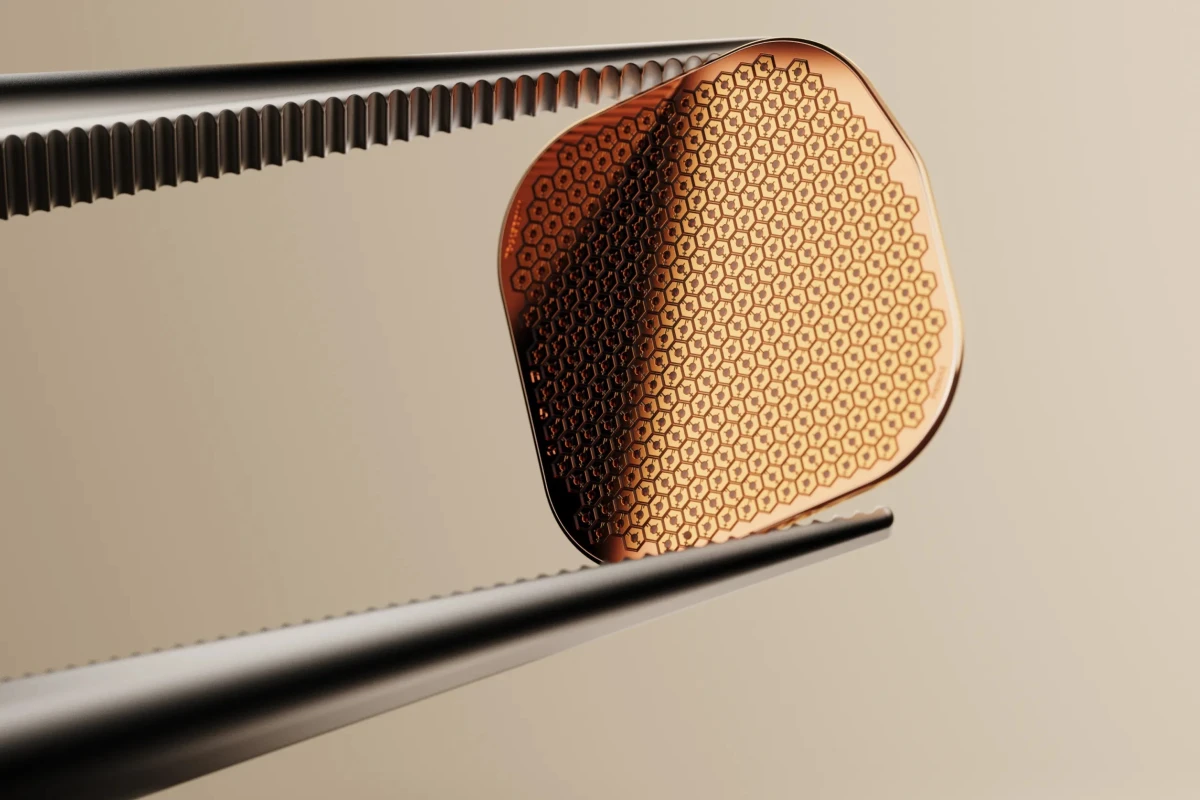
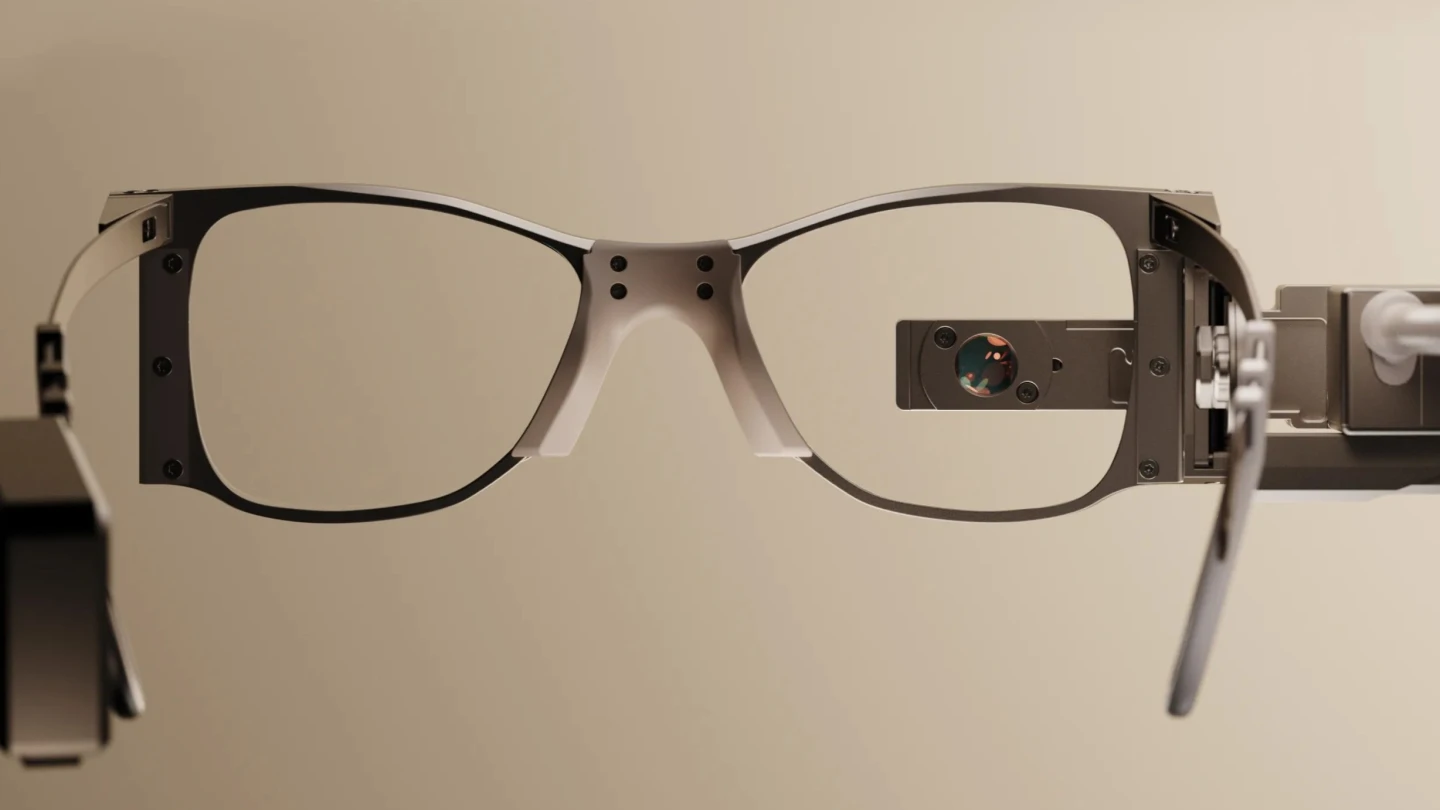
The system starts with a 30-micrometer-thick, 2 x 2-mm chip surgically placed beneath the damaged part of the retina. The implant contains 378 photovoltaic pixels, creating a microscopic solar-panel array. A camera mounted on a special pair of glasses records the scene in front of the wearer, while an eye-facing projector sends the processed image to the chip as invisible near-infrared light. Each illuminated pixel converts that light into an electrical pulse, stimulating nearby retinal cells and putting visual information back into the pathway leading to the brain.
Since the light provides both power and information, the implant requires no battery, cable, or physical connection through the eye. What is particularly clever is that the projected infrared image is confined to the implant. The patient can therefore use PRIMA for central vision while continuing to rely on their remaining natural peripheral vision for movement and awareness of their surroundings.
The technology has taken more than two decades to reach this point. Stanford ophthalmology professor Daniel Palanker first conceived the light-powered approach in 2005, reasoning that the transparency of the eye could be used to send both power and visual information to an implant. French company Pixium Vision later developed PRIMA and took it into human trials. Subsequently, Science Corporation acquired Pixium’s PRIMA assets and three ongoing clinical studies in April 2024, after which the pivotal PRIMAvera trial became the foundation of its European regulatory submission.
The trial and open-label study, which ws published in the New England Journal of Medicine (NEJM), implanted PRIMA in 38 patients at 17 sites across five countries. Thirty-two completed the 12-month visual assessment, and 26 of them – 81% – improved by at least 10 letters on a standard eye chart. After accounting statistically for the six missing assessments, the researchers estimated an overall response rate of 80%.
Average improvement reached 25.5 letters, or just over five chart lines, while 27 of the 32 participants reported reading letters, numbers and words at home using the system. Mean natural peripheral acuity, the average sharpness of the patients’ remaining vision around the damaged central area, remained roughly unchanged. It's important to note that the “vision-restoring” implant does not return normal eyesight and there are certain implantation risks.
Preliminary trial results arrived in October 2024. The following month, an independent data-safety monitoring board concluded that the benefits outweighed the implantation risks and unanimously recommended submitting PRIMA for a CE mark. Science Corp. formally submitted the CE-mark application in June 2025, and announced the certification in July 2026.
Now, while the CE mark scales the most critical regulatory hurdle in Europe, there is still a long way before the first restored vision outside of trials is a reality. Science must still activate surgical centers, train medical teams, and secure reimbursement from national health systems or insurers.
The CE mark is also not blanket worldwide approval. PRIMA remains investigational outside the EU and European Economic Area. In the United States, the Food and Drug Administration has granted the device Breakthrough Device status and two Humanitarian Use Device designations: one for a narrowly defined group blinded in both eyes by advanced geographic atrophy and another for Stargardt disease, a rare inherited retinal disorder. These designations may speed up the regulatory process, but they are not approvals. Science must still apply for and receive a Humanitarian Device Exemption before selling PRIMA for either use in the US.
Source: Science Corp.