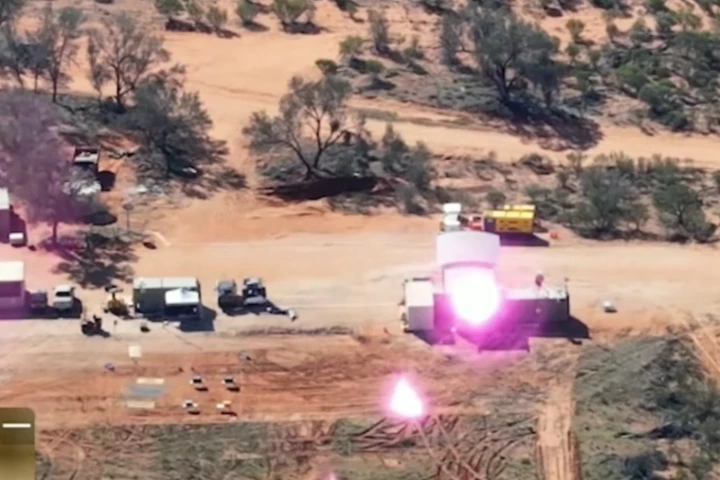


In a world first, the US Department of Defense (aka the Department of War) airlifted a complete 5-MW nuclear reactor using a C-17 Globemaster III transport from March Air Reserve Base, California to Hill Air Force Base, Utah, for assembly and operation.
Part of the Janus Program, the February 15, 2026 event, called Operation Windlord, involved three C-17s loaded with an unfueled Ward250 next-generation microreactor that had been disassembled into eight distinct modules. These were containerized or skid-loaded for rapid deployment.
The exercise was carried out by the 62nd Airlift Wing, the only US Air Force unit certified to routinely transport US nuclear weapons to ensure both safety and security. It demonstrated that a nuclear reactor can be treated as rolling stock like any other piece of equipment and delivered to remote locations with a 3,500-ft (1,000-m) runway.
Once there, the reactor can be reassembled, fueled, and brought into full operation in record time. In this case, the Ward250 is expected to fire up by July 4, 2026, as mandated by Presidential Executive Order 14301. Though there have been previous attempts at airlifting nuclear reactors, this marks the first time a complete reactor has been shipped as part of a repeatable, commercial-first logistics chain intended for operational military and industrial use rather than as a one-off scientific test.
The purpose of the exercise was not merely to show that a small reactor can be loaded onto aircraft, flown from Point A to Point B, reassembled, and switched on. According to the US government, the Janus Program is intended to address the armed forces’ growing need for dependable power supplies in both remote and conventional locations.
Some bases, particularly in places like Alaska, suffer from long, expensive, and complex fuel and electricity supply chains. Beyond that, the US domestic electrical grid is aging and increasingly unreliable. Recent state and federal mandates requiring greater reliance on wind and solar power have further complicated routine access to electricity, especially under harsh weather conditions.

To counter this, the Janus Program aims to develop the capability to rapidly deploy nuclear reactors where needed for both military and disaster-relief applications. It is claimed that this will help keep bases fully operational while also advancing technologies and procedures that could accelerate the revival of the American nuclear power sector.
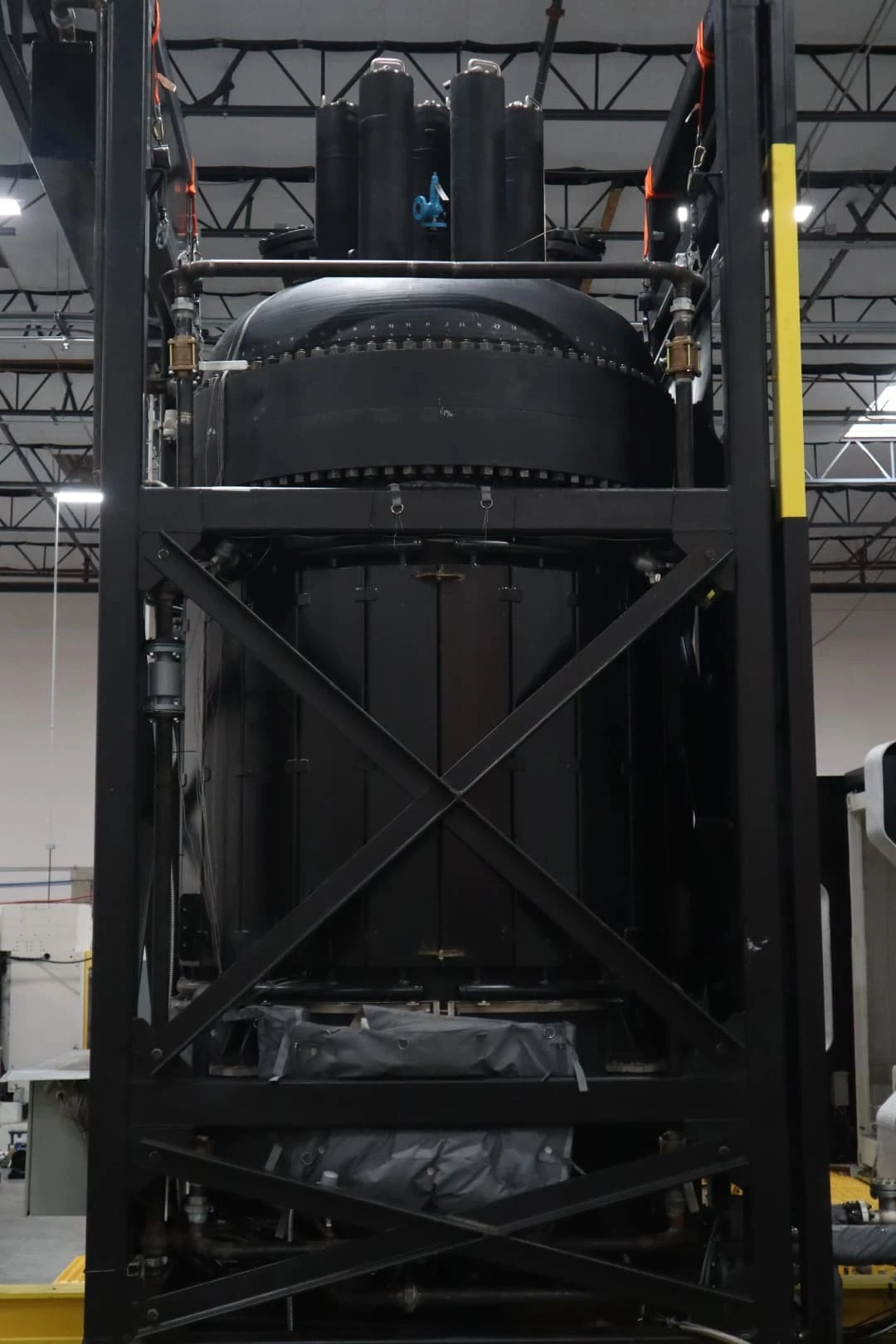
Built by Valar Atomics, the Ward250 is a High-Temperature Gas-Cooled Reactor (HTGR) running on Tristructural-Isotropic (TRISO) nuclear fuel. These seed-sized pellets of High-Assay Low-Enriched Uranium (HALEU), enriched between 5% and 20%, are coated in layers of carbon and ceramic materials and formed into round pebbles. The pebbles are fed into the reactor via a hopper and, as the nuclear chain reaction proceeds, are cooled by helium gas to an operating temperature of 750 °C (1,382 °F).
This configuration is favored by engineers for next-generation reactors because it lends itself to modular designs that can be assembled in factories and transported to site. The nuclear reaction is self-regulating and cooling is largely passive, giving the system a significant inherent safety margin.
"Today marks the beginning of what we consider America’s second Manhattan Project," said Valar Atomics in a previous statement. "Unlike the original effort focused on national defense, this initiative harnesses atomic energy for civilian power generation, artificial intelligence infrastructure, and industrial revitalization. The mission requires the same dedication, urgency, and innovative spirit that characterized our nation’s greatest scientific achievements.This means it meets US Army-specific regulations for safe operations at domestic military installations."
Source: US Government