
Science
The latest in science news, from the depths of space to the quantum realm.
Top Science News
-
 Norwegian chemical company Yara has inaugurated the largest industrial carbon capture facility in all of Europe this week. Set up at the company's ammonia and fertilizer plant in Sluiskil, the Netherlands, it can capture 800,000 tons of CO2 per year.
 -
 A honey bee’s barbed sting could be among the most sophisticated of venom-delivery systems in the natural world. Despite knowing about this relatively unusual anatomy for more than a century, nobody had ever observed it in action. Until now.
 -
 Nearly 15 years ago, scientists found that plants had a biological mechanism that directs their form – thought to have only been something seen in animals. Now, researchers have uncovered how it works. It's essentially a tree's version of a muscle.
Load More
Latest Science News
-

Brain-like synapse chip computes at 'lightning speed', dissolves in mins
October 17, 2026 | Etiido UkoThe remarkable human brain, which thought up heart surgery and space travel, runs on about 20 watts thanks to its trillions of synapses. Researchers are now attempting to replicate this ability with printable, recyclable artificial synapses. -

Human-driven 'junk-food diet' messes with hundreds of inflammatory genes
October 09, 2026 | Bronwyn ThompsonIn a landmark study, scientists have uncovered that a vibrant reef resident has had hundreds of its genes change in activity – most linked to inflammation and immune responses – by choosing more polluted but food-abundant habitats closer to humans. -

Quantum computer chip crams more info into less volume – by vibrating
September 23, 2026 | Etiido UkoQuantum computing struggles to separate processing and memory. While different techniques exist, they require bulky hardware. Scientists have now developed a new architecture that stores memory as vibrations, greatly shrinking the required hardware. -

The brain may not be a single organ after all
September 21, 2026 | Mike McRaeAccording to a recent investigation on mice by Stanford University researchers, there’s a case for treating parts of the brain as separate organs, each with very distinct embryological – and potentially evolutionary – origins. -

Our use of fire has strange ties to how we can talk
September 02, 2026 | Mike McRaeIn a peer-reviewed paper recently published in Royal Society B: Biological Sciences, researchers bring together testable claims from a number of different fields to argue that the conditions surrounding an evening fire shaped the evolution of spoken language. -

324-million-year-old animal with 24 legs reveals how life conquered land
August 30, 2026 | Bronwyn ThompsonMost of us have learnt that life on land involved transitioning from the water and evolving the physiological means to do so. But a new study has found solid evidence that this formative process involved more diverse species also making the move. -

Yeast that makes food from plastic could solve two problems with one cookie
August 28, 2026 | Mike McRaeA protein-rich cookie made from plastic and agricultural waste could help solve two serious problems facing future generations, according to a team presenting results from their NASA-funded project at the Fall Meeting of the American Chemical Society. -

Strange 17th-century Polish ‘vampire’ is no longer a mystery
August 25, 2026 | Mike McRaeWhen a 17th-century woman’s bones were discovered with such odd accoutrements as part of her burial in a Polish cemetery, archeologists knew they had stumbled across something a little different. Their findings are even more fascinating. -
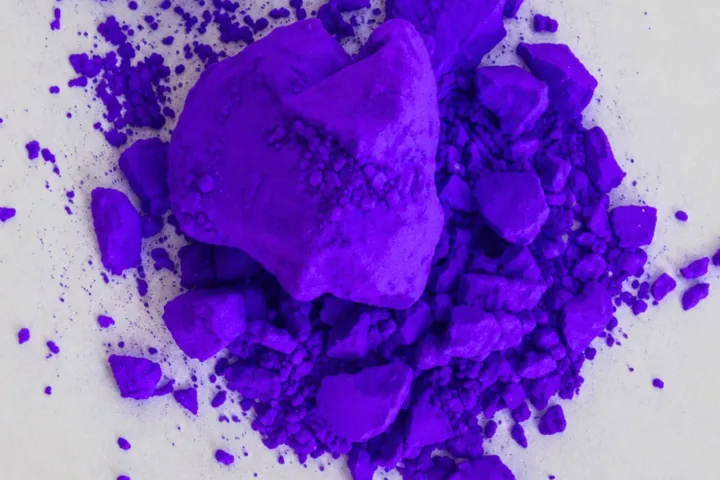
Purple is the new white for ‘cool’ summer fashion
August 24, 2026 | Mike McRaeA breakthrough by researchers from Zhengzhou University, Adelaide University, the University of South Australia, and Central China Normal University could help you chill out when the temperatures peak without compromising style. -

The extraordinary engineering that builds nature's only straight tusk
August 18, 2026 | Bronwyn ThompsonThe narwhal's defining feature – its continuously growing tusk – is the only straight structure of its kind seen in the animal kingdom. Now, scientists have cracked the code on how these elusive Arctic whales grow such an important and unique tool.
Load More