Your next favorite true crime podcast might have some new forensics jargon to make sense of. Researchers in Australia have developed a new way to identify humans – similar to how we do with DNA and dental records – that could come in handy while investigating crimes.
A PhD student duo at Edith Cowan University in Western Australia has devised a method that analyzes proteins in a single hair strand to create a unique profile for each person, sort of like a fingerprint.
"This novel technique is referred to as proteomic genotyping and relies on the detection of genetically variant peptides in single hair strands to infer genetic information that can then be used for individual identification," explained chemist Rebecca Tidy, describing it as a new forensic workflow for identifying people using hair recovered from crime scenes. Tidy authored the paper on this method that appeared in the journal Forensic Science International this month.
Specifically, this approach uses the hair shaft proteome for identification, and it's especially useful when DNA analysis – a standardized, well-characterized, and reliable method – isn't possible because said DNA is either unavailable or has degraded. "Proteins have a sequence, and that sequence is intimately connected to the genome of an individual," Dr. Joel Gummer, who led the proteomics research team and can be seen talking about the technique in the video above.
Indeed, DNA obtained in crime scene evidence can degrade or become contaminated. What's more, unlike what most TV shows and movies will have you believe, hair found during an investigation doesn't instantly help identify a suspect.
To identify someone from their hair, you'll need hair with a root (follicle), which contains nuclear DNA that can help pinpoint an individual – and crime scenes usually only have shed hairs, which are made of dead keratinized cells that do not contain nuclear DNA. If no follicular material is present, you can analyze the hair's mitochondrial DNA, which doesn't identify an individual, but a maternal lineage and a narrowed population group.
Okay, back to this new tech. The core mechanism hinges on the genetic variations naturally present in proteins, primarily in the form of Single Amino Acid Polymorphisms (SAP), which are the amino acid building blocks that make up proteins. These SAPs occur because of a variation in an individual's DNA code, specifically a non-synonymous single nucleotide polymorphism, which changes one amino acid in the protein chain.
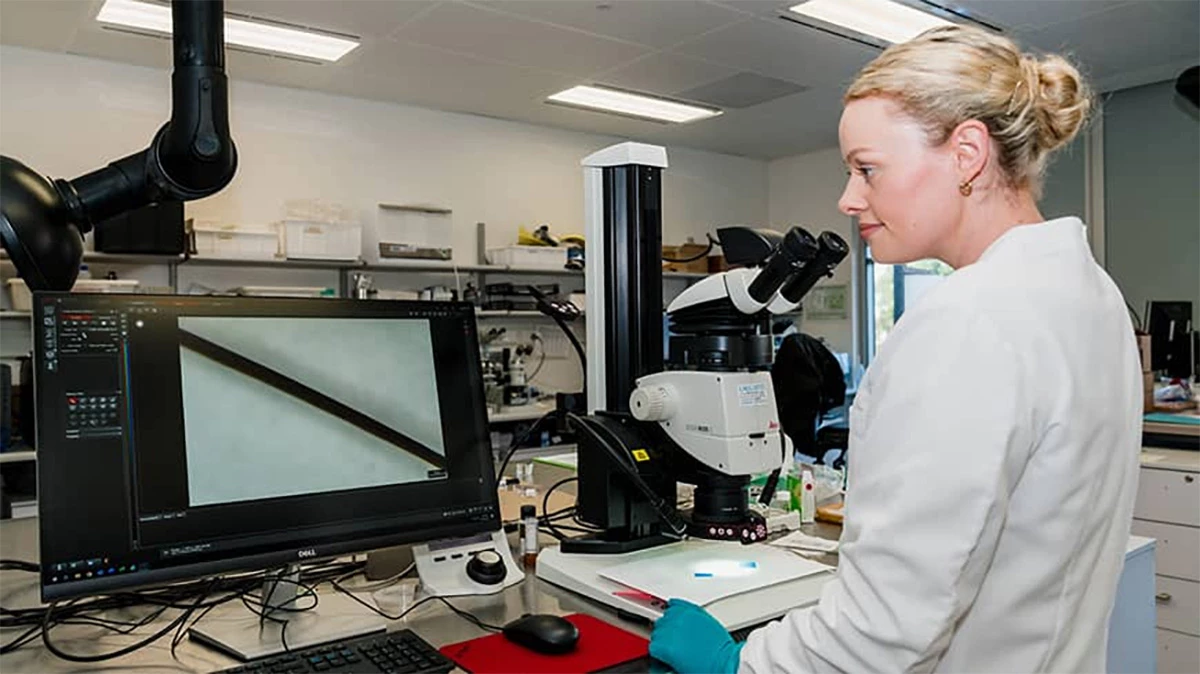
When a protein is chopped up into small pieces (peptides), a piece that carries this special amino acid difference is called a Genetically Variant Peptide (GVP). Scientists use machines like mass spectrometers to analyze these protein pieces and figure out the exact sequence of amino acids, which in turn tells them the individual's underlying genetic code. By checking a group of these GVPs, scientists can calculate a statistical Random Match Probability (RMP), showing the likelihood that the protein evidence belongs to that specific person.
RMP tells us: "What are the odds this hair belongs to someone else by pure chance?" Think of it like this: If the RMP is one in 100, that means if you randomly tested 100 people, you'd expect to find one person whose protein profile matches by coincidence. The higher that number, the more certain you can be it's actually from your suspect.
The technique has improved from a study back in 2016, when the RMP provided 1 in 12,500 odds (which is like picking the right person in a small town). Having been greatly optimized since, the best RMP that's been achieved is 1 in 310 trillion (which way more people than have ever existed on Earth), from a 2022 study.
Traditional DNA testing typically gets odds better than 1 in a trillion, so it's still the gold standard. But this protein method is catching up fast and works when DNA has degraded too much to use – which is a huge advantage for old crime scenes or damaged evidence.
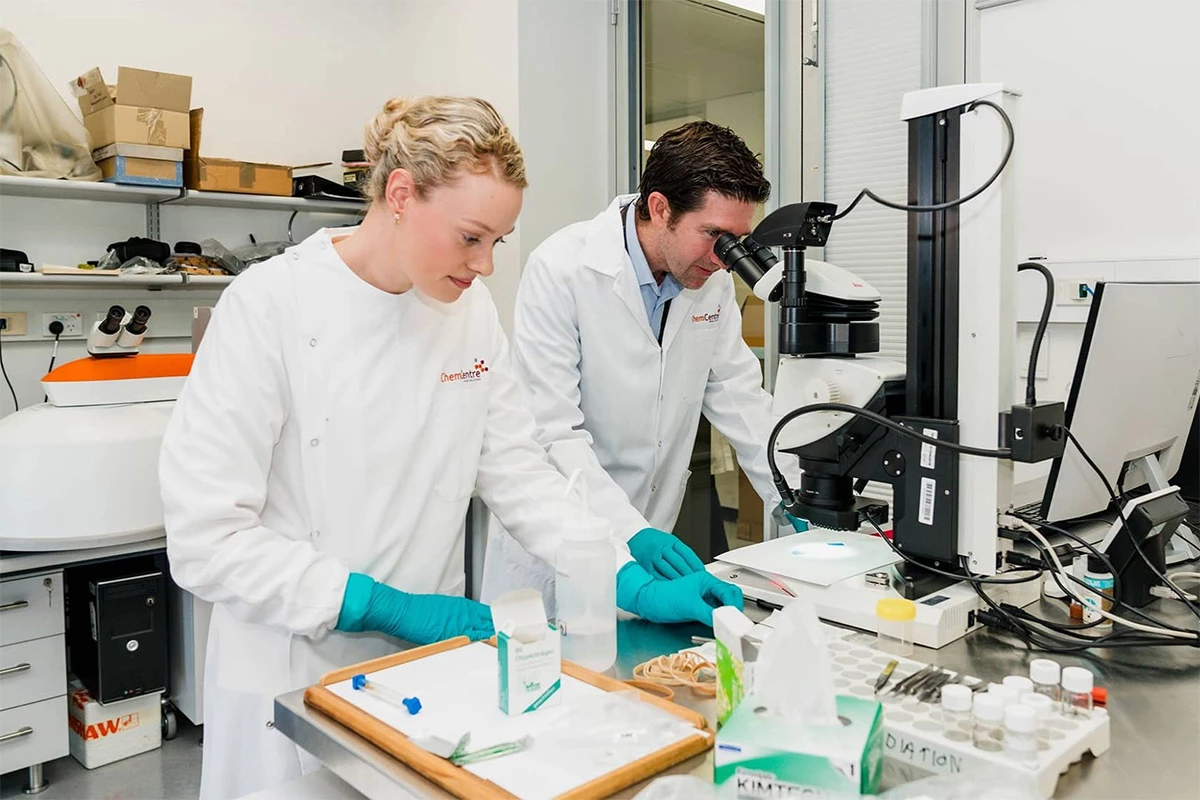
Proteomic genotyping can also help tackle cold cases that have remained unsolved for years. "Structural proteins persist much longer than DNA in challenging environments, remaining detectable in tissues long after DNA has become too fragmented for analysis," researcher Romy Keane explained. "Hair is always recovered from a crime scene because it is so prevalent, but historically it has been underutilized due to the limitations of microscopy techniques." It could also help identify victims of natural disasters, where DNA may be hard to recover.
The researchers are also chemists at ChemCentre, a chemical science facility in Western Australia. It's partnering on this with PathWest, which runs the only forensic biology laboratory in that state.
More testing and validation is required before the technique is deployed in criminal investigations, and it most likely won't replace DNA analysis anytime soon. But it could well feature in forensic findings presented in court in the years to come – and subsequently, in bingeable crime shows and podcasts.
Source: Edith Cowan University