
Biotechnology
-
 In somewhat of a surprise announcement, the Food and Drug Administration has approved the first US influenza vaccine engineered from the mRNA technology that gave us one of the most administered COVID-19 shots during the pandemic.
 -
 A new injection that strengthens a mouth muscle may have a life-changing impact on the 90% of dogs that suffer from chronic respiratory issues. It has the potential to provide these flat-faced pooches with happier and longer lives, without surgery.
 -
 Scientists have hacked the meaning of a "light meal," creating microlasers that use natural products to emit beams through food. They're also completely safe to eat. It's the first demonstration of laser emission from an entirely edible system.
 -
 A pair of $139 brainwave-synching earbuds uses your body's data to shape your sleep. Whether it's a peaceful night or quality power naps, they stand to be a game-changer for anyone who has trouble getting enough shut-eye naturally.
 -
 Major steps towards better, sustainable and affordable food production free of environmental challenges have been taken, with the with the opening of the "world's first farm to grow indoor, vertically farmed berries at scale".
 -
 Your boots may soon have a tropical touch, with a breakthrough in using pineapple leaves to make a strong, 100% natural, sustainable leather. It comprehensively outperformed mushroom leather, and has serious potential for scalable, commercial use.
 -
 Scientists believe lightweight, ultra-strong and flexible spider silk is now one step closer to commercial use thanks to a deceptively complex 'box' that can spin nature's wonder fiber in a "spontaneous, extremely rapid, and highly reproducible" way.
 -
 When you take 800,000 human brain cells, wire them into a biological hybrid computer chip, and demonstrate that it can learn faster than neural networks, people have questions. We speak to Dr. Brett Kagan, Chief Scientific Officer at Cortical Labs.
 -
 For the first time, scientists have successfully produced full-length spider silk fibers using genetically modified silkworms. This silk has the potential to provide a scalable, sustainable and better-quality alternative to current synthetic fibers.
 -
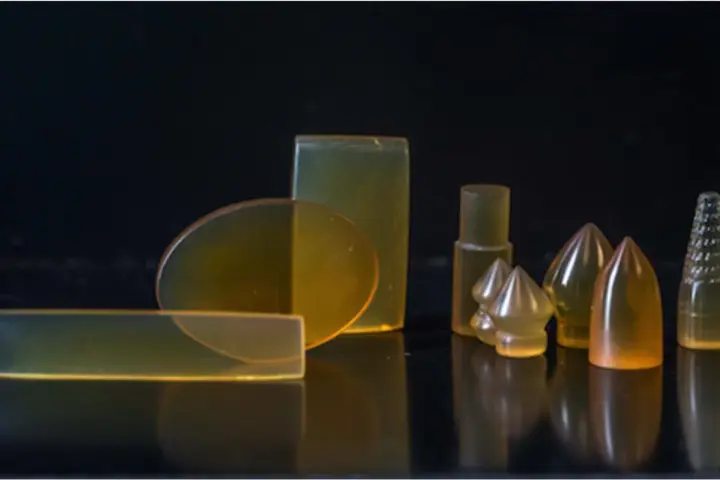 Scientists say they've devised a way to create "programmable" silk-based forms that have a variety of optical, chemical or biological functions. Imagine pins or other mechanical components that change color when they near a breaking point, or solids that can deliver drugs, among other possible uses.
 -
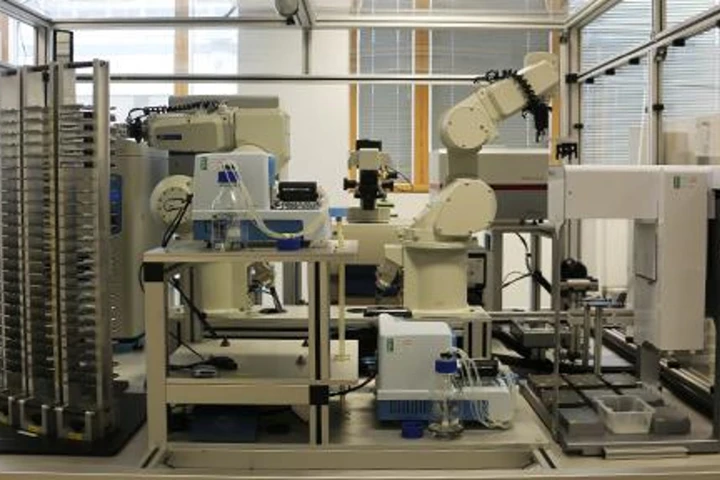 To cut time and costs involved in developing new drugs, scientists have built Eve, an artificially-intelligent "robot scientist" that is not only faster and cheaper than its human counterparts, but has already identified a compound that could be used to fight malaria.
 -
 Nanoscribe GmbH, a spin-off of Karlsruhe Institute of Technology (KIT), has built the world’s fastest 3D printer of micro- and nanostructures.
Load More