
Flying
-
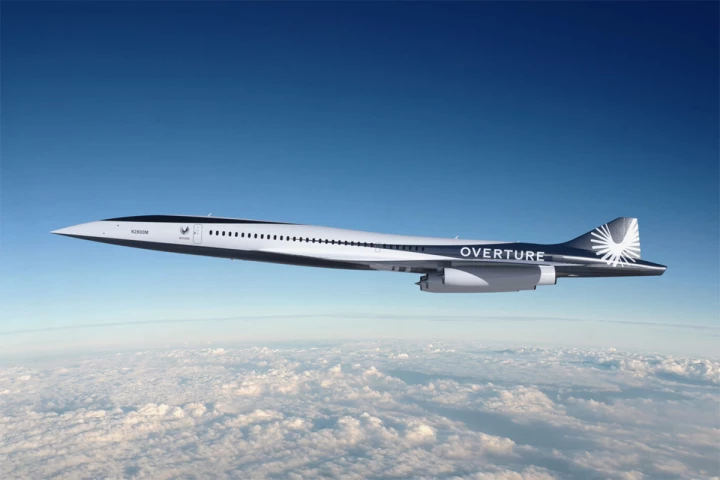 More than 20 years after the last commercial Concorde flight, President Trump has signed an executive order to repeal the ban on supersonic flight over land across the US. That paves the way for companies building the ultra-fast planes of the future.
 -
 When it comes to things that have a reputation for being hard to learn, flying an airplane certainly ranks among the hardest. The Airhart Sling could soon change that, however, as it's designed to radically automate and simplify the flying process.
 -
 A remarkable group of drone prototypes from a team at the University of Tokyo takes multirotor complexity to the next level. These hypnotic flying robots are able to change their structural shape mid-air, creating some unprecedented capabilities.
 -
 Engineers at MIT have added a new ability to existing flying robots – they can now glow when they flap their wings. Inspired by fireflies, this fluorescence could help with communication or tracking of the tiny, lightweight robots.
 -
 No matter how good our human designs may be, there’s no shame in copying Mother Nature’s homework. A new nature-inspired flying robot can flap its wings even more efficiently than an insect, using a unique electrostatic “zipping” mechanism.
 -
 Whether you think it’s cool or unnerving, robots are becoming more agile – and Caltech’s LEONARDO looks like one of the most nimble examples yet. LEO walks on two legs, jumps and flies, can balance on a slackline and even skateboard.
 -
 If your busy lifestyle leaves little time for housework, robot vacuum cleaners can help. If you want your robovac to clean upstairs, you'll have to carry it up and set it off. Peter Sripol wasn't happy with that situation so made his Roomba fly.
 -
 Airbus' new fello-fly demonstrator project will test the idea that two commercial aircraft flying in tandem can boost flight efficiency while reducing emissions, based on the technique used by flocks of birds.
 -
 London Gatwick Airport is starting a two-month test of new methods to speed up aircraft boarding without queues. By combining digital displays with new boarding sequences, the goal is to make getting on a plane more efficient and less stressful.
 -
 Traditionally, robots are either airborne or landlubbers – there’s not much crossover. But researchers at Northeastern University have now built a robot that can do both, walking around on two legs before jumping and flying short distances to get over obstacles in its path.
 -
 They're environmentally damaging, and can be frighteningly lethal – by accident, or by design. But they are also things of beauty. Here are 10 of the best examples of aeronautical artistry in history.
 -
 Engineers at Caltech and the UIUC have developed the Bat Bot, a robotic bat with soft, flappable wings that could not only make for a safer alternative to keeping drones aloft with spinning blades, but also teach scientists more about the mechanics at work in natural bat flight.
Load More