
Implant
-
 “Remove the plank from your eye before pointing out the speck in another’s,” says a popular proverb. For millions with geographic atrophy, the speck is literal. Relief may now be coming, after a sight-restoring implant received approval for sale in Europe.
 -
 Implantable neurological technology has advanced drastically, offering a return to normalcy for some people with neurological disorders. But given its rapid progression, what happens when these implants become obsolete or its manufacturer goes bust?
 -
 In order to keep surgeries minimally invasive, it would be great if implants could be injected into the body in liquid form, then solidified once in place. Well, a new ultrasound-based 3D printing process may one day make that very thing possible.
 -
 Following years of controversy, including whistleblowers reporting of rushed experimental “hack jobs” that resulted in as many as 1,500 animal fatalities, Elon Musk's brain-chip implant company has begun recruiting for its landmark first human trial.
 -
 Several years after Elon Musk's "aspirational" timeframe, Neuralink has announced it's received FDA approval for the first human trials of its brain-computer interface. But it's worth noting that another company has already done more than 50 implants.
 -
 When deaf athletes with cochlear implants take part in sports, they have to wear headgear that protects the external parts of their implant. A new wearable serves that same purpose, while allowing users to hear the sounds around them much better.
 -
 Scientists regularly turn to nature for inspiration in their pursuit of next-generation materials, and engineers studying the porous microstructures of bone and wood have come up with a clever example of biomimicry with wide-ranging potential.
 -
 Researchers have developed a new type of artificial muscle that’s entirely made out of natural proteins. Responding to changes in its environment allows the muscle to flex on demand, which could make it useful for implants, prosthetics or robots.
 -
 Engineers at Columbia University have developed the smallest single-chip system ever created, which can be implanted with a hypodermic needle to measure temperature inside the body, and possibly much more.
 -
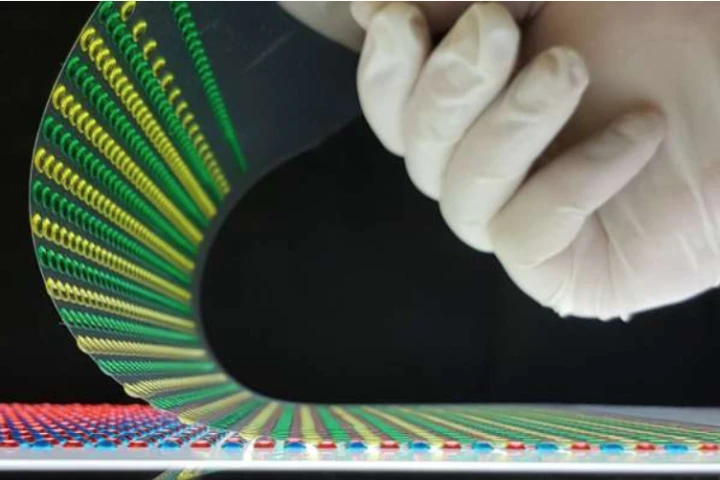 An organism that is pretty good at generating biocompatible power (for itself, at least) is the electric eel, and scientists have now used the high-voltage species as a blueprint for a promising new self-charging device that could one day power things like pacemakers and prosthetics.
 -
 Inside everyone's middle ear are three tiny linked bones known as ossicles. When these bones are damaged, a condition called ossicular conductive hearing loss results. A more effective treatment for it may now be on its way, thanks to 3D printing technology.
 -
 For years a subset of the transhumanist community, called “grinders”, has been experimenting with implanting electronics and microchips into their bodies. Now a tech company based in Wisconsin is set to offer all its employees the option of having a microchip implanted in their hands.
Load More