
Liquid
-
 Ordinarily, if you want liquid to flow in only one direction through a pipe, that pipe has to have a flap-type valve – which could fail. Now, scientists have created a new type of more robust one-way-flow pipe, which was inspired by shark intestines.
 -
 Harvard engineers have created a strange new “metafluid” – a liquid that can be programmed to change properties, like its compressibility, transparency, viscosity and even whether it’s Newtonian or not.
 -
 New evidence has emerged in the debate about whether there’s liquid water on Mars. In a study led by the University of Cambridge, scientists examined the topology of Martian ice sheets and found signatures that match subglacial lakes here on Earth.
 -
 Mundane as it may seem, glass is a surprisingly mysterious material. Now scientists at the University of Konstanz have identified a new state of matter called liquid glass, which has some unusual properties.
 -
 Ordinarily, if you want to make a 3D-printed liquid-filled object, you have to inject the liquid after the object has been printed. A new process, however, allows such items to be printed in one step – and it could have some valuable applications.
 -
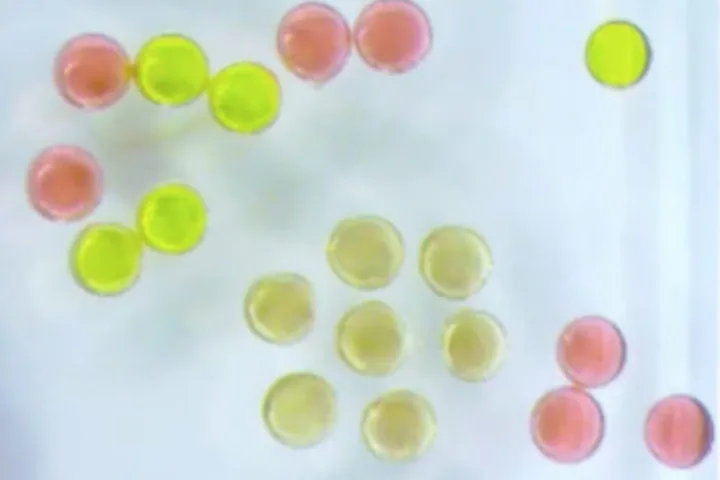 The closest thing we have to magnetic liquids are ferrofluids. But now, Berkeley Lab has managed to create the first permanently magnetic liquids, which could open up new avenues for electronics and robotics.
 -
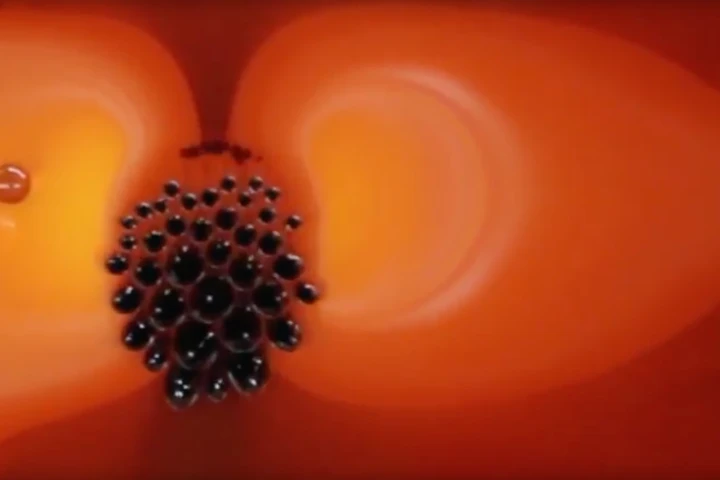 Harvard scientists have led an international team to develop a new surface that can reconfigure its shape, stickiness or slipperiness on demand, through the application of a magnetic field.
 -
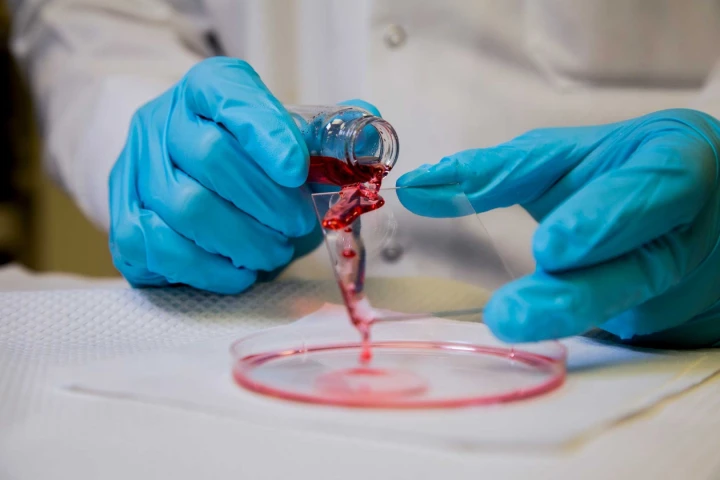 Our phones follow us everywhere – which often puts them in the line of fire for spilt drinks or rain. But now a team at the University of Michigan has developed a durable, clear coating that could help phones – or any surface, for that matter – repel almost any liquid.
 -
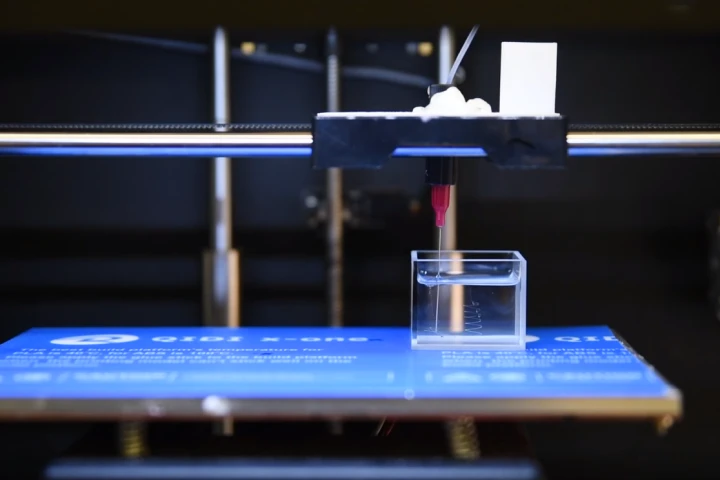 A new technique developed at Berkeley Lab allows liquid 3D structures to be printed within other liquids. This new form of 3D printing could give rise to flexible and stretchable liquid electronics, aid chemical synthesis, or serve as a transport and delivery system for nanoscale particles.
 -
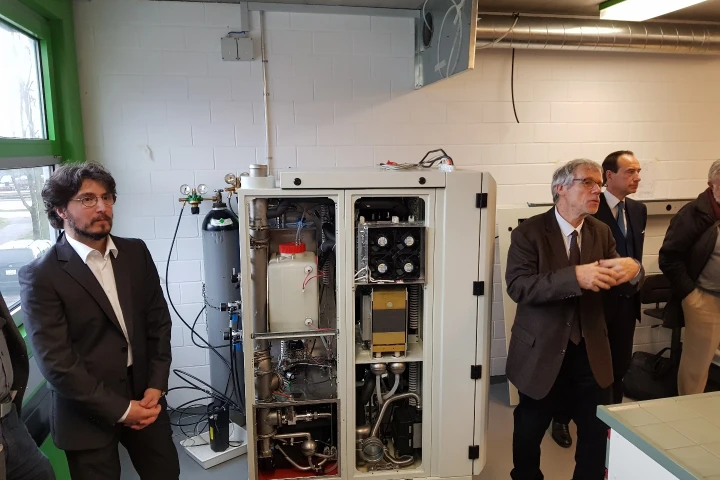 Rather than using hydrogen in its normal gaseous state, a liquid hydrogen carrier called formic acid has been floated, and now a team from EPFL has built a promising prototype of a formic acid-based fuel cell.
 -
 Thanks to gravity, fluids flow downwards following the path of least resistance. Now researchers at Brandeis University have mixed biological molecules into a substance that marks the first steps towards developing a self-propelling liquid, that could flow free of human or gravitational influence.
 -
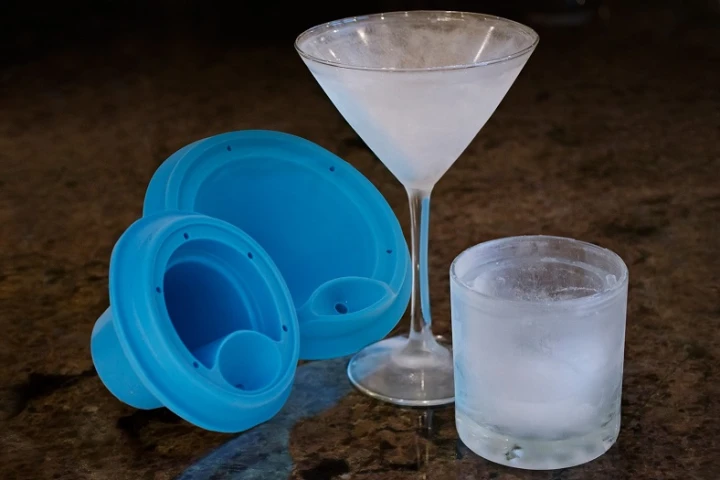 IceLiners could be the perfect solution to creating ice-cold cocktails which stay almost-frozen for as long as it takes to drink them. IceLiners is simple, comprising a silicone mold used to line a glass with frozen water, fruit juice, or mixer suitable for consuming with your favorite cocktail.
Load More