
Microscopes
-
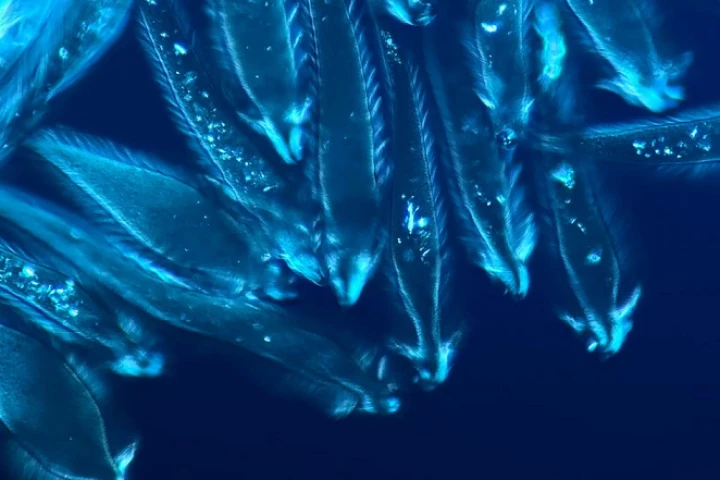 A groundbreaking video of single-celled organisms moving around the gut of a termite has won this year’s Nikon Small World in Motion Competition. In its 11th year, this video microscopy contest continues to deliver astounding glimpses of tiny worlds.
 -
 By taking advantage of recent advances in smartphone technology and the infinite possibilities of Lego, scientists in Germany have built a cheap and easy high-resolution microscope that is part educational tool and part toy.
 -
 Researchers at Leiden University in the Netherlands have created the world’s smallest boat. Measuring just 30 microns long, the tiny model was 3D printed as part of a project investigating how to make synthetic “microswimmers” in complex shapes.
 -
 The incredible winners from this year's Nikon Small World photo awards strike a unique balance between art and science, offering everything from a surreal close-up of the grooves in an old vinyl record to a stunning image of hippocampal neurons firing.
 -
 Zooming in on the motion of the microscopic, the winners of the Nikon Small World video contest offer up the closest one can get to shrinking down to the size of Ant-Man and experiencing the weird and wonderful world of polyps, proteins and parasites.
 -
 Nikon’s Small World competition has been running for nearly 50 years and it is one of the most compelling and reliably spectacular photo contests in the world. This year's contest featured many mesmerizing images like this small white hair spider by Javier Rupérez.
 -
 A surreal close-up of a weevil eye has taken the top prize at this year’s Nikon Small World Photomicrography Competition. The magnificent annual photography competition, now in its 44th year, celebrates the skill and artistry in the world of microscopic photography.
 -
 Perhaps above all else, the smartphone camera triumphs for capturing the drunken antics of our friends. With the simplest of additions, though, our phones can be used for capturing a world so small that it is barely visible to the human eye.
 -
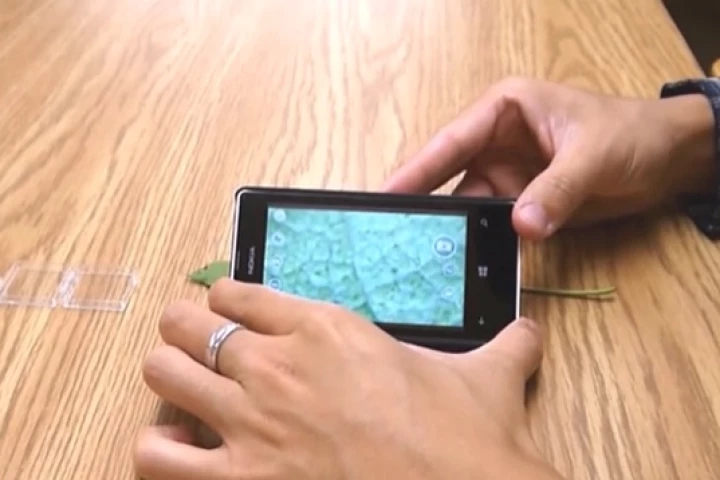 Researchers at the University of Houston (UH) have created a polymer lens designed to fit on almost any smartphone and to magnify images up to 120 times their original size, all at an estimated production cost of just three cents per lens.
 -
 This year's winners of the Nobel Laureates in Chemistry, Eric Betzig, Stefan W. Hell, and William E. Moerner, are honored for their discovery of two methods to bypass the physical limits of optical microscopes to create the field of nanomicroscopy.
 -
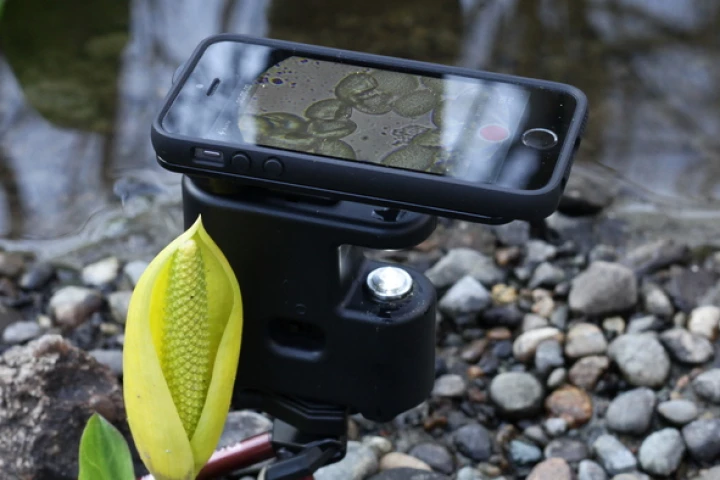 We've seen devices that let you attach your smartphone to a microscope, but they require you to have access to a microscope in the first place. What if you don't? Well, that's where the MicrobeScope comes in. It's a portable microscope that works with newer iPhones – or just with the naked eye.
 -
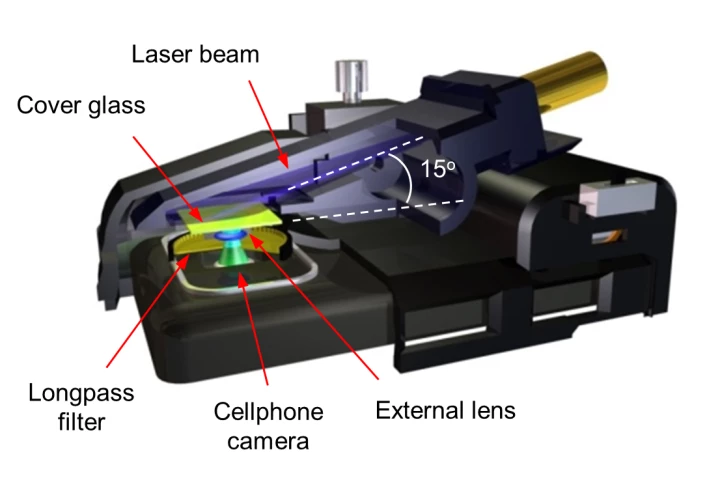 In an advance that could make medical testing easier in third world countries, UCLA scientists have created a 3D-printed smartphone attachment that is able to detect particles as small as 90 nanometers.
Load More