
Stretchable Electronics
-
 LG Display has built on the technology powering its flexible screen prototype that stretched by 20% in 2022, announcing what's claimed to be the world's first stretchable display capable of expanding up to 50%.
 -
 While the field of stretchable electronics does hold a lot of promise, joining the parts of such devices together can be tricky. A new connector is designed to help, as it stretches between the components plus it links them in a matter of seconds.
 -
 A team of researchers has developed a new material that’s not only elastic, but is impervious to gases and liquids – something this kind of material is usually bad at. The material could be useful for making flexible batteries or wearable electronics.
 -
 Soft robots and flexible electronics aren't as protected as their rigid-shelled counterparts, so they're more likely to get ripped or punctured. A new stretchable, self-healing conductive material was designed with this limitation in mind.
 -
 Researchers from the Samsung Advanced Institute of Technology have developed a wearable health-monitoring system that's attached to a user's wrist, and can stretch by as much as 30 percent without affecting display or monitoring performance.
 -
 Although some tantalizing research is currently underway, we're still waiting to see stretchable electronic displays reach production. Well, scientists have now created one that can not only be stretched, but that also self-heals when damaged.
 -
 Engineers from North Carolina State University have developed a thin, stretchable electronic wearable sleeve that allows the user's skin to breathe, making for more comfortable long-term use as a biomedical sensor or human-machine interface.
 -
 Researchers from the University of Connecticut have created color and transparency changing materials that alter their properties in response to mechanical force. The team believes that these techniques may one day help create everything from smart windows to physical encryption devices.
 -
 Besides having tentacles, squid and octopi are also both known for their color-changing skin. Well, soft-bodied robots may soon also share that attribute, thanks to research being carried out at Cornell University.
 -
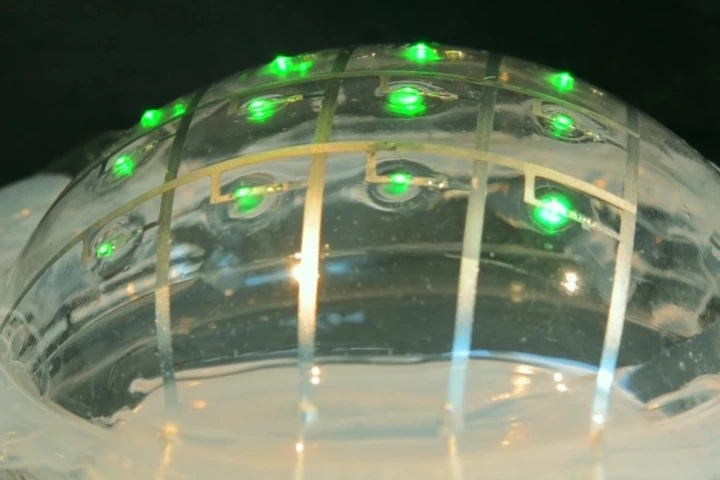 Before things like touch-sensitive robot skin can become commonplace, we first need to develop robust and reliable flexible electronics. Researchers have taken a big step toward that goal, by developing circuits that remain functioning while being stretched by up to four times their original length.
 -
 We generally picture lasers as being encased within hard housings, much like most other electronics. Thanks to new research, however, we could soon see sensors or other devices that incorporate stretchable laser-emitting rubber.
 -
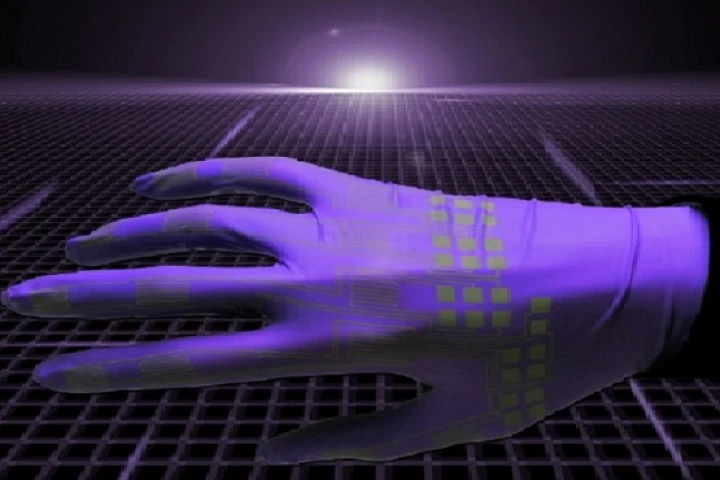 A new nanoparticle liquid metal ink promises faster, cheaper, and easier production of stretchable, bendable electronics for clothing, soft robotics, and wearable devices created directly from an ink-jet printer.
Load More