
TU Wien
-
 Scientists around the world have been one-upping each other in a bid to create the smallest QR code that can be reliably read. Now, researchers have set the bar real high with a QR code so tiny, you'll need an electron microscope to see it.
 -
 From washing urinals to tidying up the beach, we can already see a future where our robot servants help keep our world a little cleaner. Now, a robotic arm has mastered the surprisingly complex task of sink washing, showing off its ability to learn.
 -
 It may seem like electronics will always get faster, but at some point the laws of physics intervene. Scientists have now calculated the absolute speed limit – the point at which quantum mechanics prevents microchips from getting any faster.
 -
 The ivory trade has been banned for over 30 years now, which means that technicians restoring ivory artifacts have to get creative in finding alternative materials. A new 3D-printable substance known as Digory appears to fit the bill nicely.
 -
 An imaginative new approach to bridge-building was demonstrated for the first time in Austria last week. The novel construction method, likened to opening an umbrella, is designed to save considerable time, money and impact on the local landscape.
 -
 While we've certainly heard of epoxy resins that harden when exposed to light, usually all of the substance has to be exposed. A new additive causes resin to solidify when even only a bit of it gets lit up, however – plus it works underwater.
 -
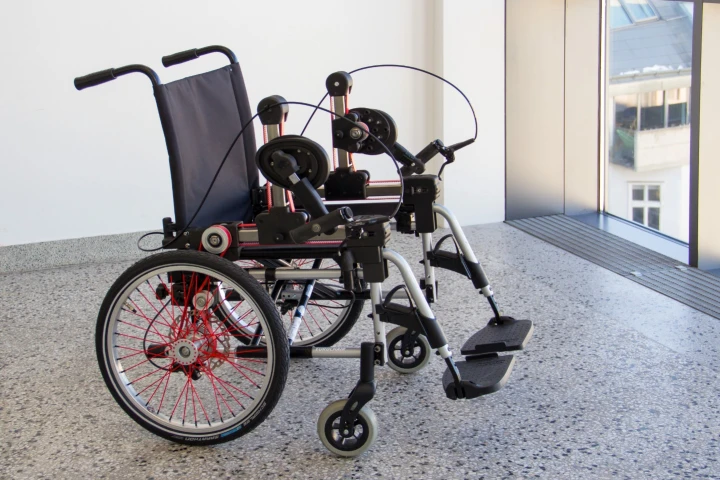 According to researchers from the Vienna University of Technology, propelling conventional wheelchairs puts users' joints in unnatural and potentially injury-causing positions. They've developed what is claimed to be a more ergonomic alternative, in the form of a hand-cranked wheelchair.
 -
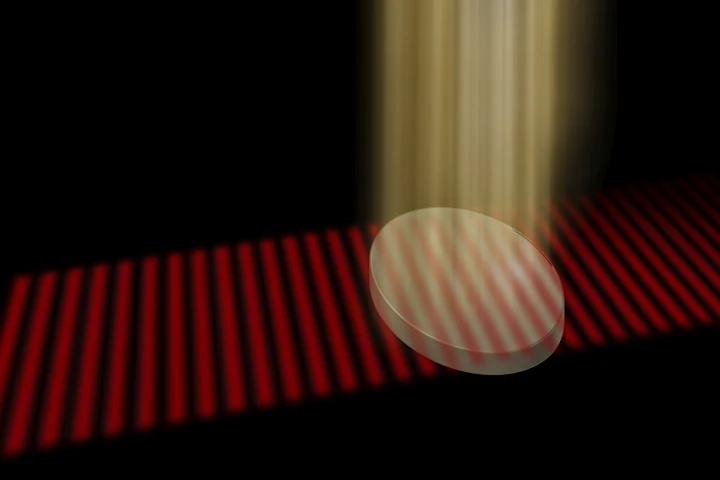 Researchers from TU Wien have developed a new process that allows light waves to pass right through a material by projecting a matching wave pattern onto it, actively camouflaging the target from view. The technique could be used as an invisibility cloak, and it might also work on sound waves.
 -
 Generally, water repellent objects and those that attract or absorb water have very different microscopic-level attributes. Now researchers have discovered a way to use a single type of material to perform both functions, switching between the two simply by applying electric current.
 -
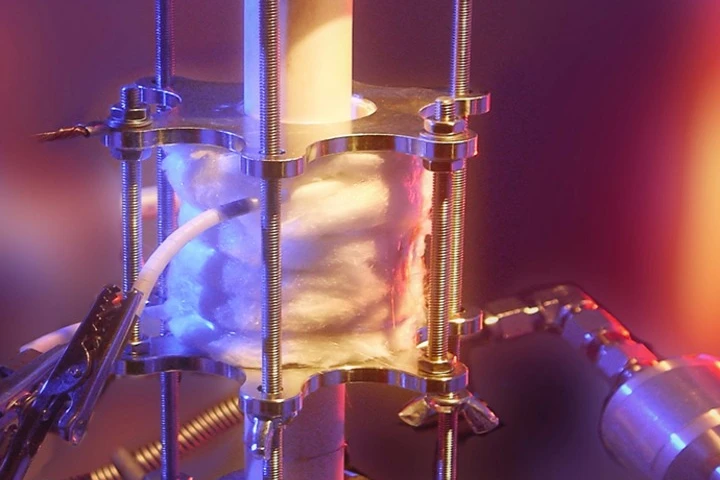 To address the limitations or silicon-based solar cells, scientists at TU Wien in Vienna have combined perovskite-based solar cells that work at high temperatures with an electrochemical cell that allows the energy from ultraviolet light to be stored chemically.