


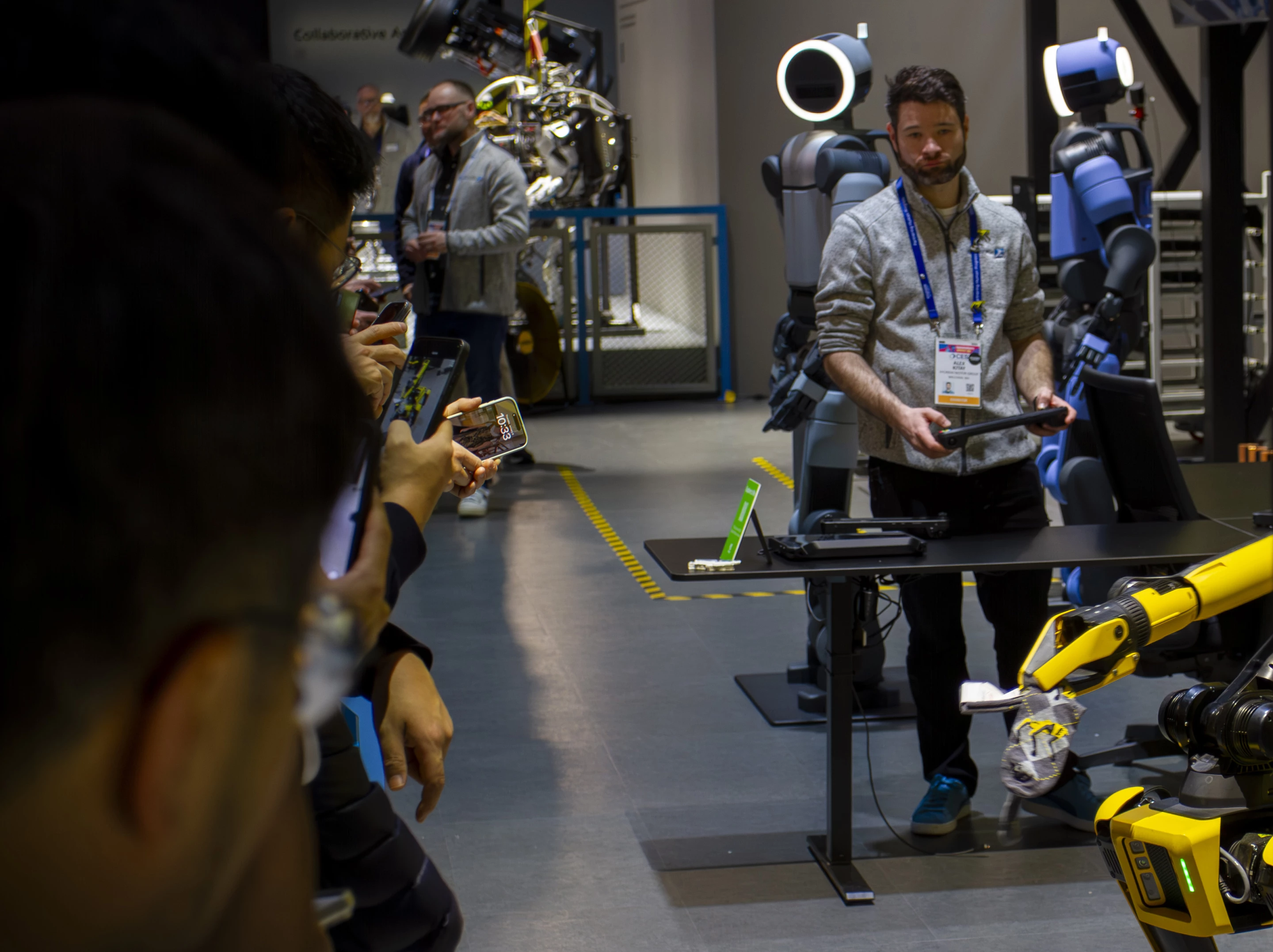

Boston Dynamics has unveiled the new industry-ready Atlas, a humanoid designed as a practical industrial tool for warehouses and factories. Atlas can operate 24/7 in extreme temperatures, and uses AI to adapt to its environment. Production has already started.
After a creepy launch video followed by wowing us with backflips and dance moves, Boston Dynamics has finally gotten down to business. The robotics company has just unveiled the production version of Atlas, a humanoid robot built for serious industrial work. With the first units arriving this year, Atlas has already landed its first job at a Hyundai facility, marking the robot's first deployment in a real-world industrial setting.
"For more than 30 years, Boston Dynamics has been building some of the world’s most advanced robots," says Robert Playter, CEO of Boston Dynamics, in a press release. "This is the best robot we have ever built. Atlas is going to revolutionize the way industry works, and it marks the first step toward a long-term goal we have dreamed about since we were children – useful robots that can walk into our homes and help make our lives safer, more productive, and more fulfilling."
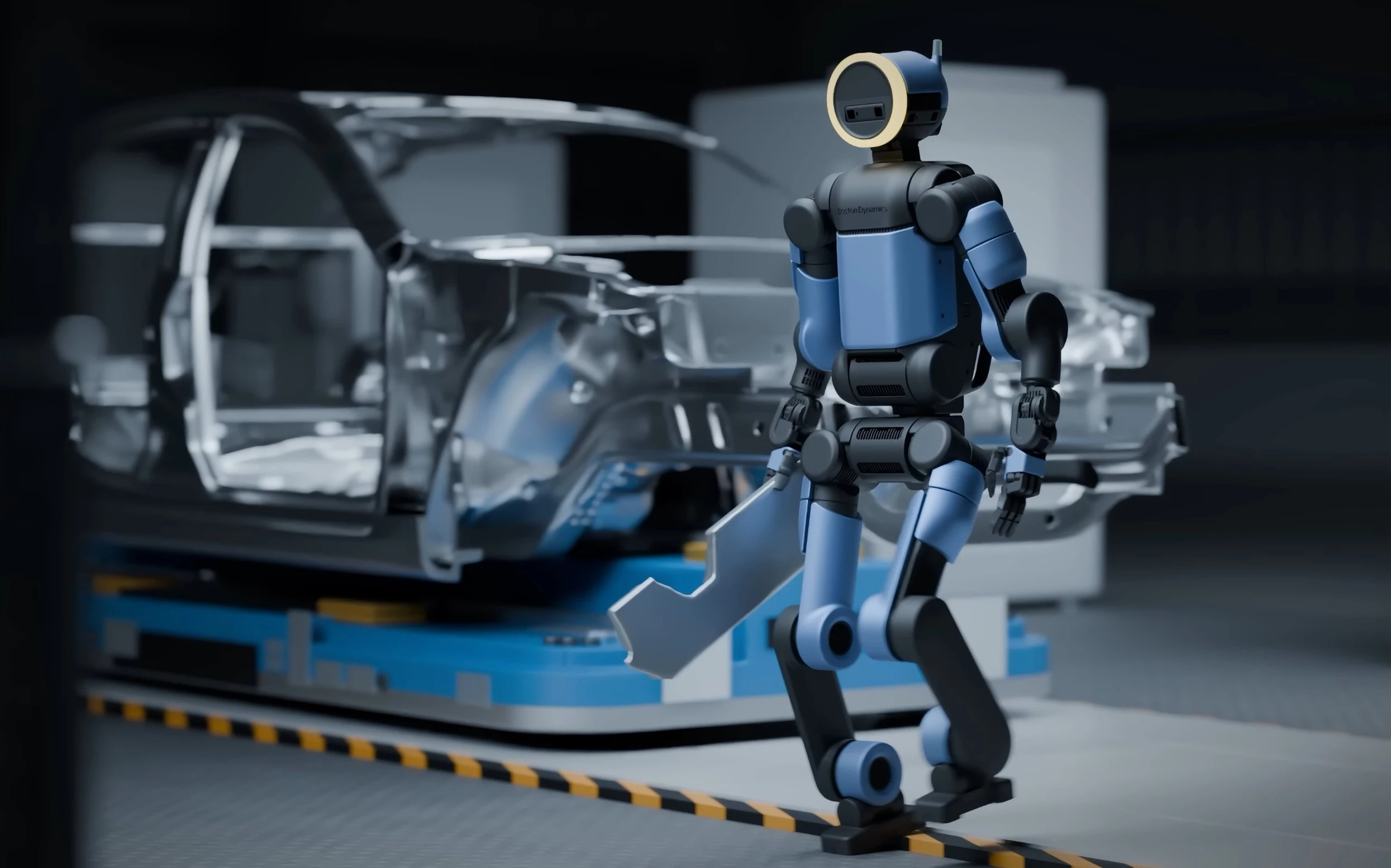
The latest Atlas stands 6.2 ft tall (1.9 m) and features 56 degrees of rotational freedom across its joints. This gives it the flexibility to rotate its neck and hips, move its fingers independently to grasp objects, and bend its knees and ankles to navigate factory floors. That level of articulation translates to a reach of 7.5 ft (2.3 m) – a considerable advantage in cramped warehouse and manufacturing spaces.
Though designed to work alongside humans, Atlas is engineered to operate in conditions that would exhaust most human workers. It can handle temperatures ranging from minus 4 °F to 104 °F (-20 °C to 40 °C) and is able to lift 66 lb (30 kg) repetitively, with the occasional spike to 110 lb (55 kg). Its battery provides four hours of normal operation, and when depleted, the robot can swap out its own power source in under three minutes – no human intervention required.
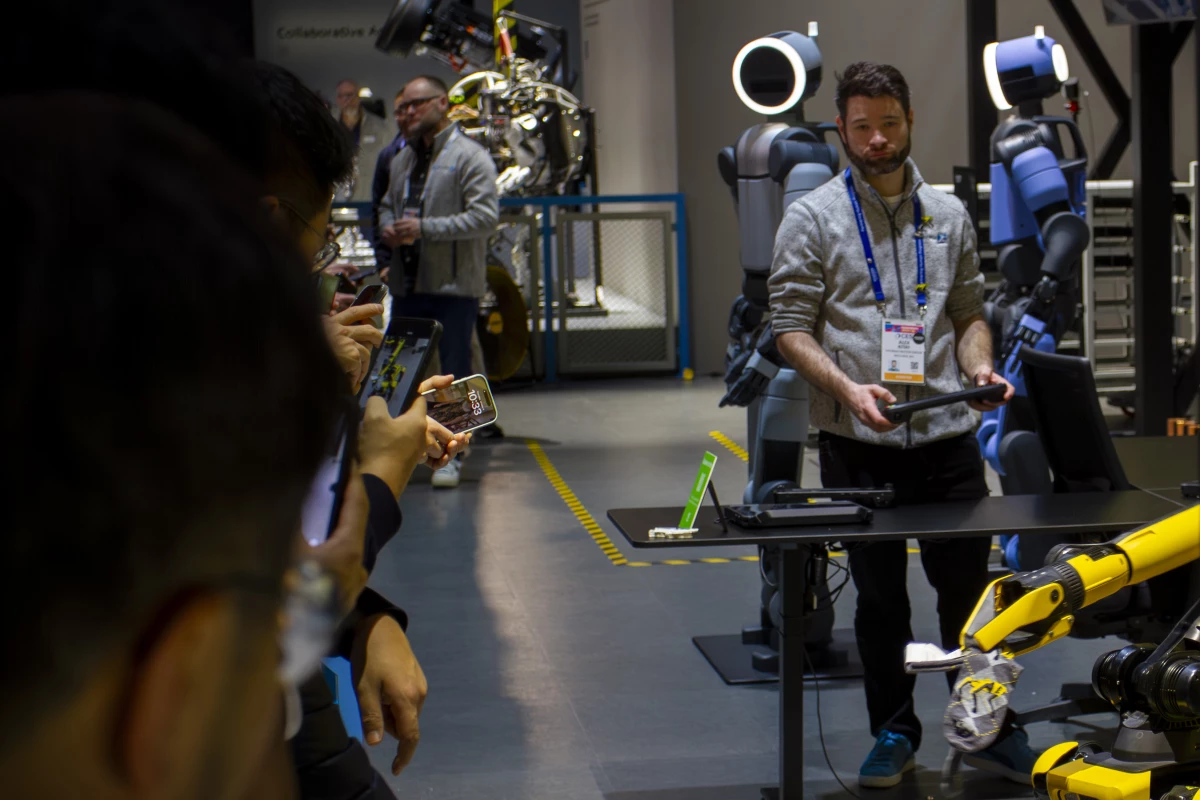
Atlas operates through three control modes: fully autonomous, tele-operated by a human handler, or managed through a tablet interface. Its brain is powered by artificial intelligence that doesn't just allow it to move smoothly and execute tasks, it also understands its environment, adapts to changes, and can help extract valuable operational data that companies can use to optimize their facilities.

Boston Dynamics has also announced a partnership with DeepMind, Alphabet's British-American artificial intelligence research lab, to accelerate the humanoid's capabilities. The collaboration will focus on teaching the robot new tasks more quickly and improving its contextual understanding of factory and warehouse operations. And when one Atlas learns a new task, that knowledge or skill can be deployed instantly across the entire fleet.
This version of the robot is built for warehouse and factory roles – component sequencing, machine tending, and order fulfillment – though Boston Dynamics claims its systems can be customized in less than 24 hours to adapt to other tasks. Production of the new Atlas has started at Boston Dynamics' Boston headquarters, according to the company, with initial customer deployments scheduled for 2026 at Google DeepMind and Hyundai facilities.
Hyundai is a majority shareholder in Boston Dynamics, and is planning to build a new robotics facility that's capable of churning out 30,000 robots every year – though that will likely include Spot robodogs and other units. More Atlas customers will be added to the roster from 2027.

Hyundai itself will supply the actuators that serve as Atlas' robotic muscles, deepening the integration between hardware and AI. "Our new Atlas is the most production friendly robot we’ve ever designed," says Zack Jackowski, GM of Atlas at Boston Dynamics. "This generation of Atlas significantly reduces the amount of unique parts in the robot, and every component has been designed for compatibility with automotive supply chains. With Hyundai Motor Group’s backing, we will achieve the best reliability and economies of scale in the industry."
The start of production brings American industrial humanoid robotics up to speed with China. Last month, Chinese company UBtech released a video showing a regiment of Walker S2 humanoid robots being deployed across multiple sectors – automotive assembly, smart manufacturing, logistics, and AI data centers. According to UBtech, the rollout will continue in staged batches, with units heading to frontline industrial environments.
The timing suggests that the race to put humanoid robots on factory floors is no longer one-sided, and both American and Chinese manufacturers are taking methodical, incremental approaches to large-scale deployment.
Source: Boston Dynamics